A DUT Partnership Project on Circular Urban Economies
Community reclaiming of the city through the lens of participation and circularity_Building a new corpus of knowledge on Circular Urban Economies
*corpus \\ noun [plural corpora]
a. all the writings or works of a particular kind or on a particular subject
b. a collection or body of knowledge or evidence
CORPUS so far
300 m²
reclaimed municipal space
76
workshops, sessions & public events
~515
recorded citizens participated in two cities
16
organisations engaged beyond the consortium
9
types of public space intervention under construction
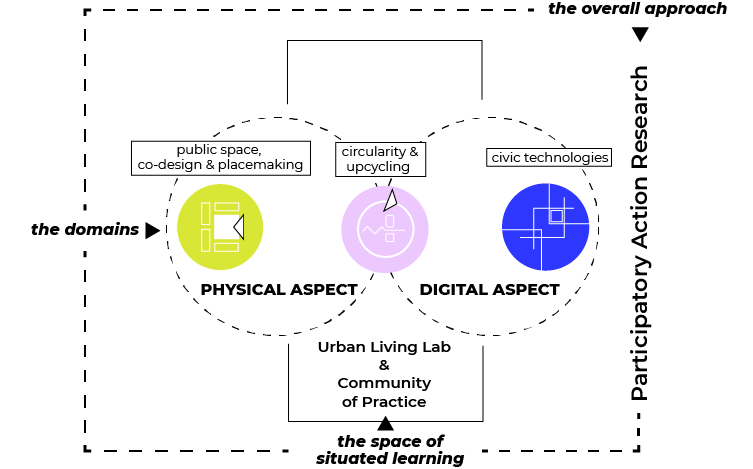
CORPUS carries out research on alternative processes for retrofitting public space at neighbourhood level, grounded in Circular Urban Economies (CUE) and built through the sustained involvement of local stakeholders and citizens. Its starting challenge — the revival of degraded public space on the periphery of the city — is being addressed through the concept of the Urban Living Lab (ULL), tested simultaneously in two very different neighbourhoods.
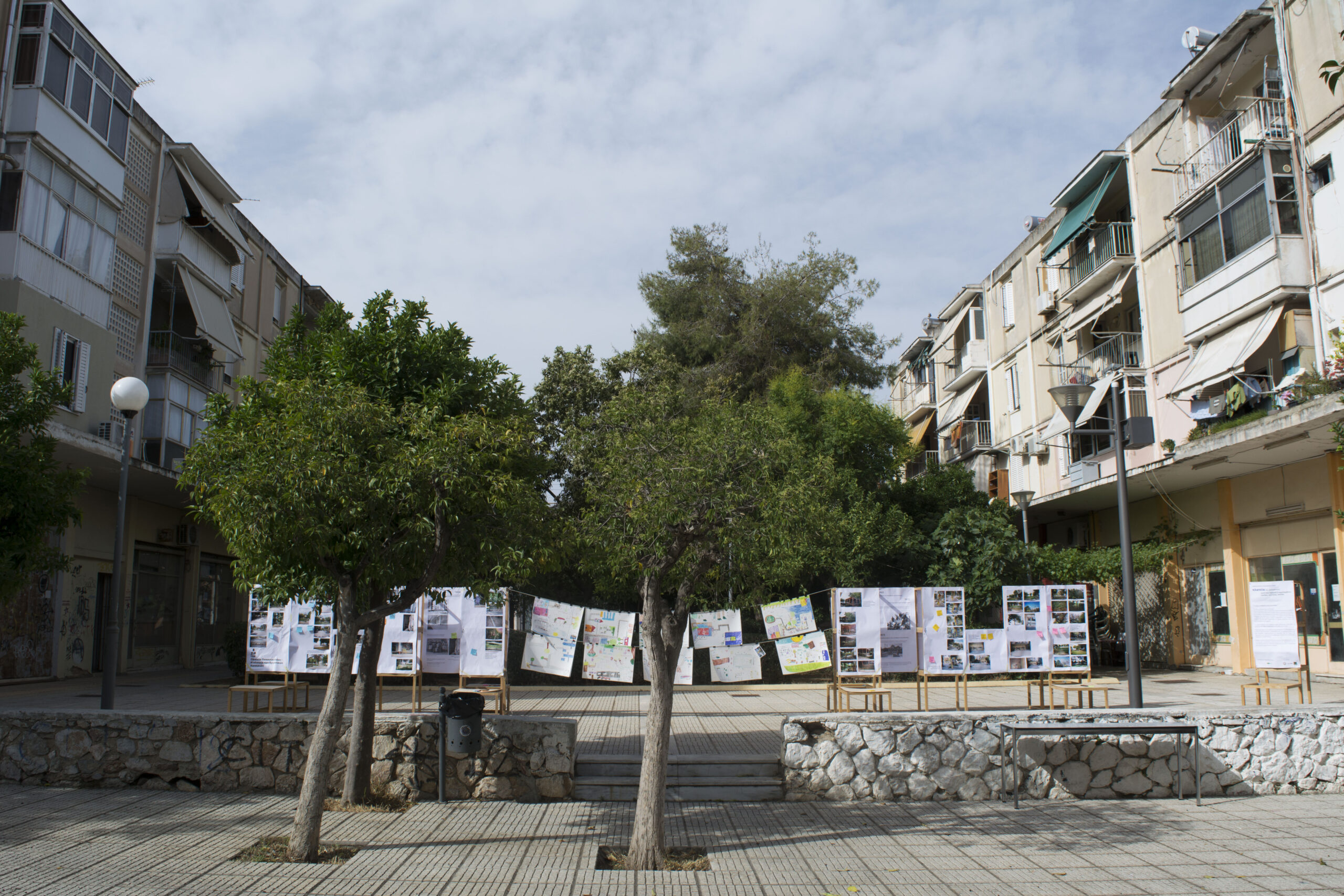
Since 2024, two ULLs — a public housing park in Aigaleo and a network of civic and cultural organisations in Turin — have turned that concept into practice through participatory action research, a method that gives residents the tools and knowledge to connect with, and change, their own built environment, rather than simply asking their opinion of it. Workshop by workshop, reclaimed materials are finding a second life in a community makerspace, residents and schoolchildren are co-designing interventions for their own square, and a growing circle of citizens, schools and organisations is sharing tools, time and materials across both cities. What is emerging is not only two local projects, but a replicable model, carried between neighbourhoods through a shared pattern language — for how circularity, participation and civic technology can cultivate CUE and communities of making.
the domains
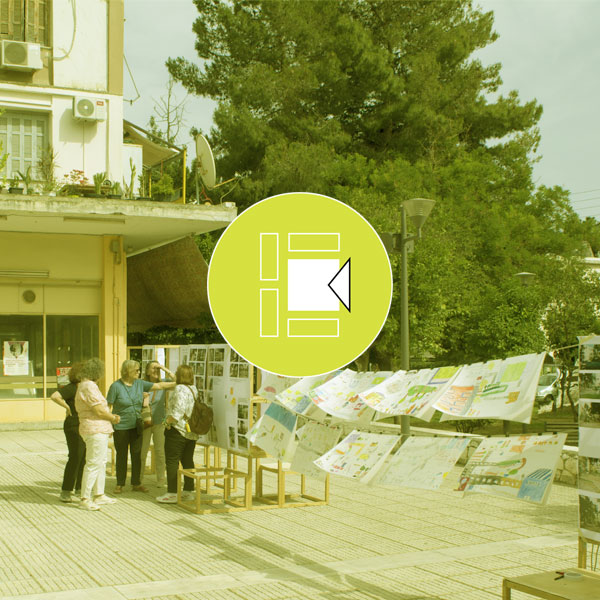
CORPUS treats public space as something residents design, not something designed for them. Through participatory action research, citizens, schoolchildren and local associations work directly alongside researchers to read, question and reshape the spaces they use every day — a housing-complex park in Aigaleo. The tools and vocabulary developed through this process are gathered into a shared pattern language, allowing what’s learned in one neighbourhood to inform the next.
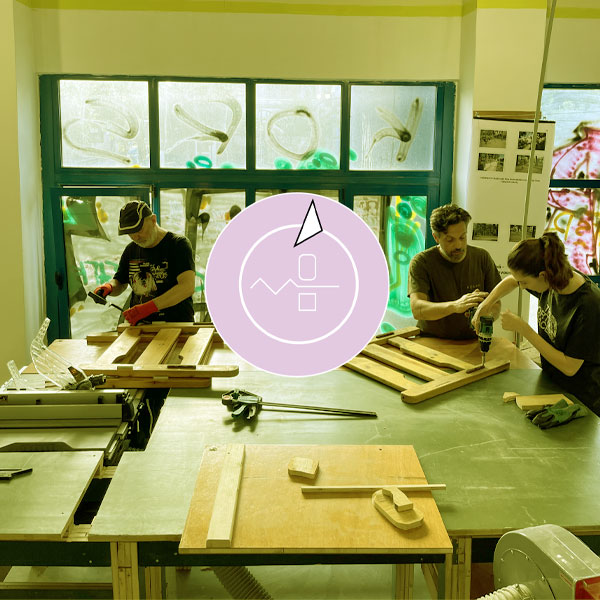
Large amounts of unused materials — reclaimed school furniture, construction offcuts, discarded fittings — are finding a second life through CORPUS’s community fab lab. At Scrapelo, Aigaleo’s converted municipal warehouse, residents work alongside craftspeople to turn reclaimed materials into public equipment, following design-for-reconstruction principles rather than producing new waste. The first outcome of this process, a workbench built entirely from reclaimed school blackboards, shows what circular construction can look like at neighbourhood scale.
CORPUS is testing how digital tools can support, rather than replace, community trust. Through COMMONSHOOD, a civic blockchain wallet developed by the University of Turin, participants exchange time, tools and materials using a local unit of value — turning everyday acts of reciprocity into a transparent, community-managed system. The approach favours accessibility and low environmental impact over the speculative logic of most blockchain applications, keeping the technology in service of the neighbourhood rather than the other way round.
CORPUS consortium

University of Turin

Municipality of Aigaleo

Open Lab Athens

FBW Architects + Urbanists

Urban Design – TU Delft
Città di Torino – Circoscrizione 4
in collaboration with
Rokani – Construction Cooperative
Les Petites Madeleines Association
“CORPUS understands the retrofitting of public space not as a design intervention alone, but as a site for investigating how circular economies, participatory governance and civic technologies can be brought into productive relation with one another. Its findings are developed and refined across two Urban Living Labs, in Aigaleo and Turin”.
funded by