
circularity and participation in practice
Building on the first cycle of engagement with the 20th Primary School of Aigaleo, the Urban Living Lab entered a second cycle designed to move circularity and participation from ideas into practice. The aim was twofold: to let students experience circular economy directly — by turning their own classroom waste into building material — and to give them the tools of space design, so that their observations of the neighbourhood could become concrete, buildable proposals for the square and playground of the social housing complex. Rather than learning about circularity and participatory design in the abstract, the children would do both, step by step.
The cycle was structured to connect with the school’s own educational goals. It wove together environmental awareness, collaborative decision-making and hands-on making, and it alternated between activities run in the classroom by teachers and activities facilitated by the CORPUS research team. Seven classes took part, and the sequence deliberately moved from material, to scale, to model, to collective choice, and finally to design — each stage handing the students a little more responsibility for shaping the outcome.
From waste to material
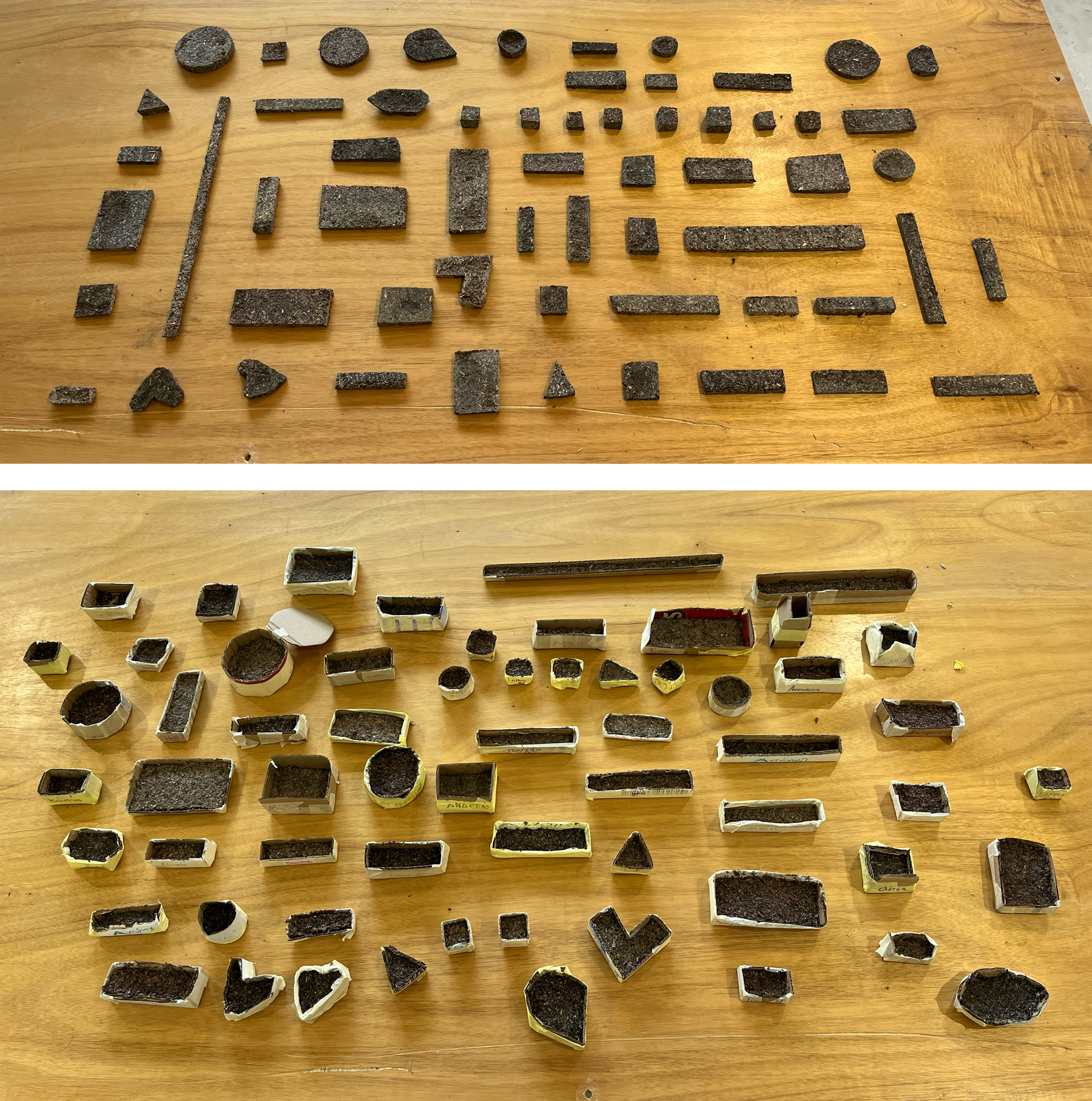
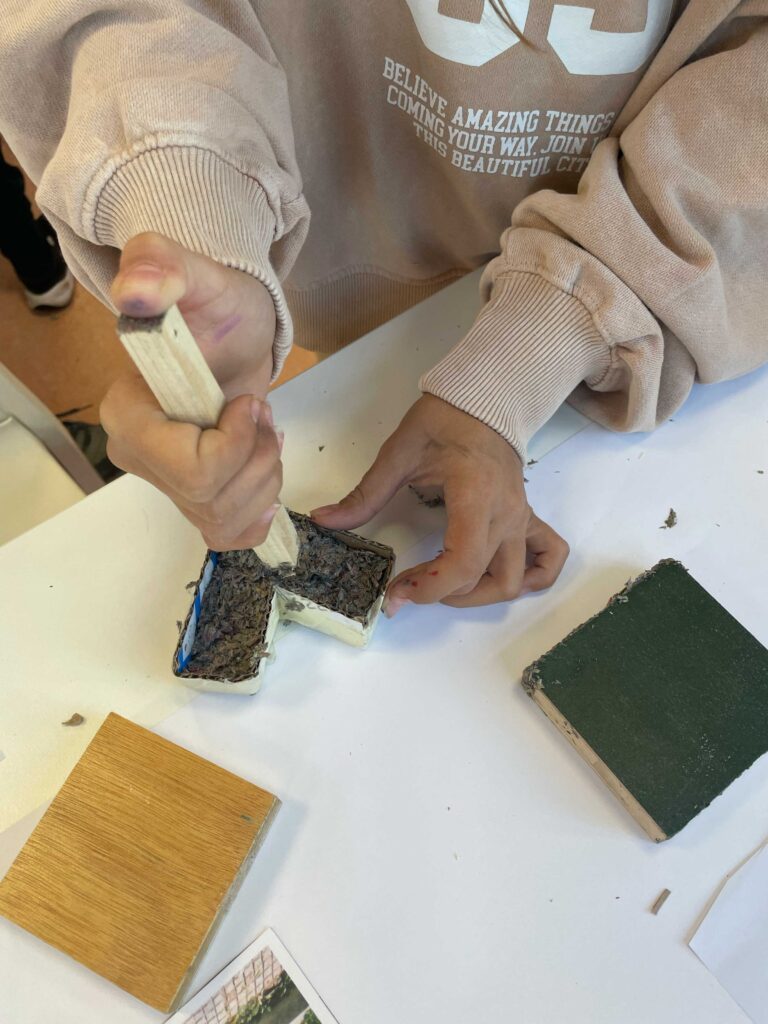
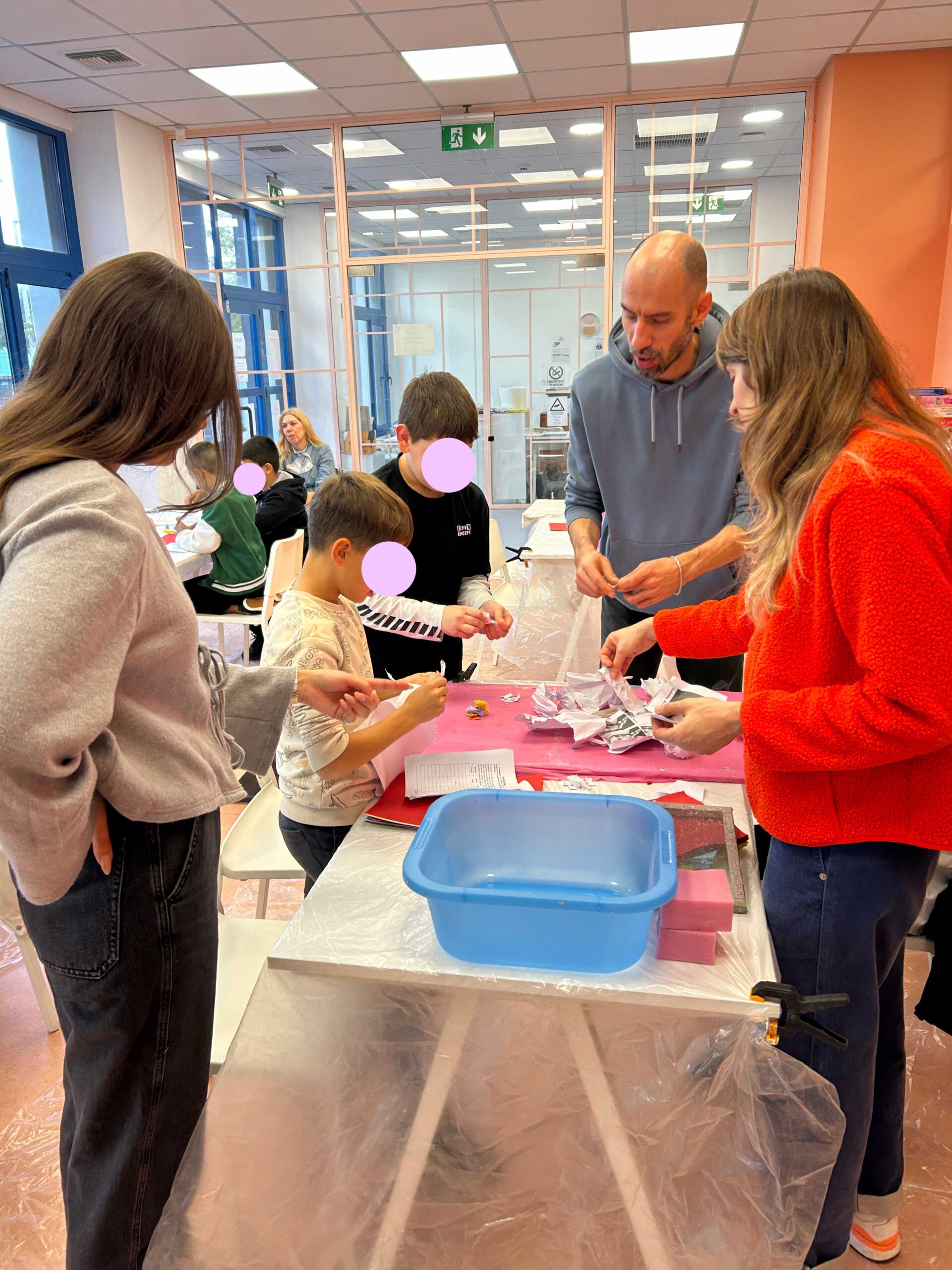
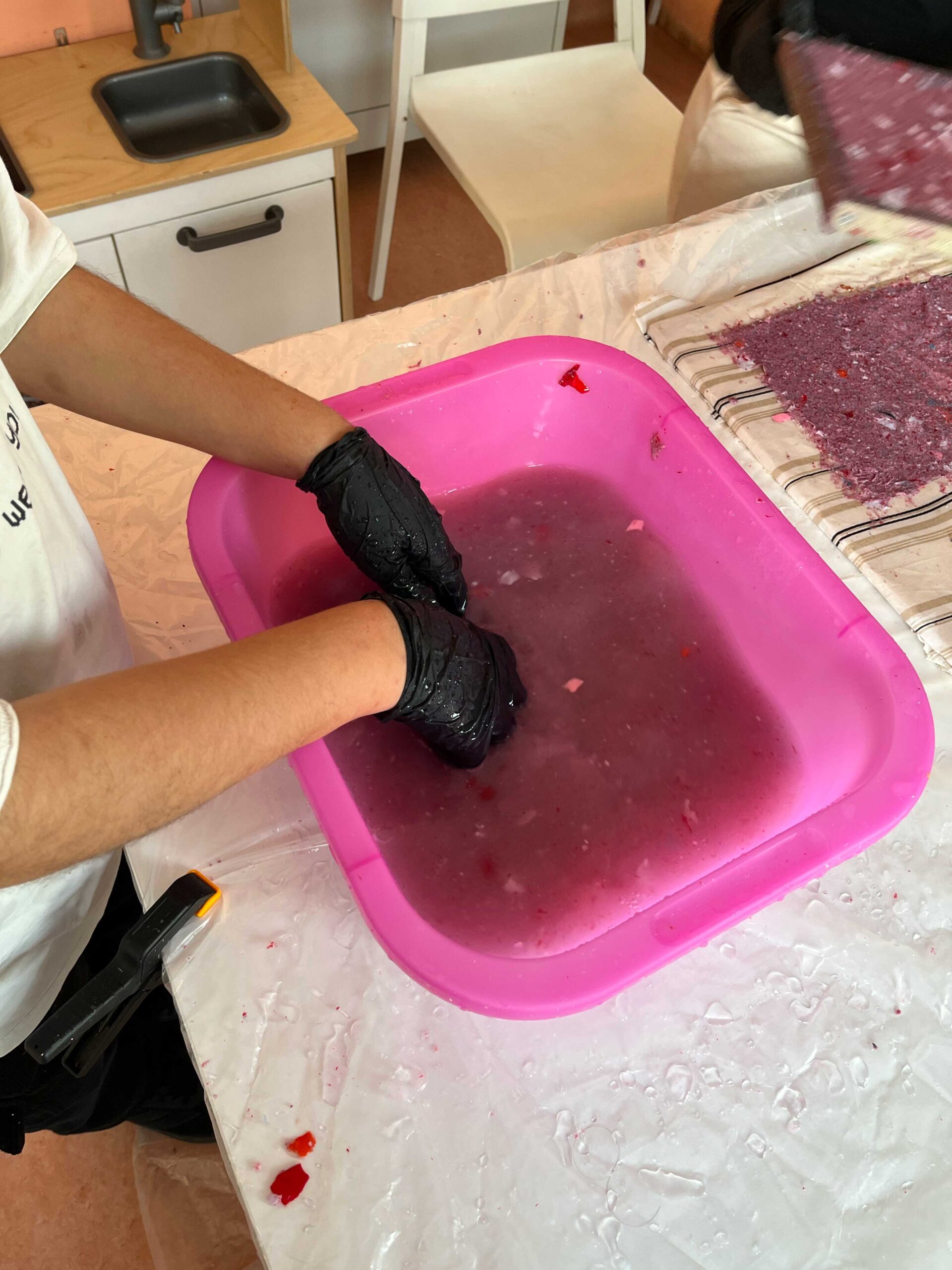
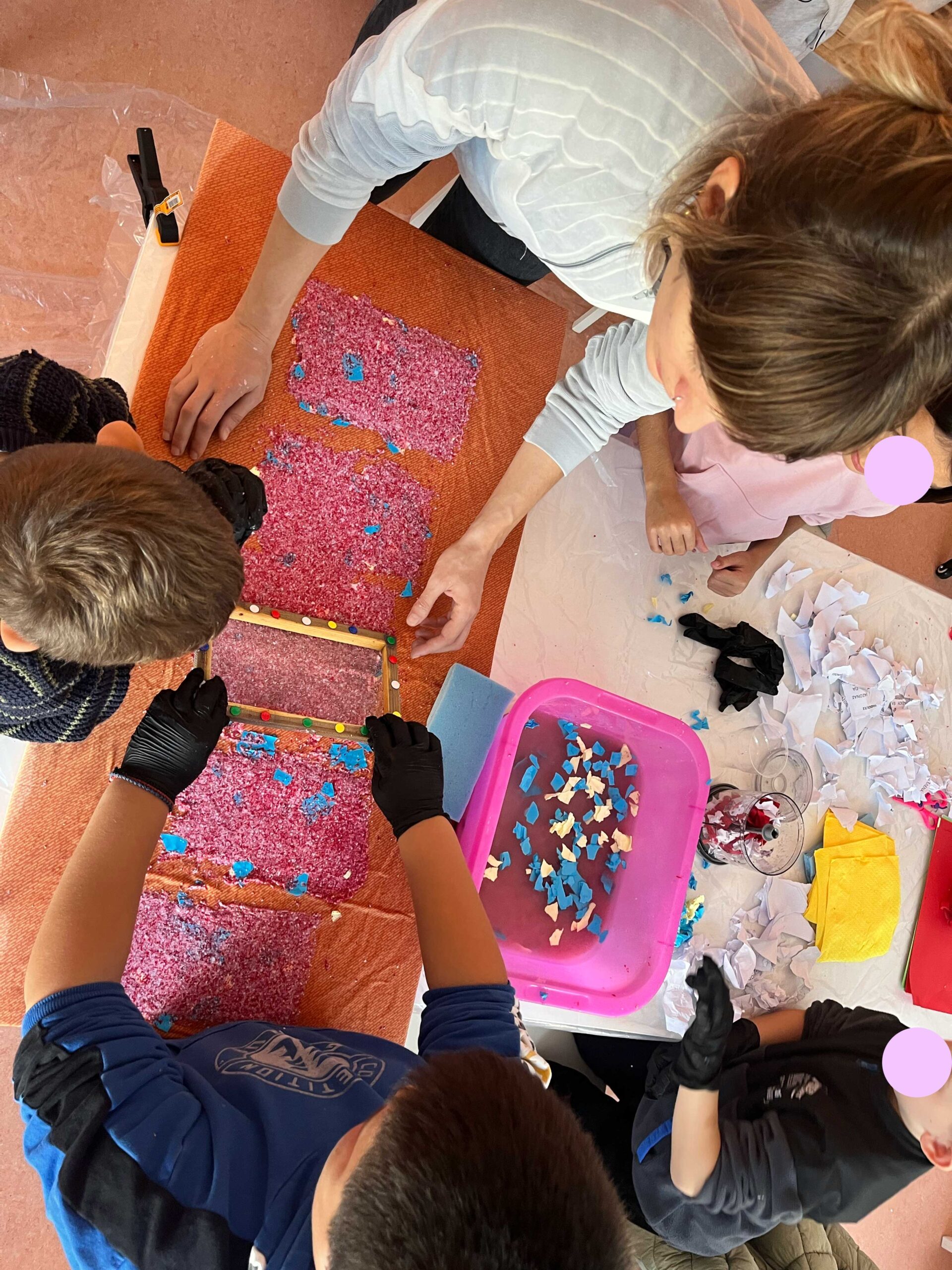
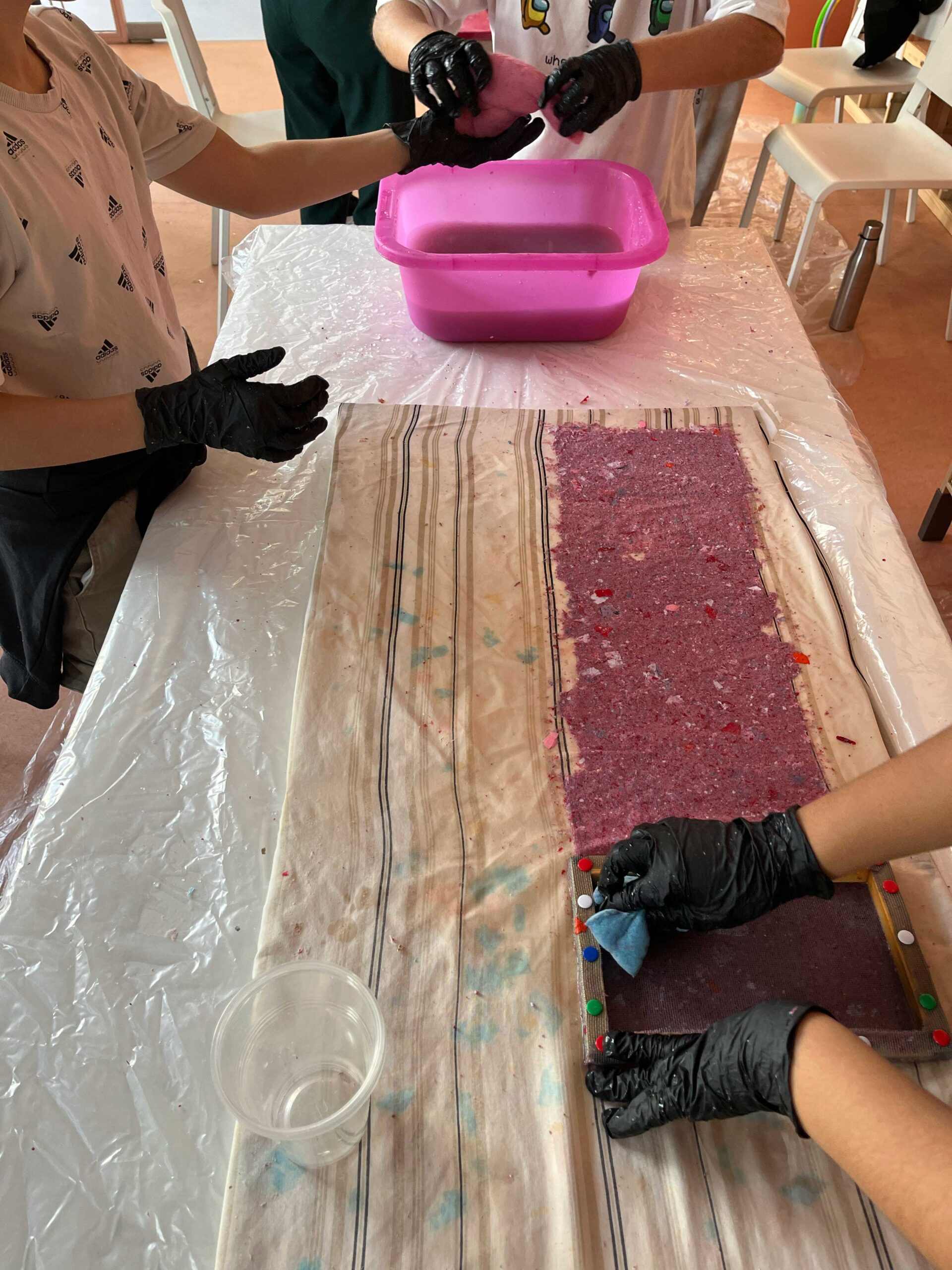
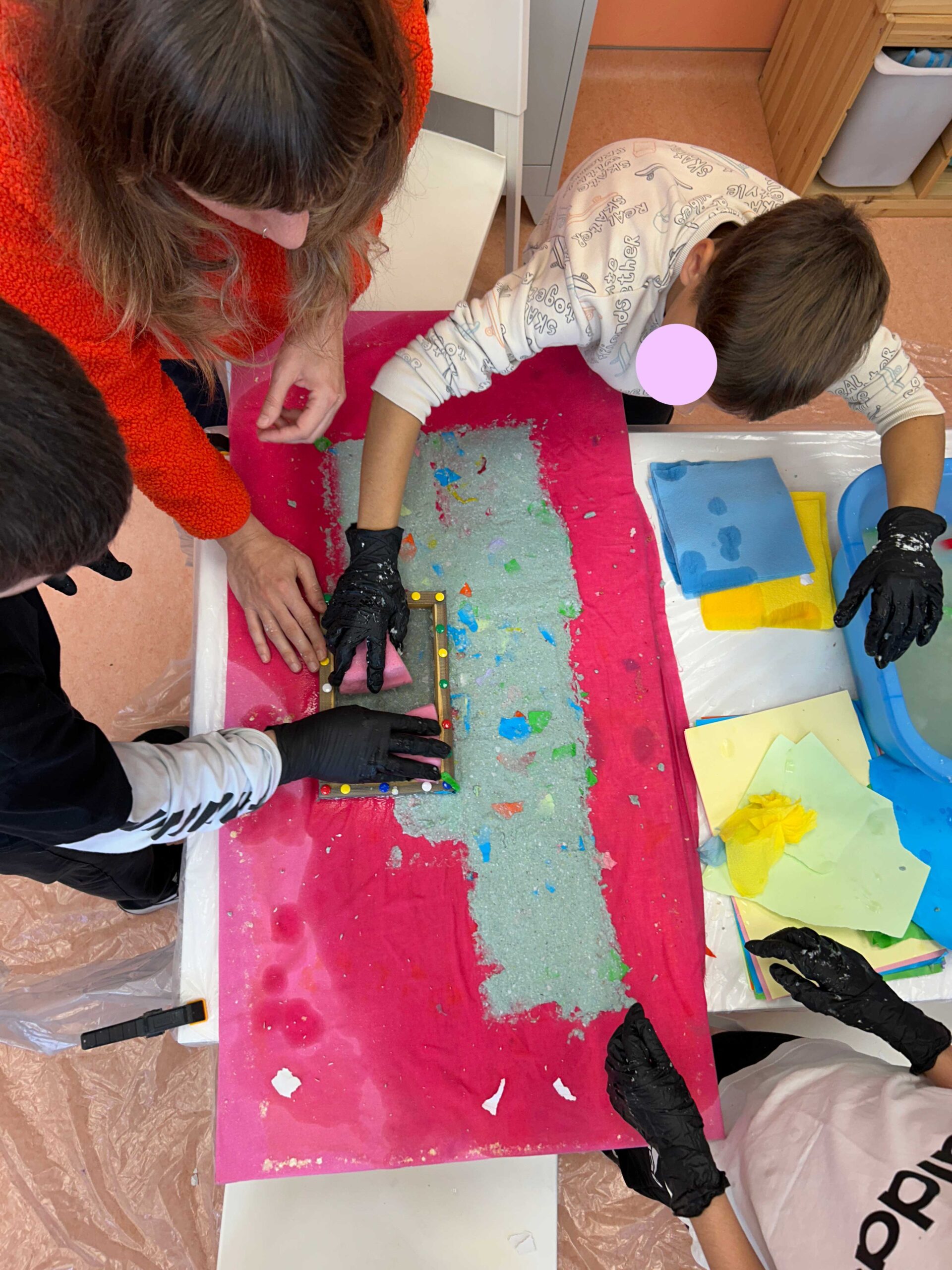
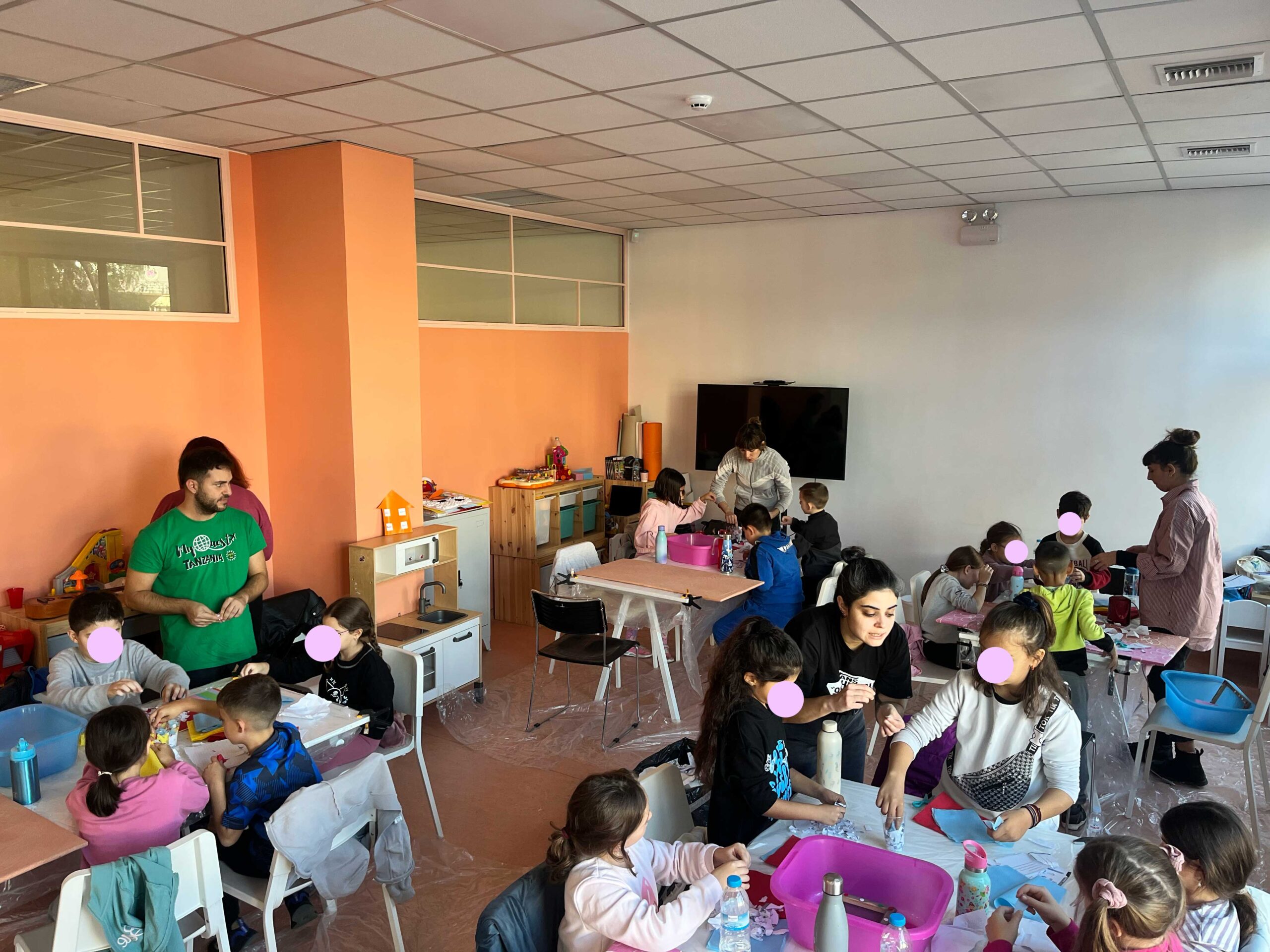
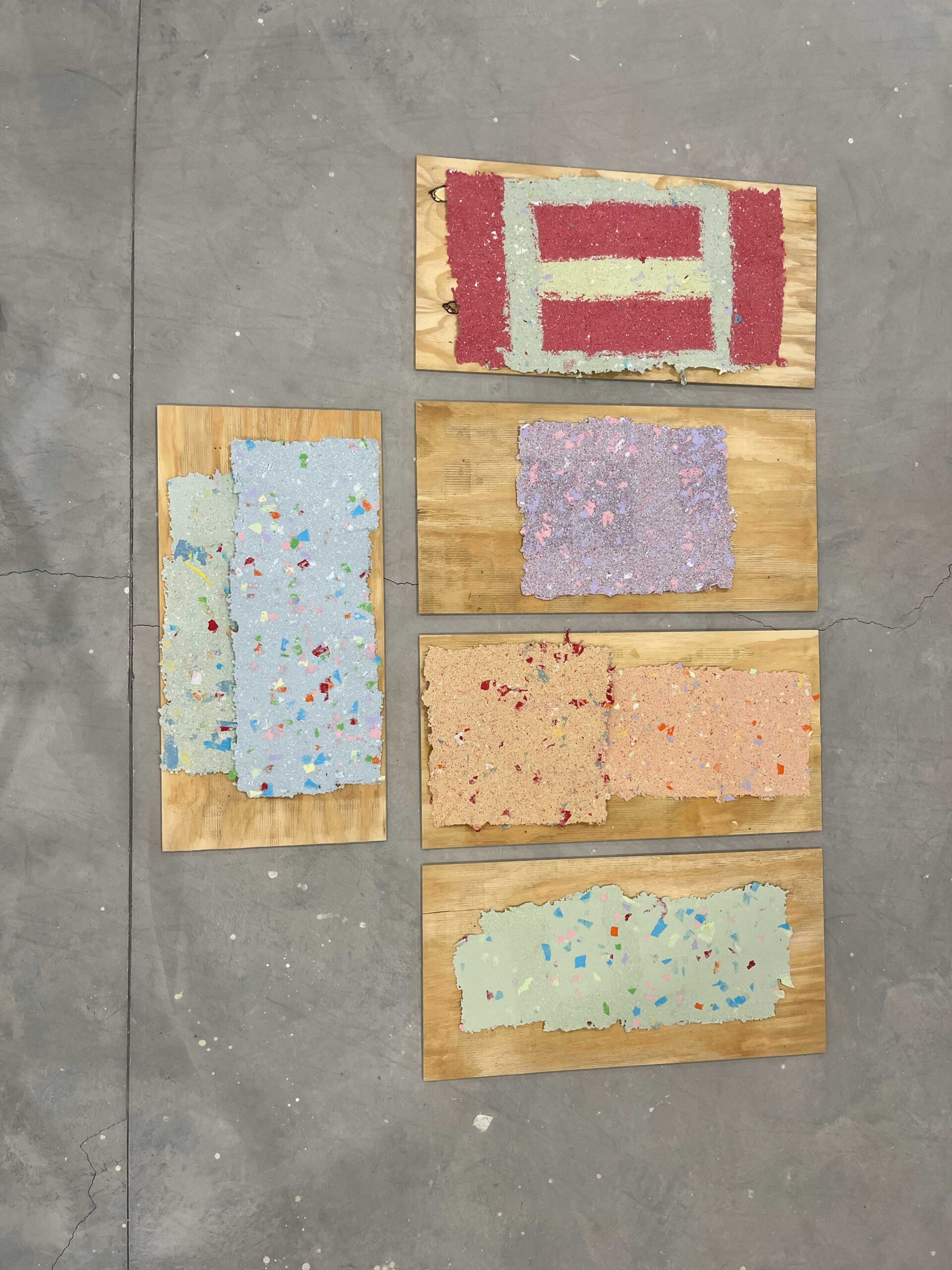
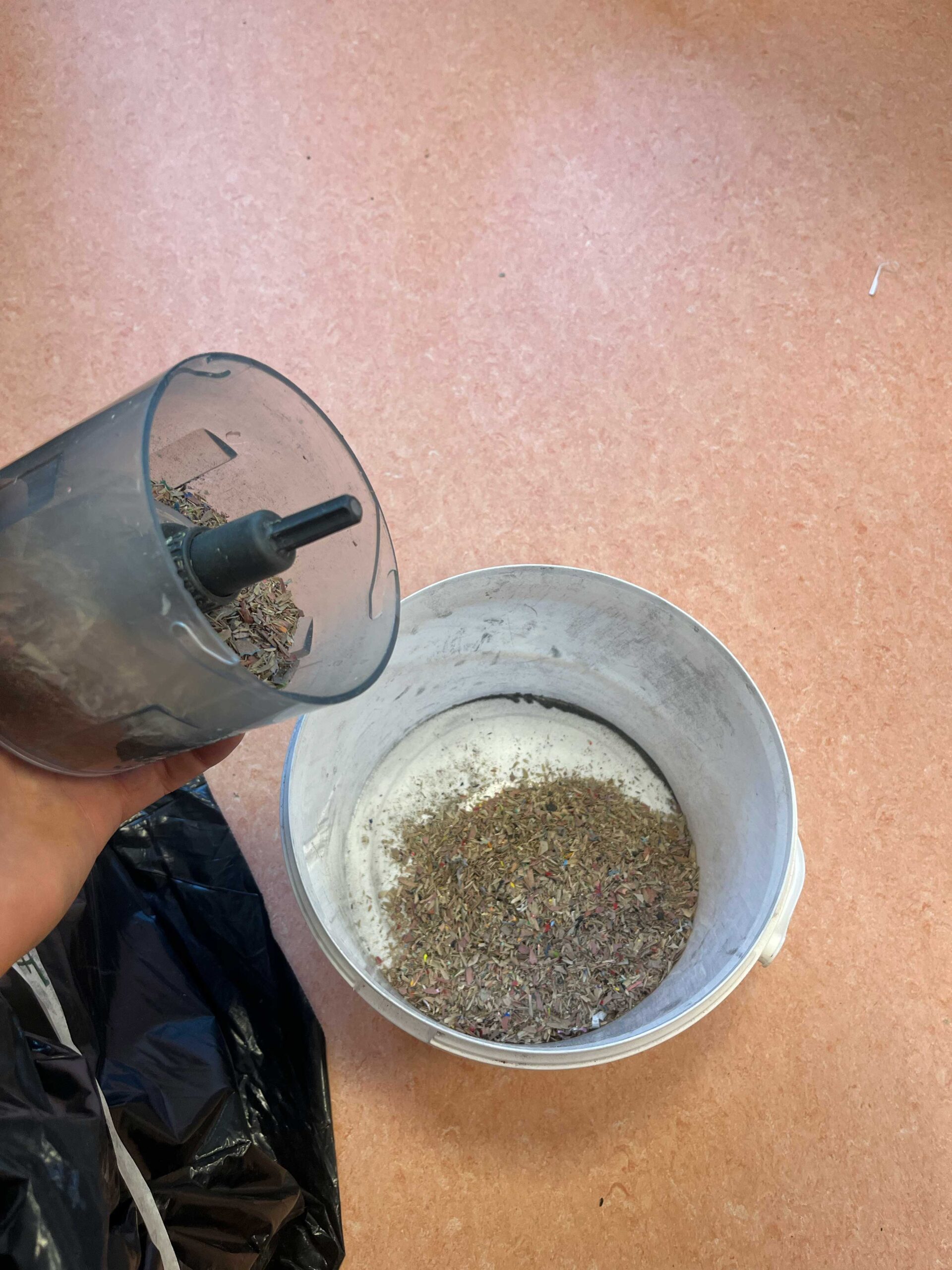
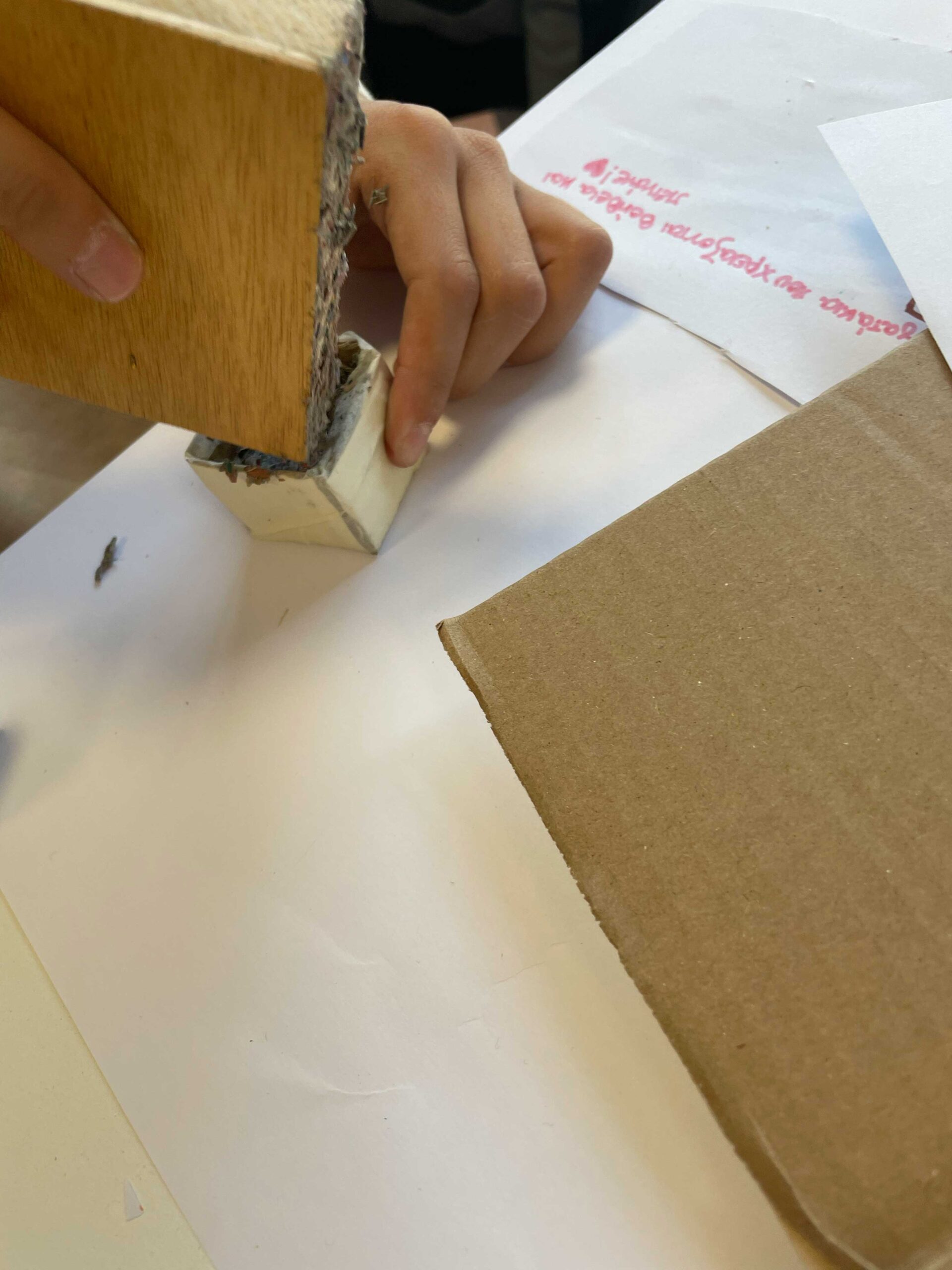
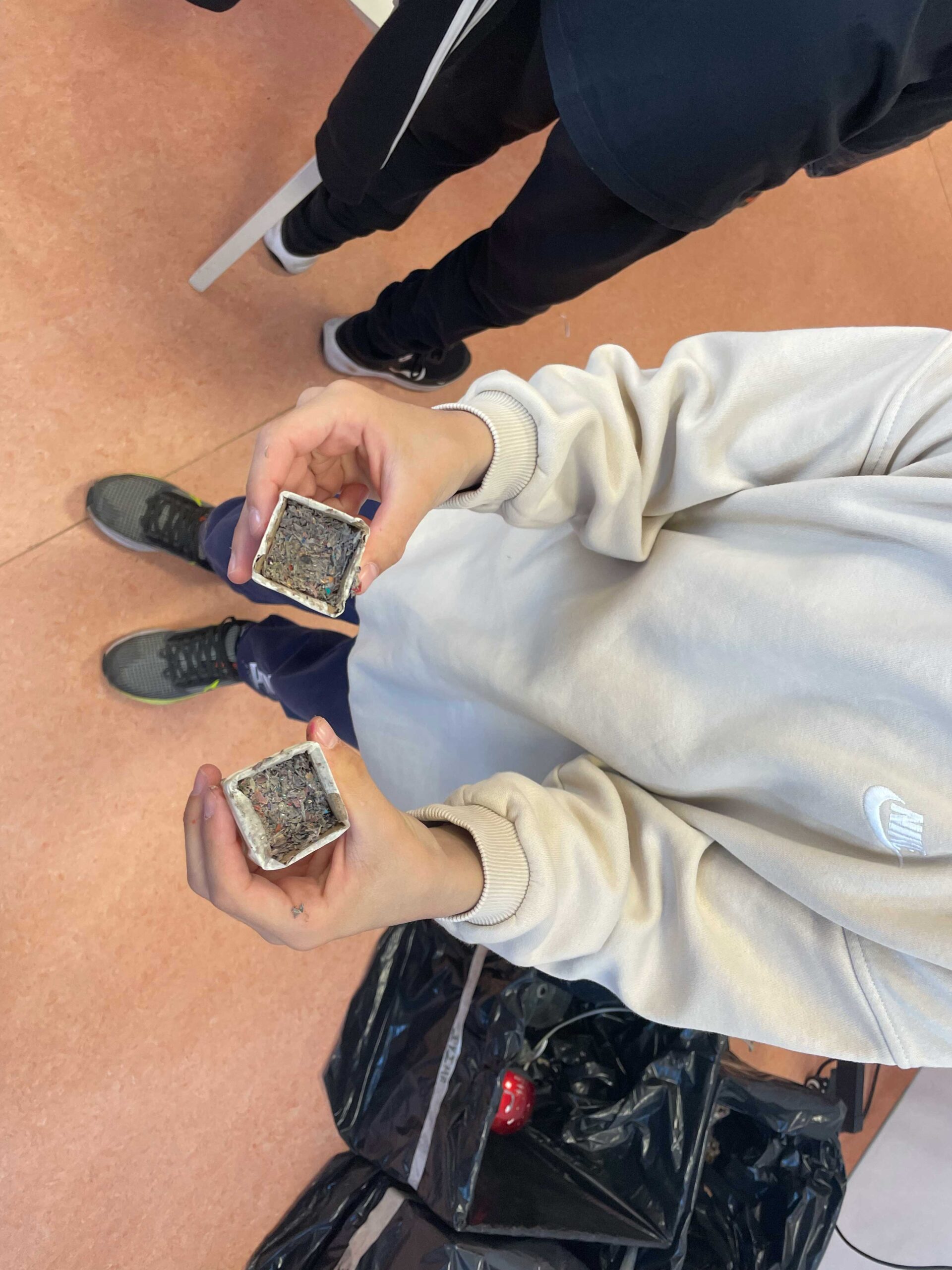
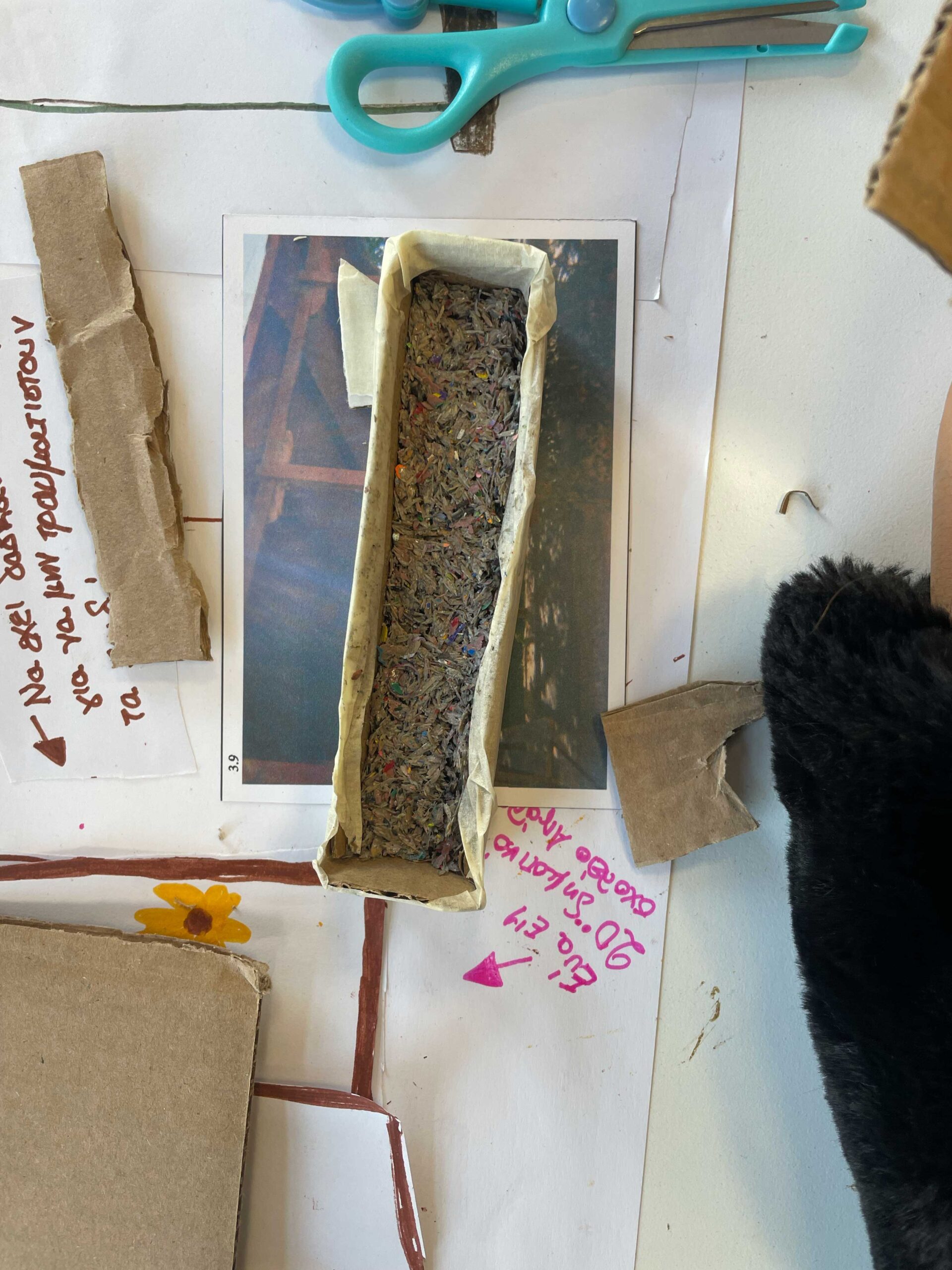
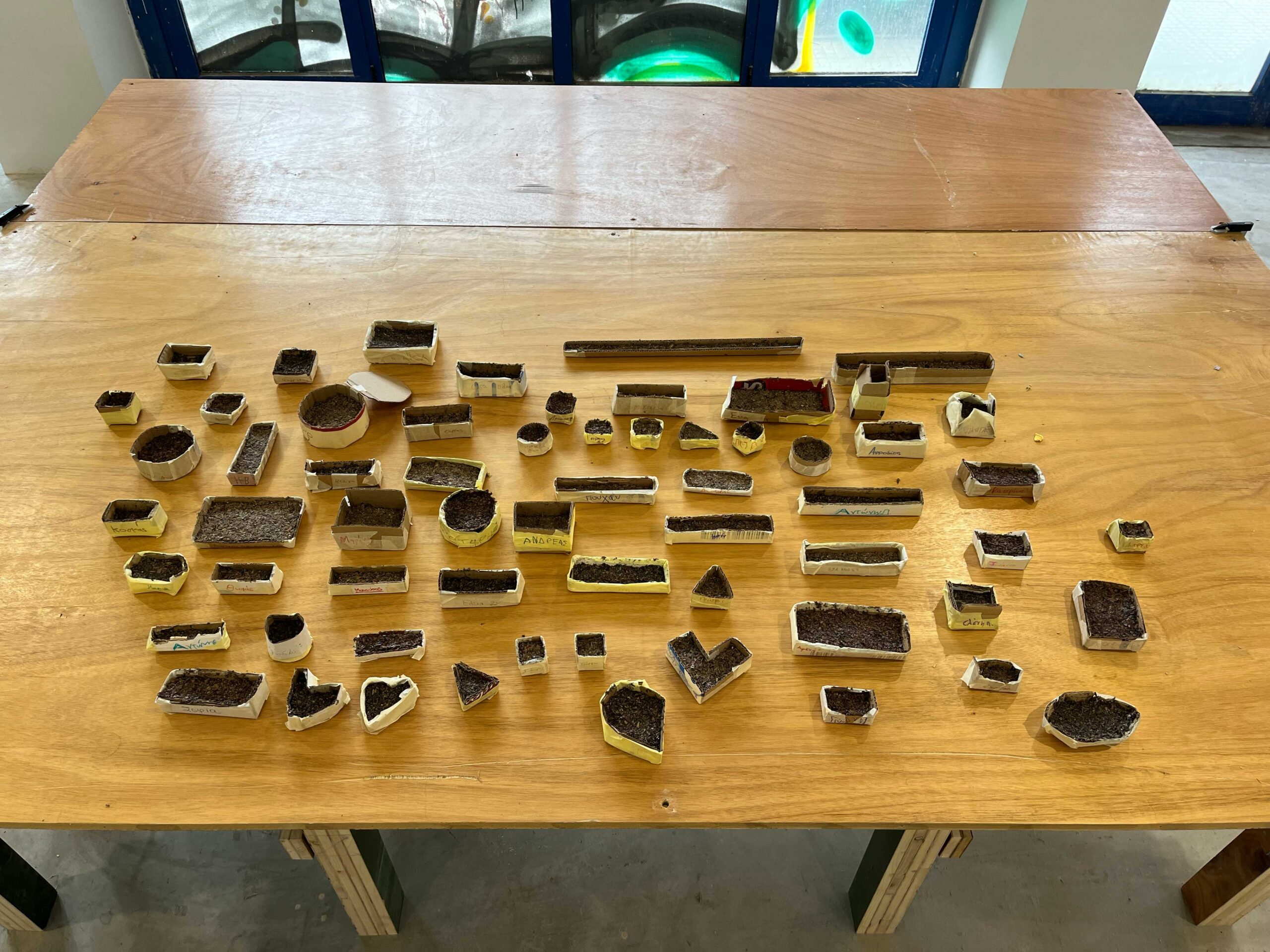
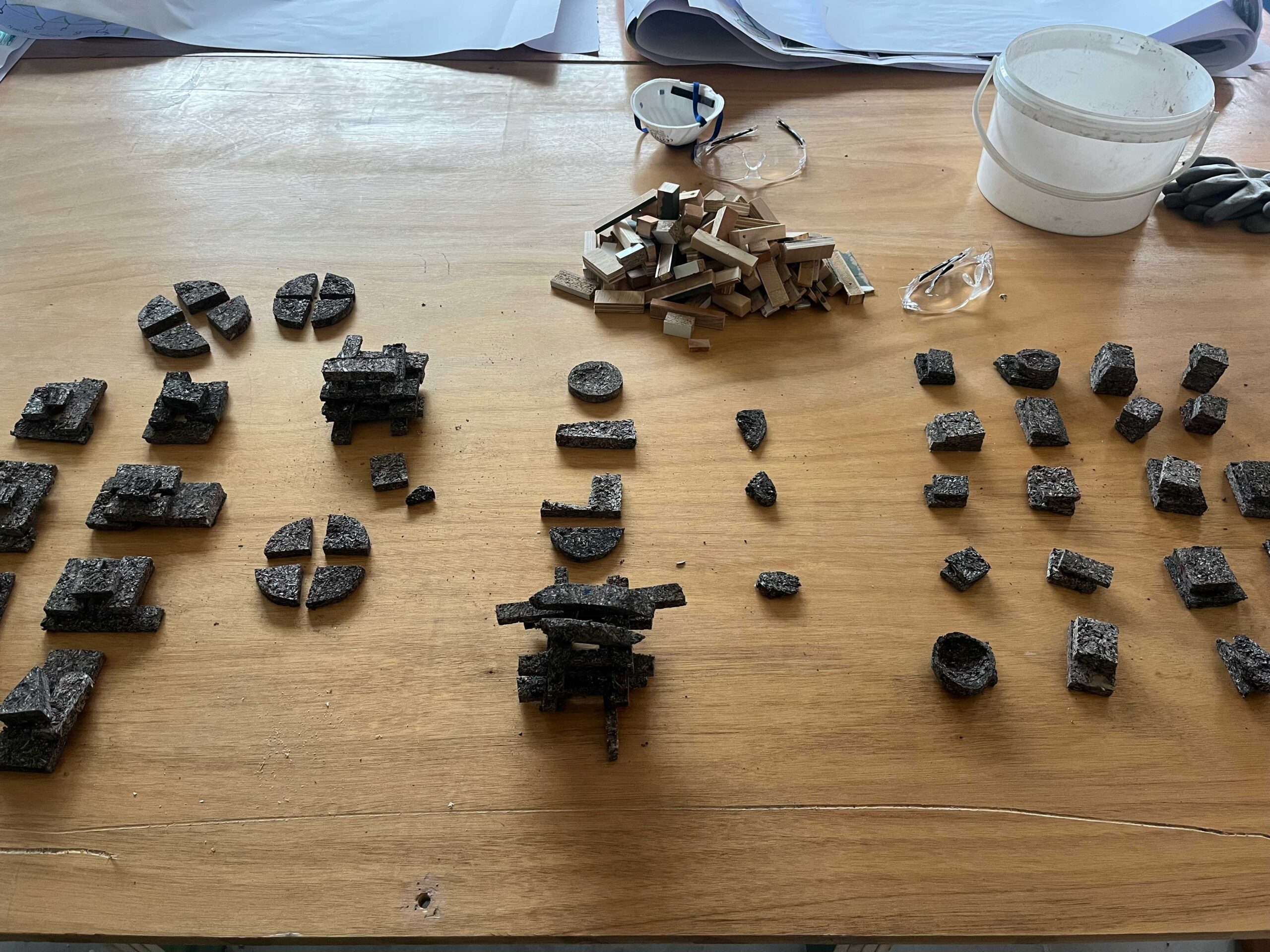
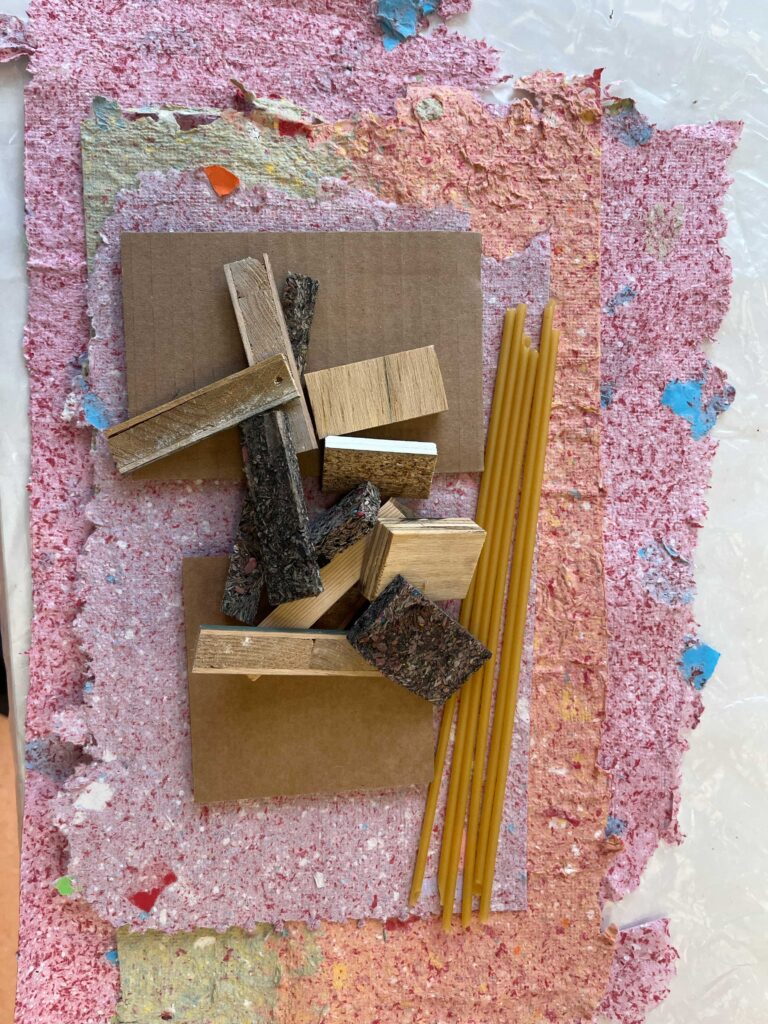
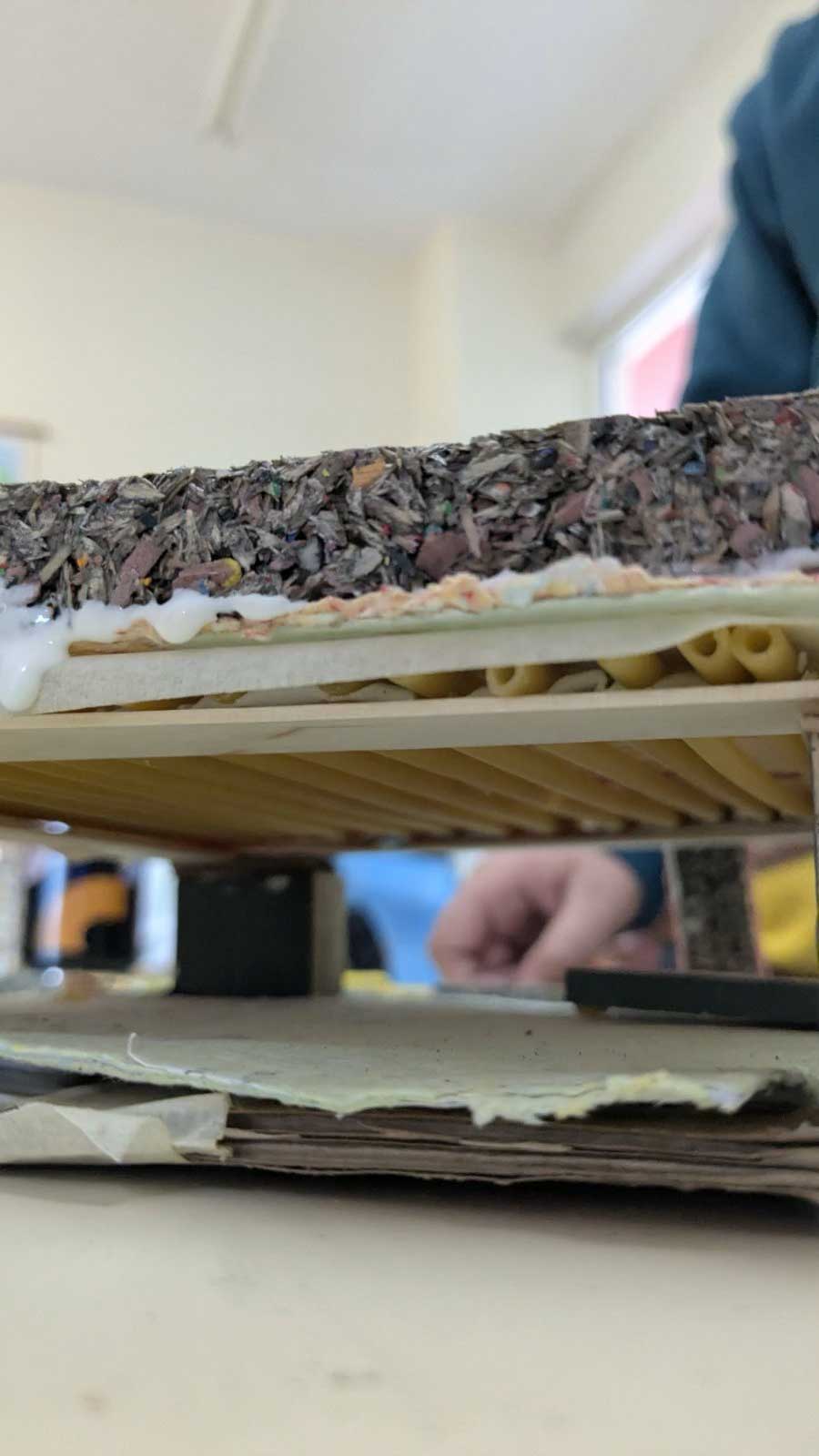
The cycle opened with recycling and material processing, carried out within the participating classrooms. Two bins were placed in each class — one exclusively for paper, one for pencil shavings — and over the following weeks students collected these everyday “wastes” as raw material. The paper was cut into small pieces, soaked in water and turned into pulp, which was pressed into sheets of colourful recycled cardboard. The pencil shavings, handled by the 5th and 6th grades, were mixed with wood glue to produce small “bricks” in a range of sizes and shapes. Nothing was thrown away: both materials would become the literal building blocks of the models to come — a first, tangible encounter with upcycling as a design practice.
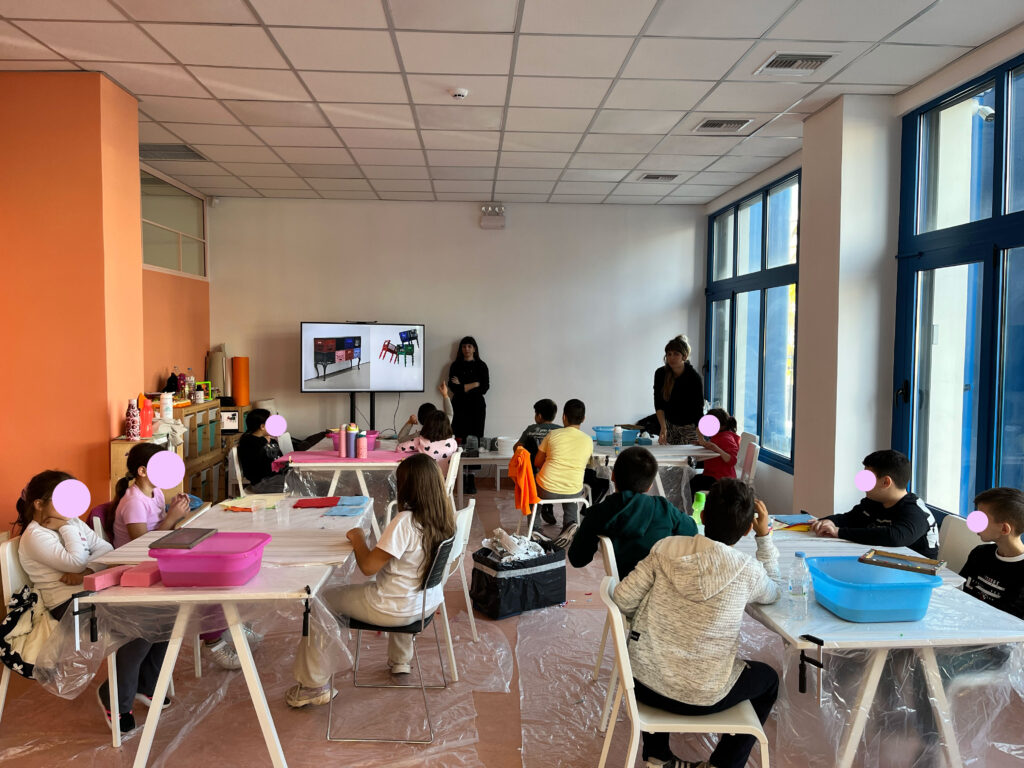
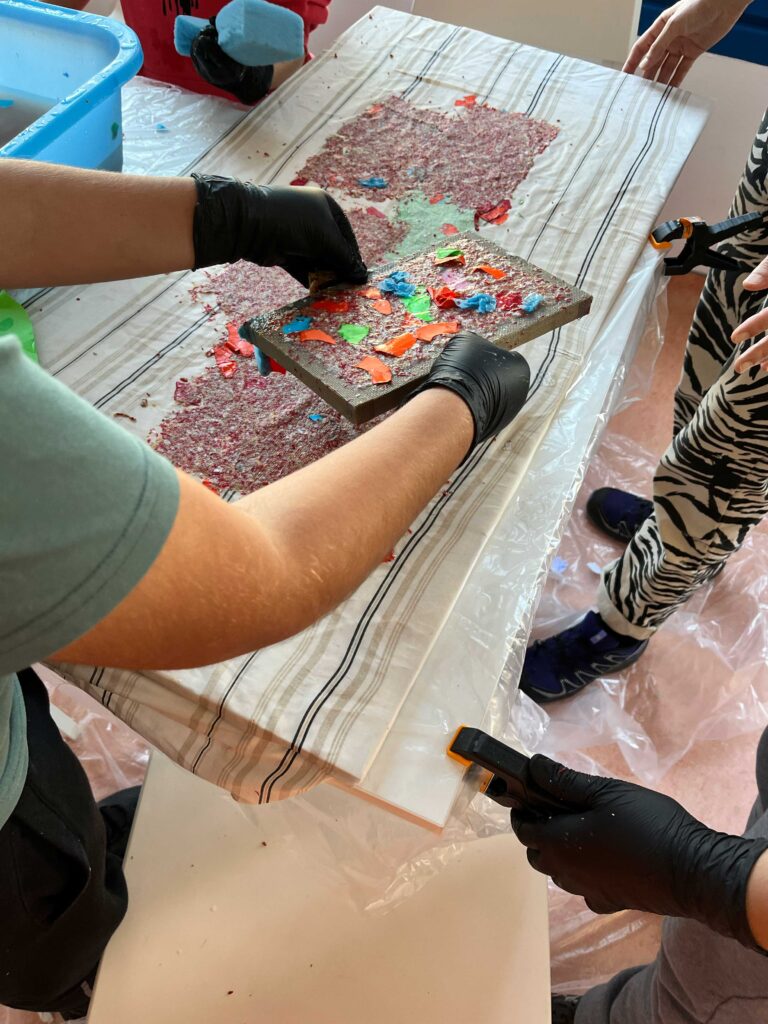
Paper making workshop
Brick making workshop
Introducing scale
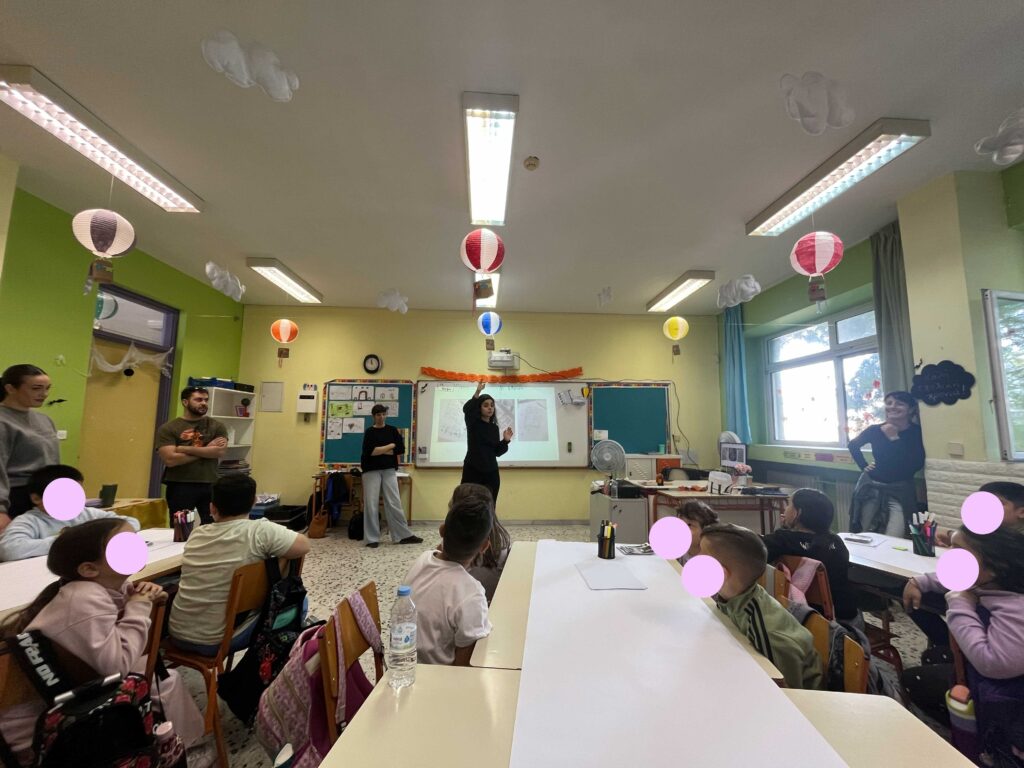
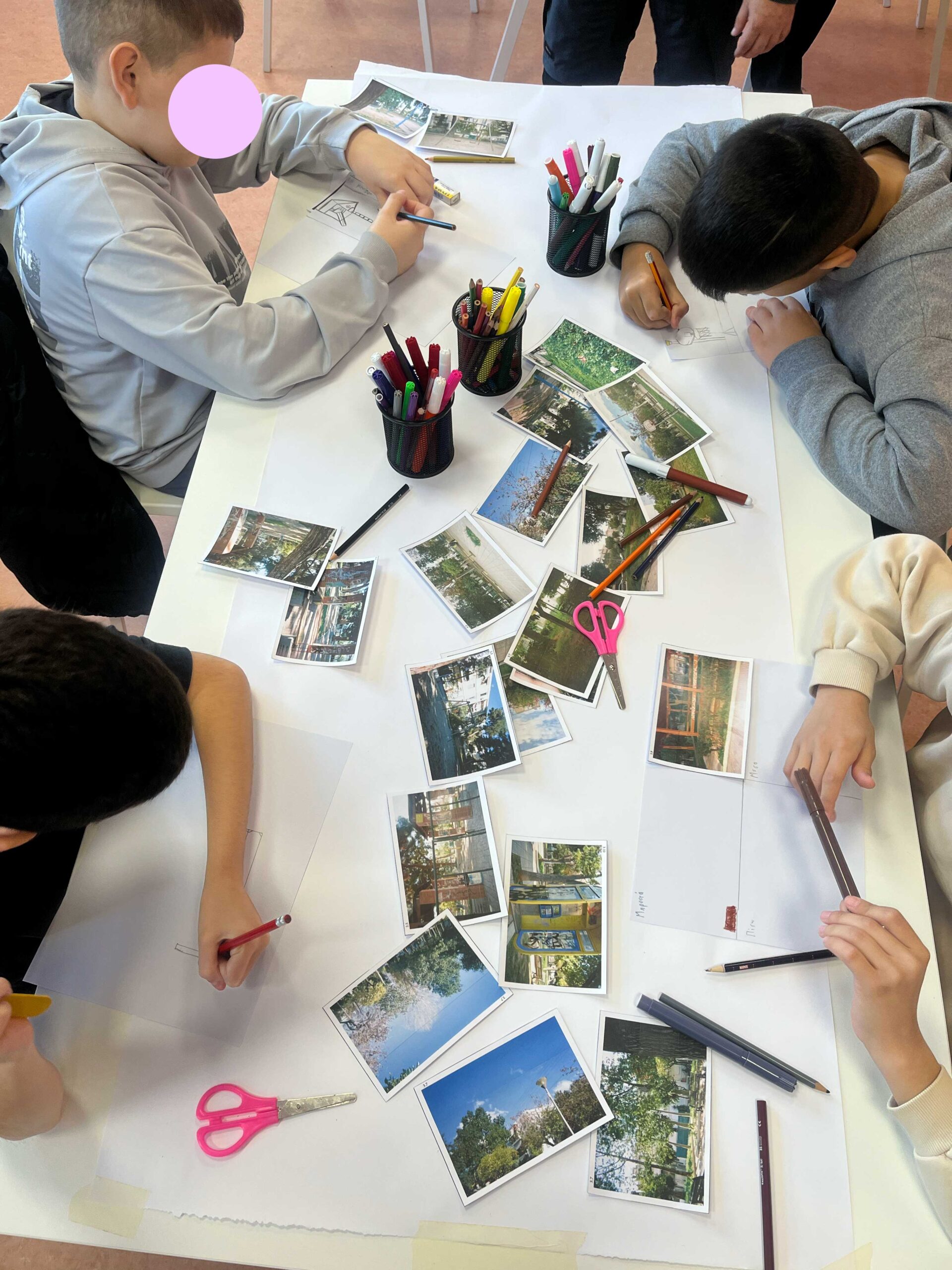
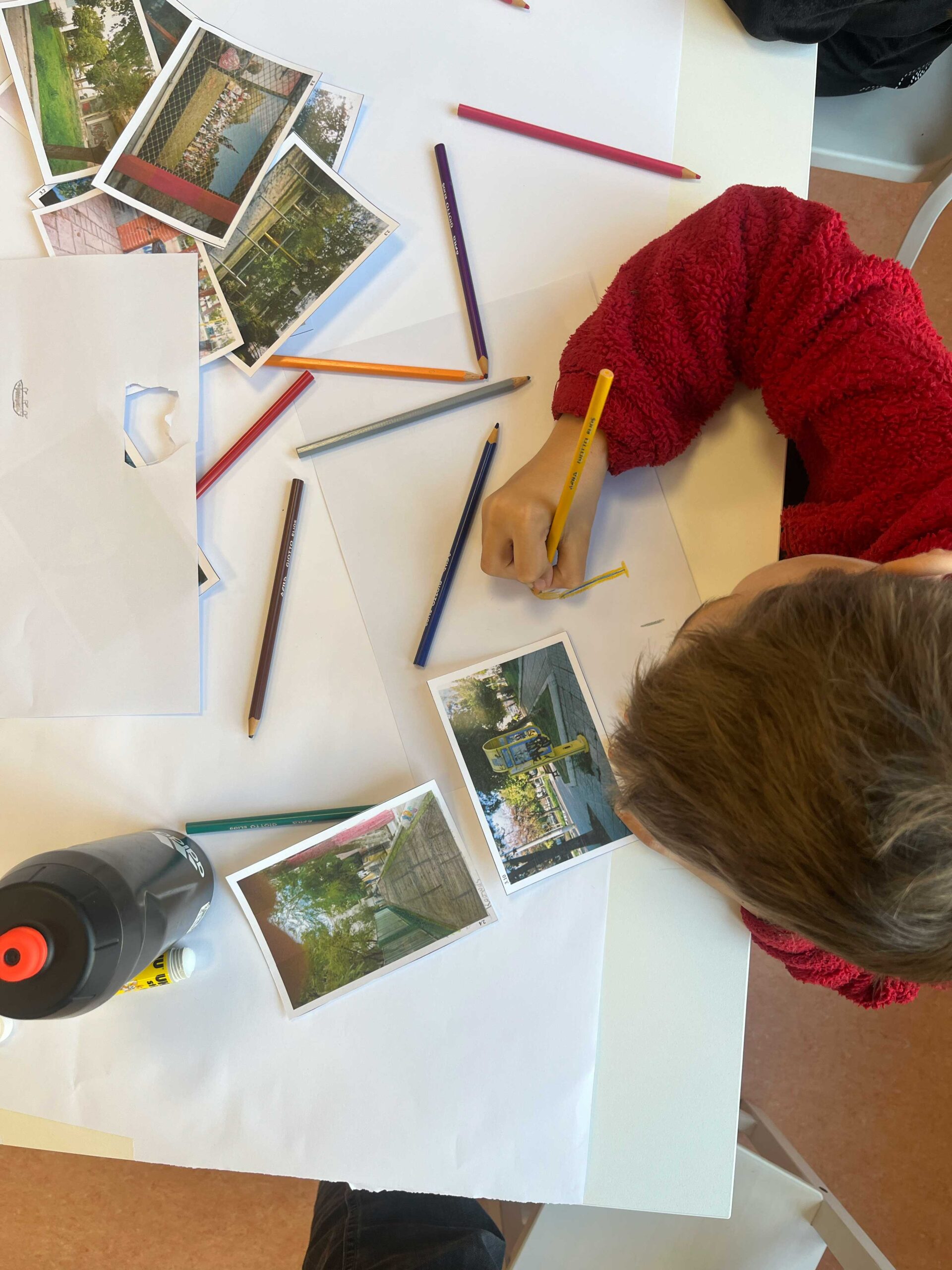
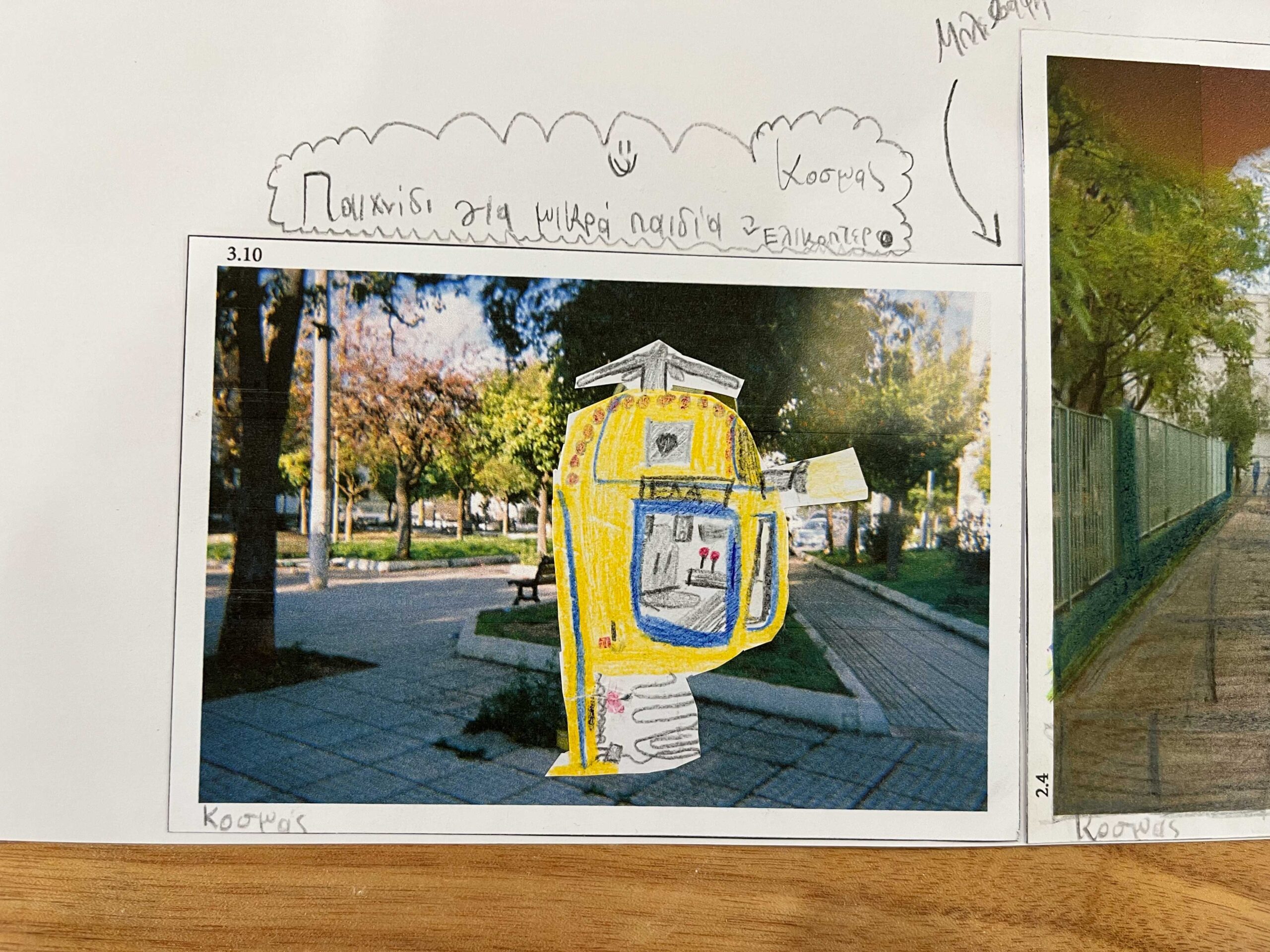
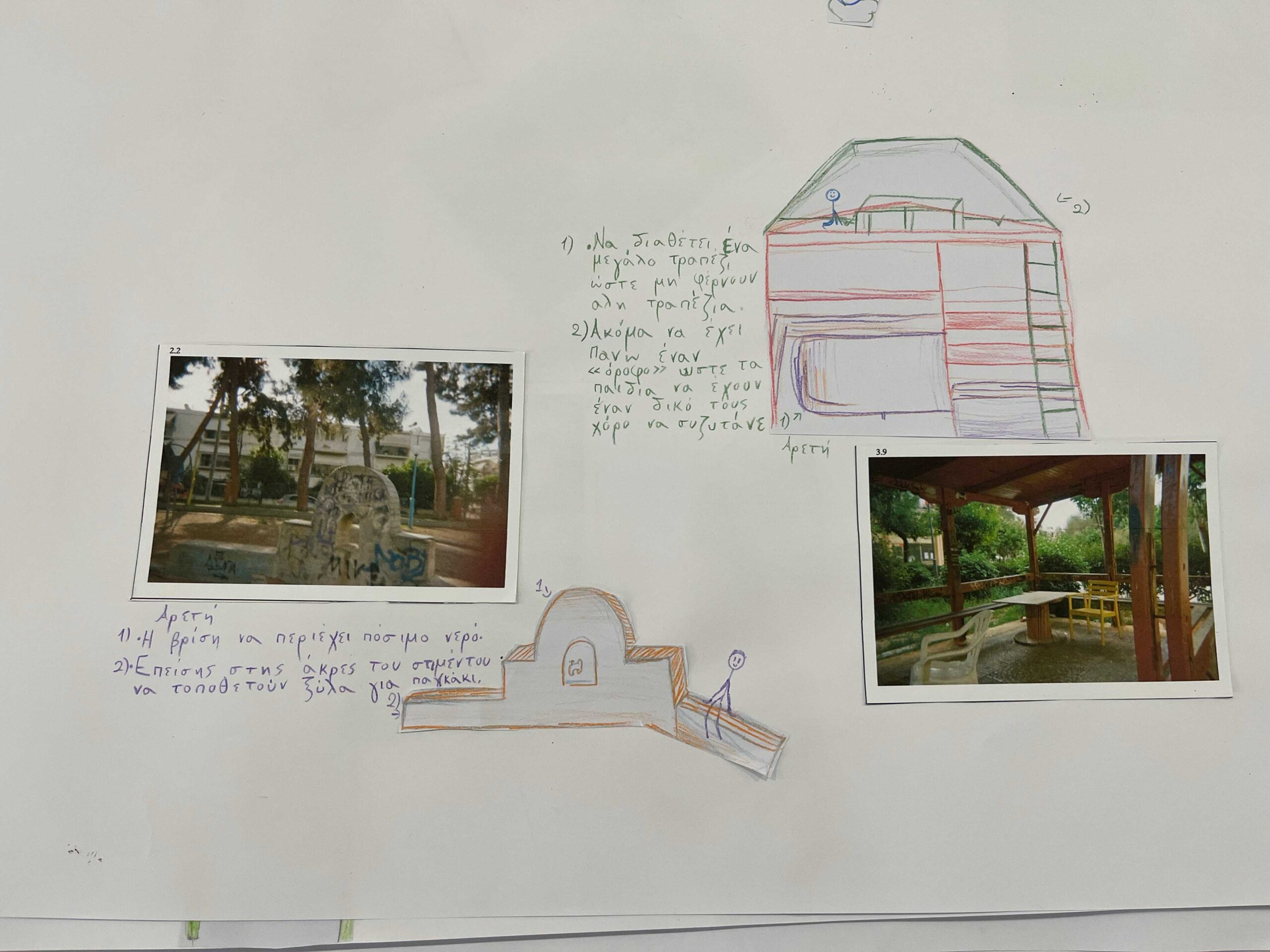
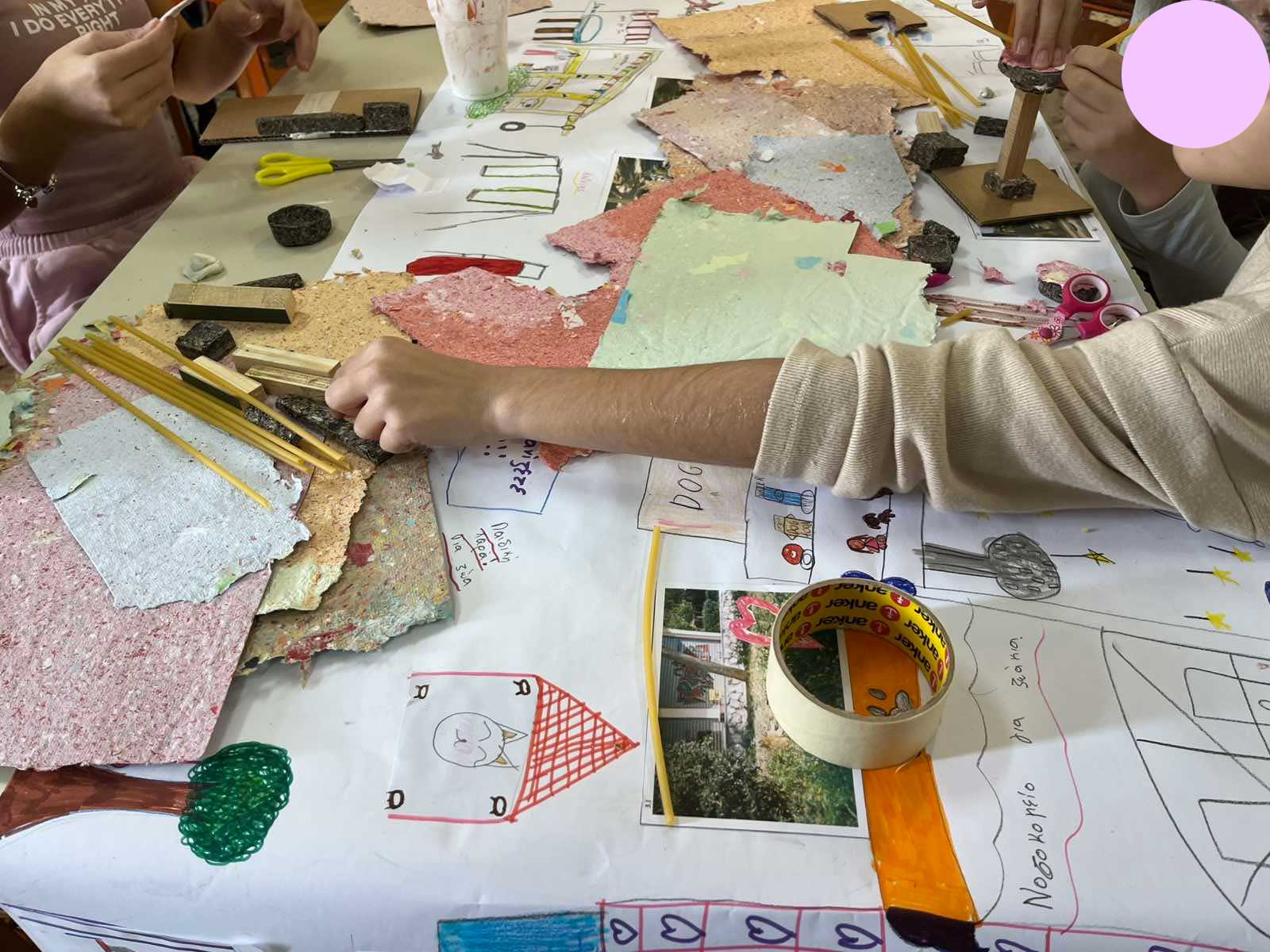
With materials in hand, the research team introduced the concept of scale — what it means, and how it lets you design and build something before it exists at full size. Drawing on the photographs the students had taken of the square and playground in the earlier phase, the children created collages that translated their first impressions into design intentions: what they wanted to keep, and what they imagined adding.
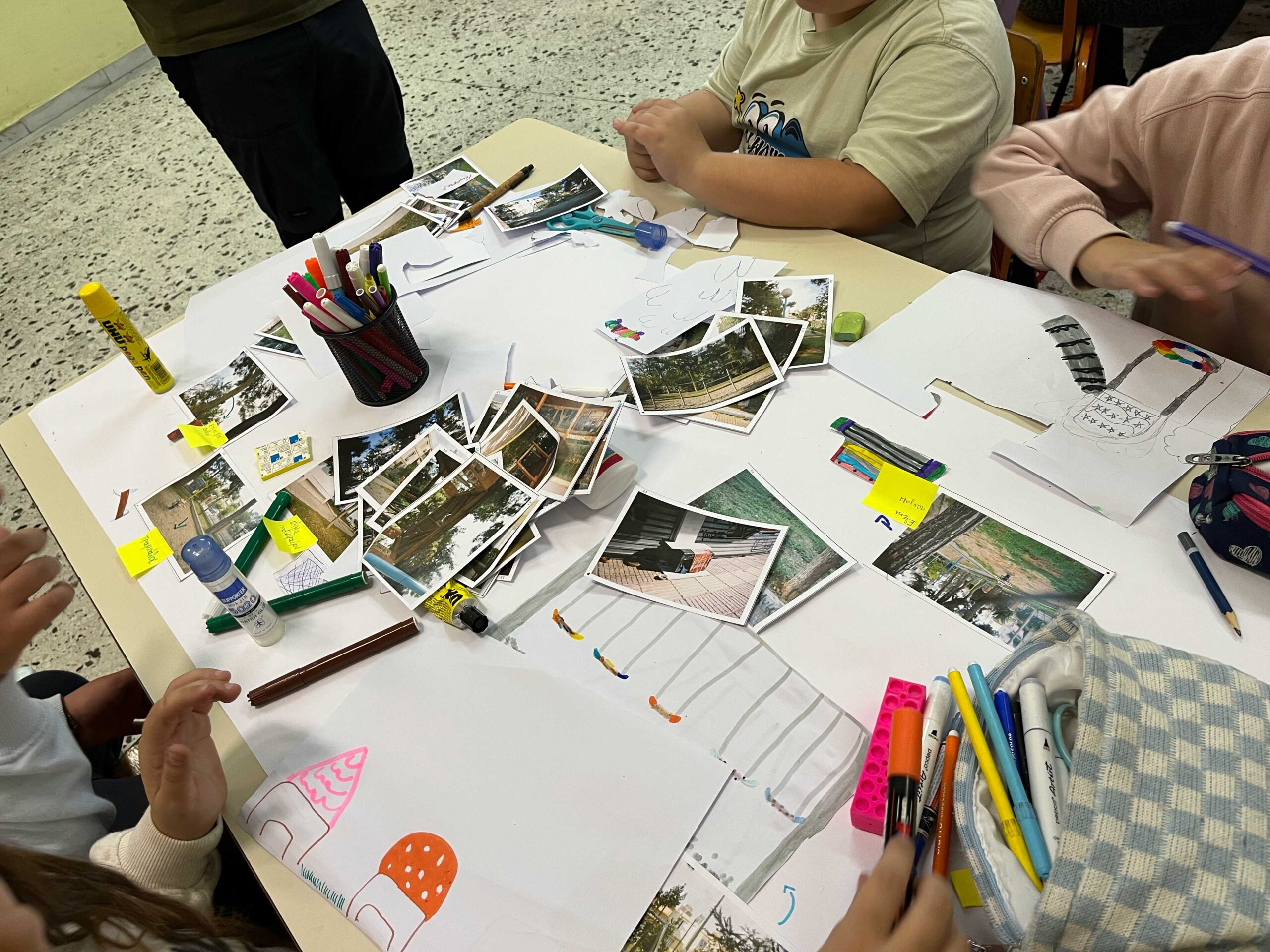
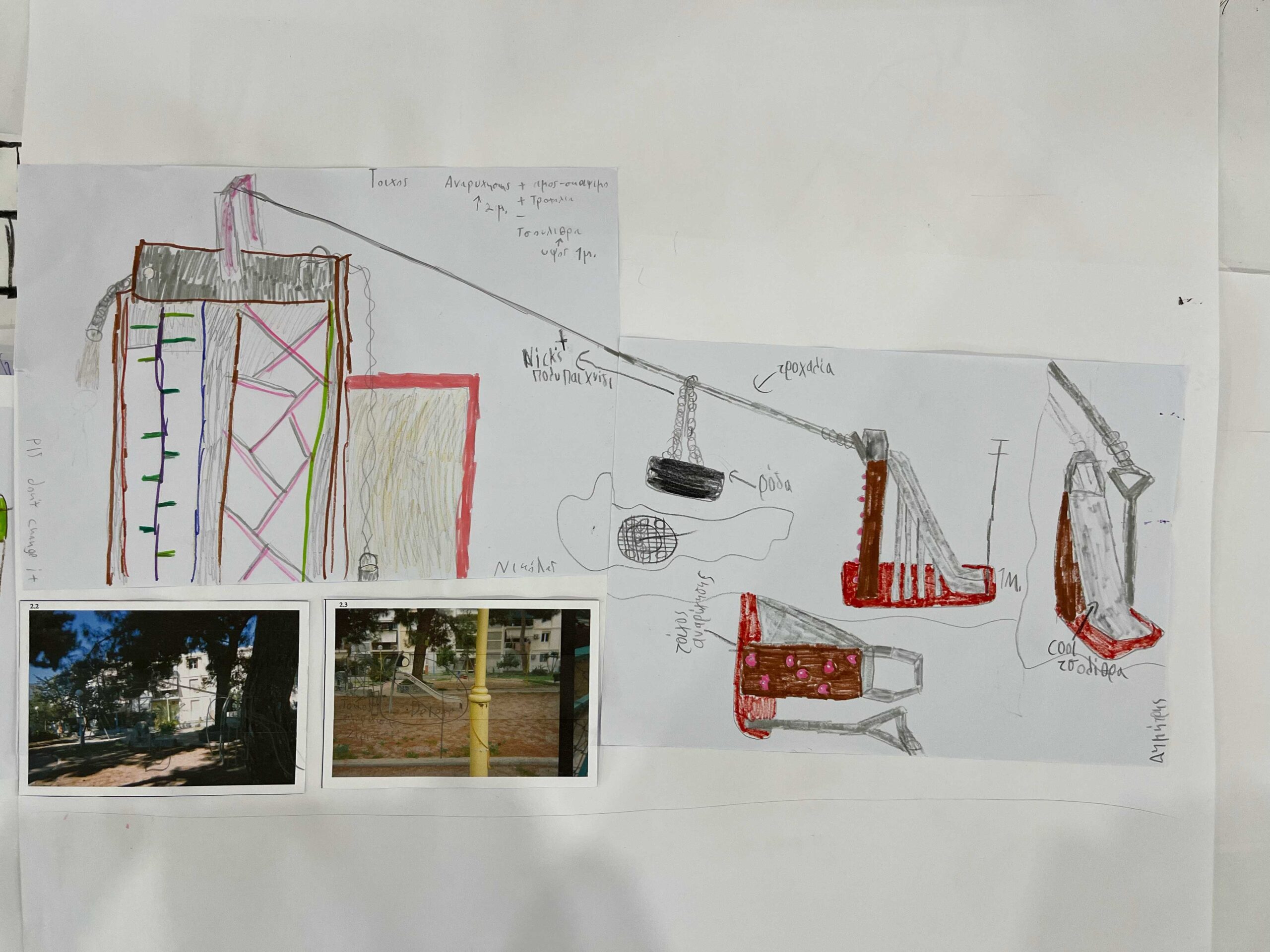
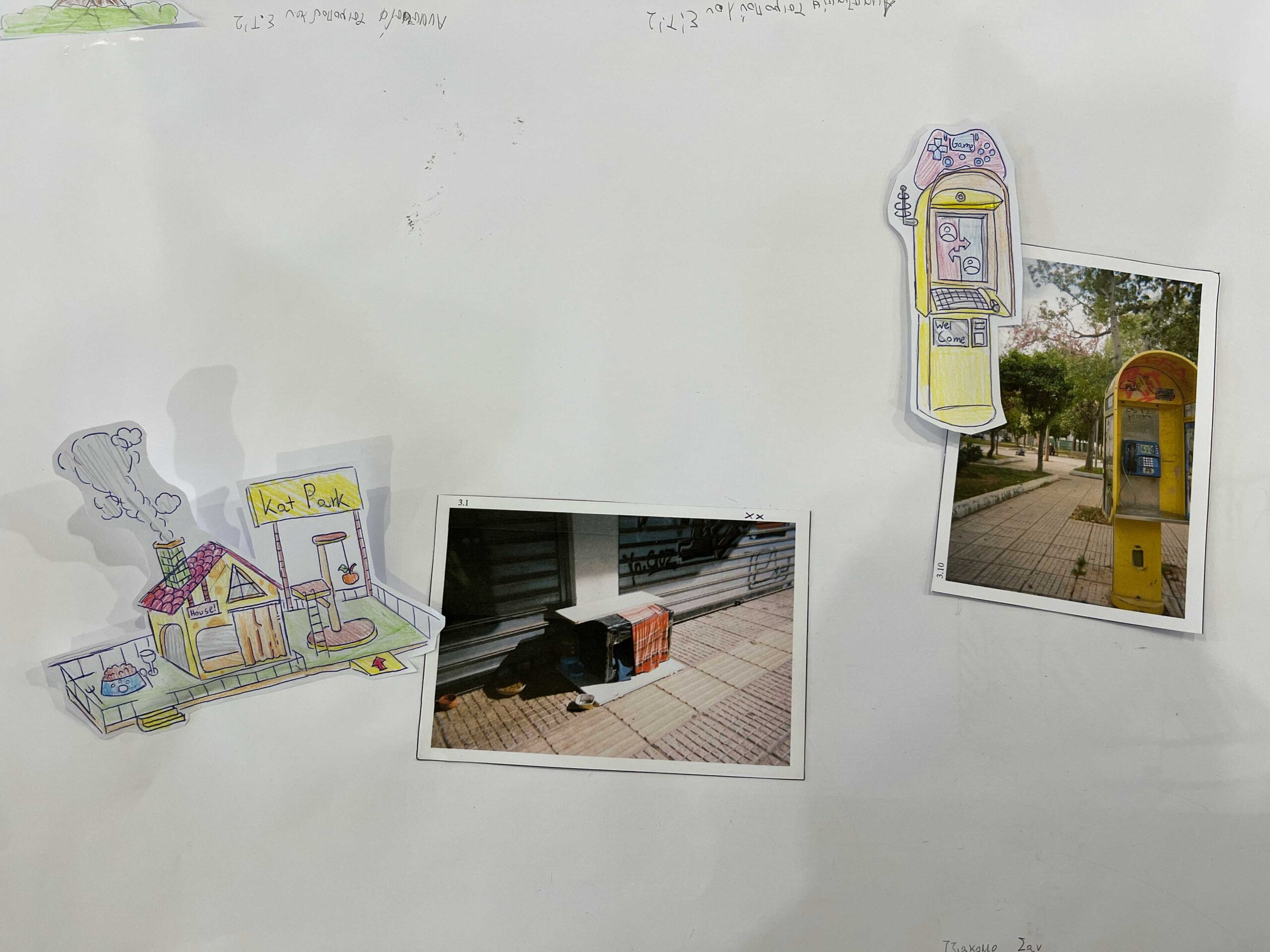
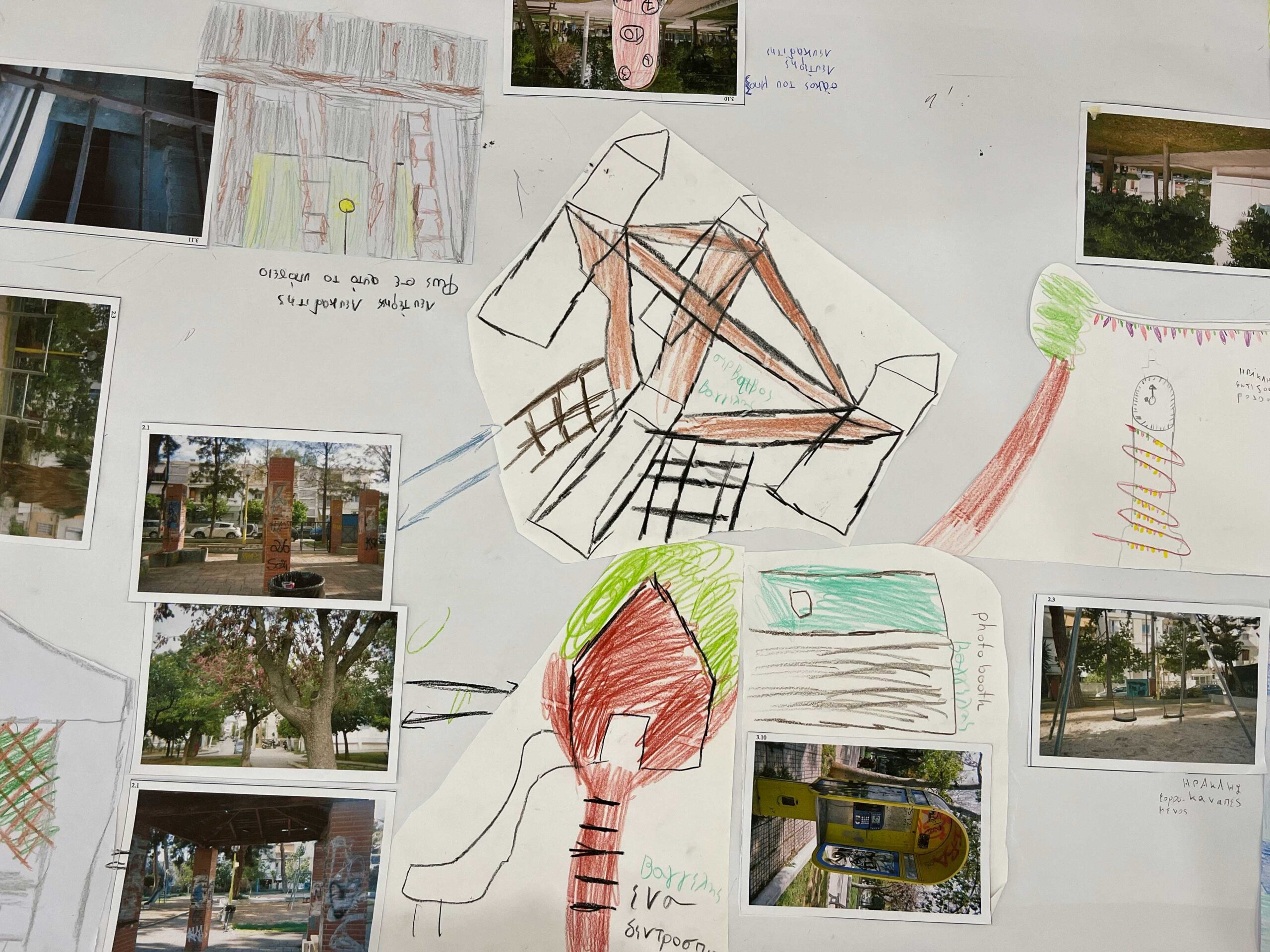
The participatory model
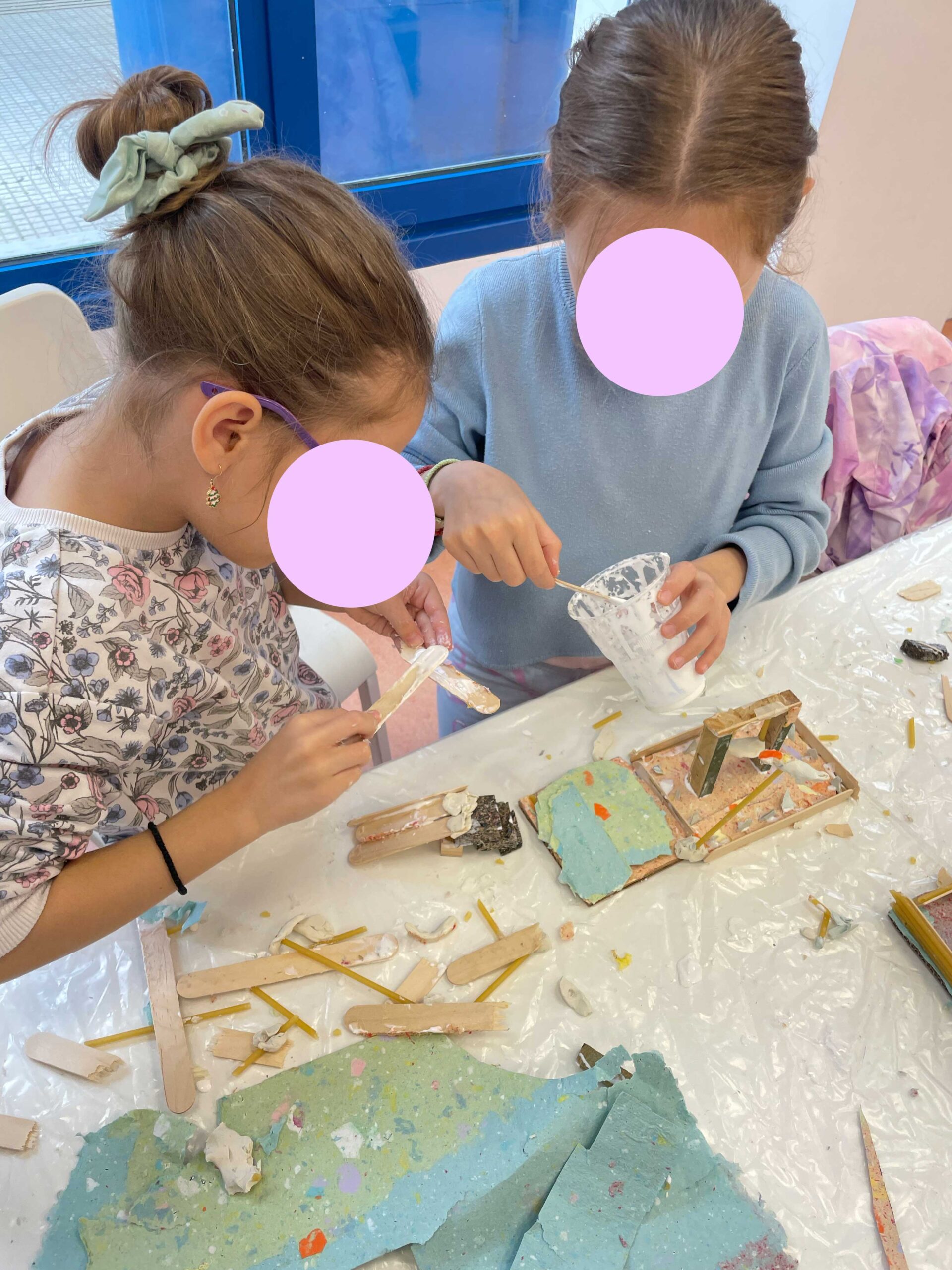
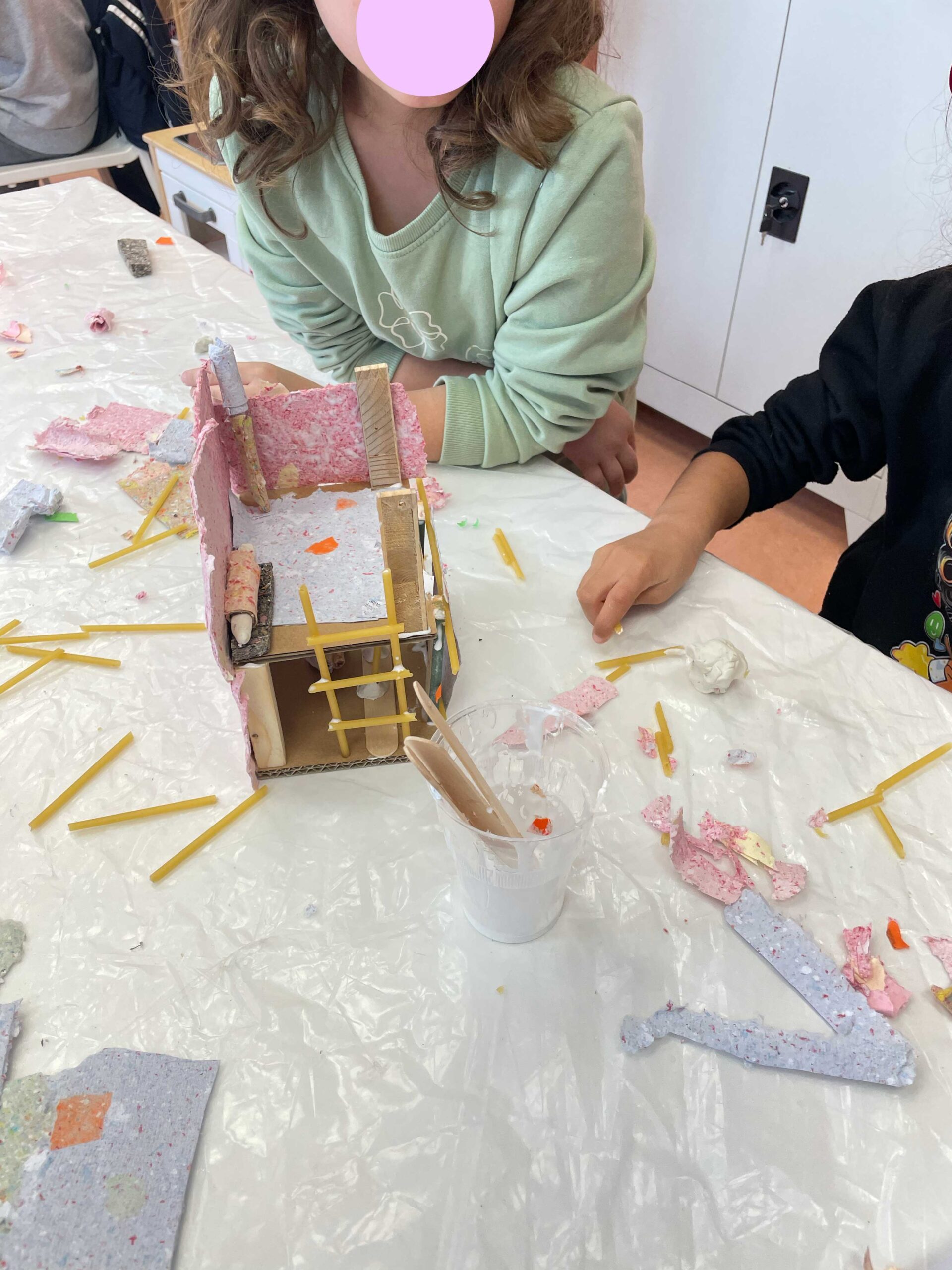
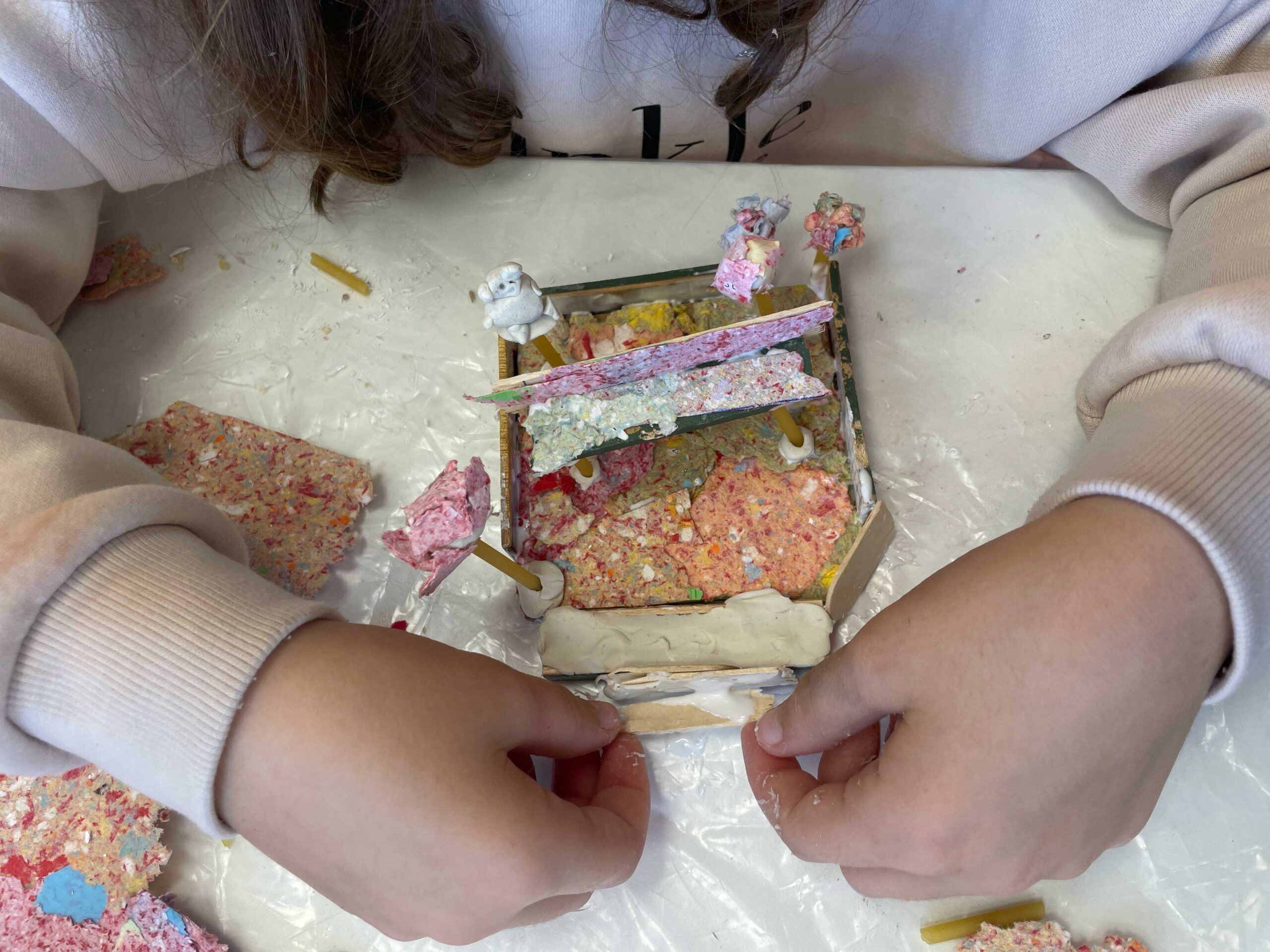
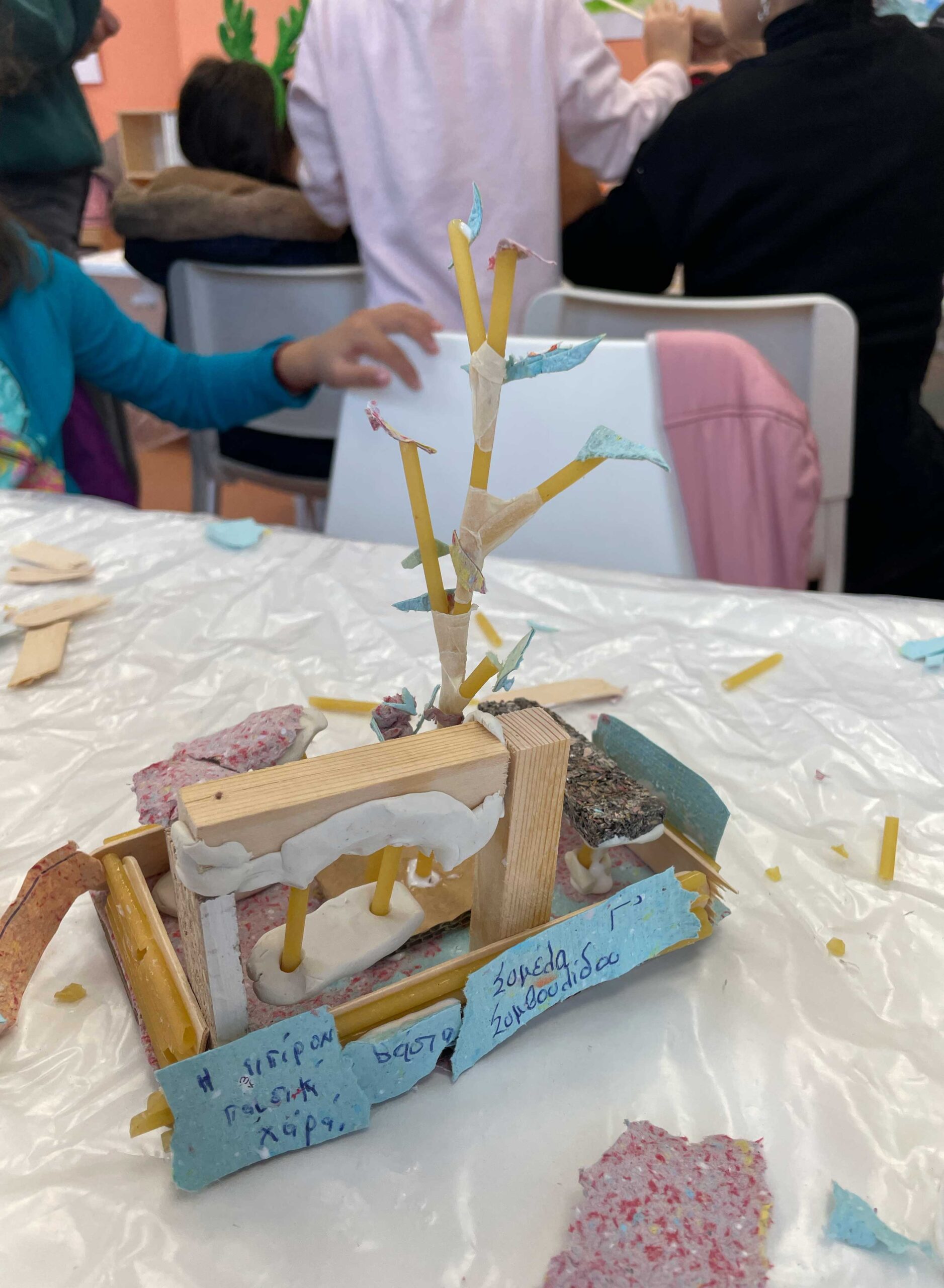
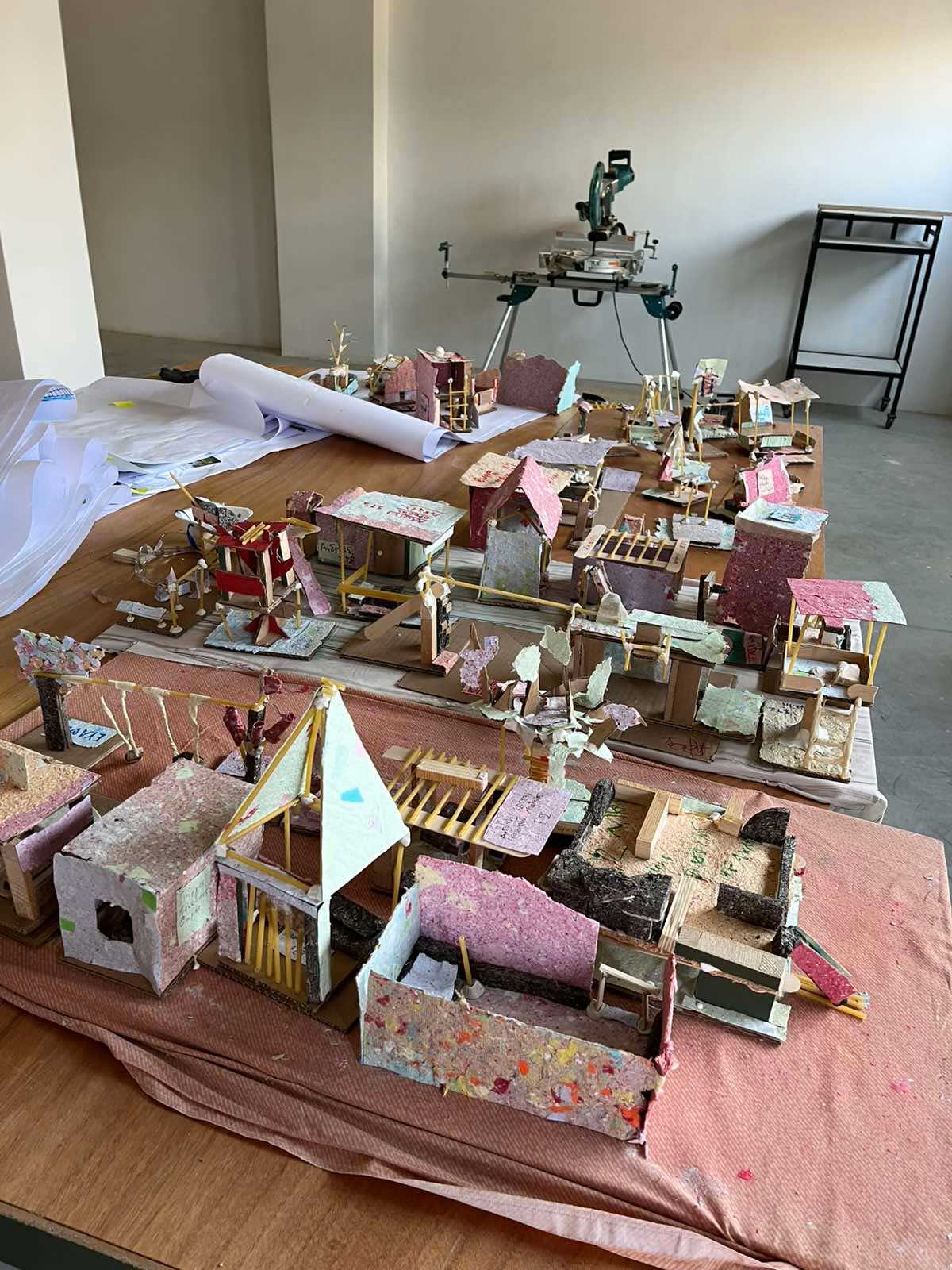
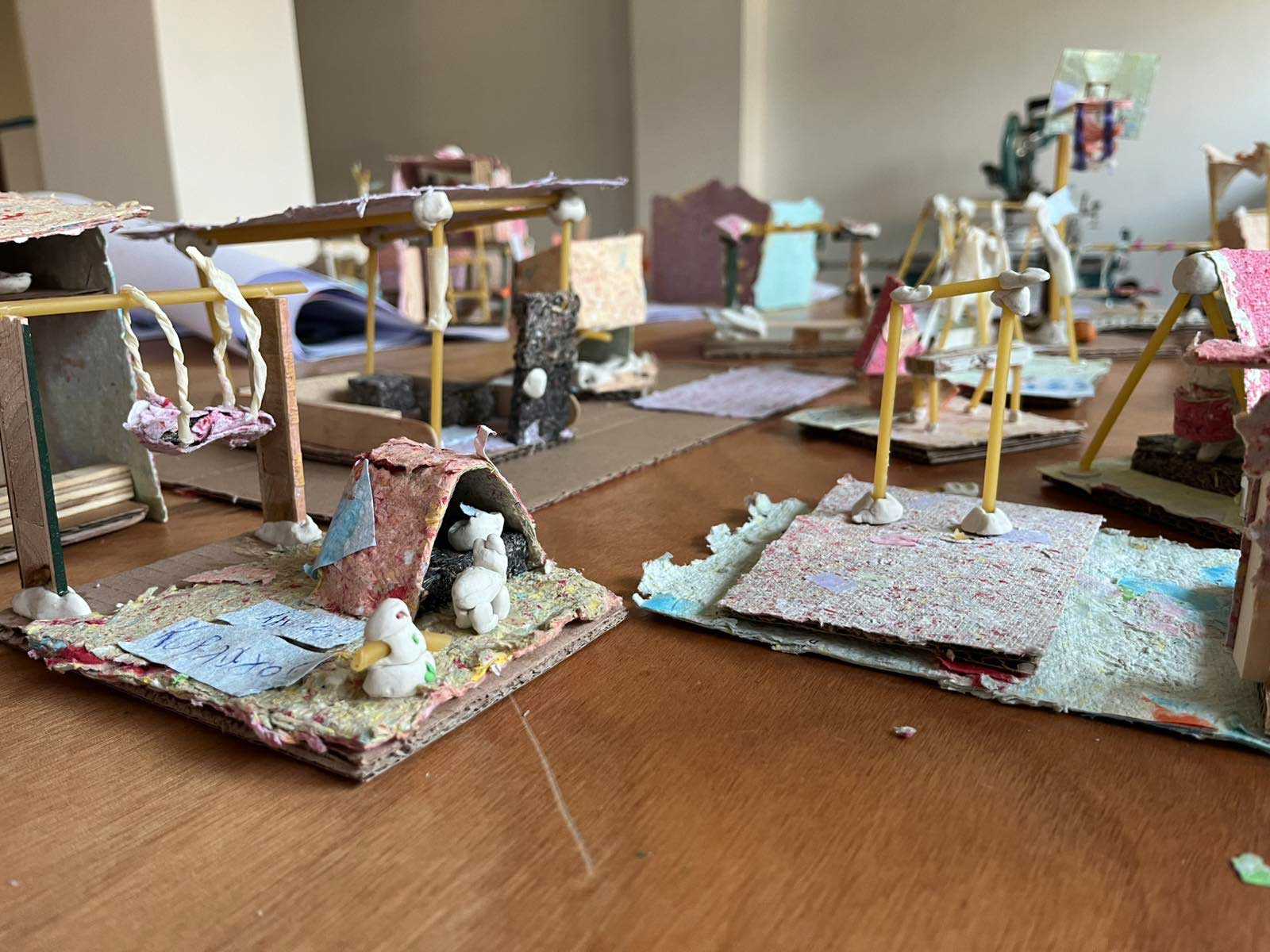
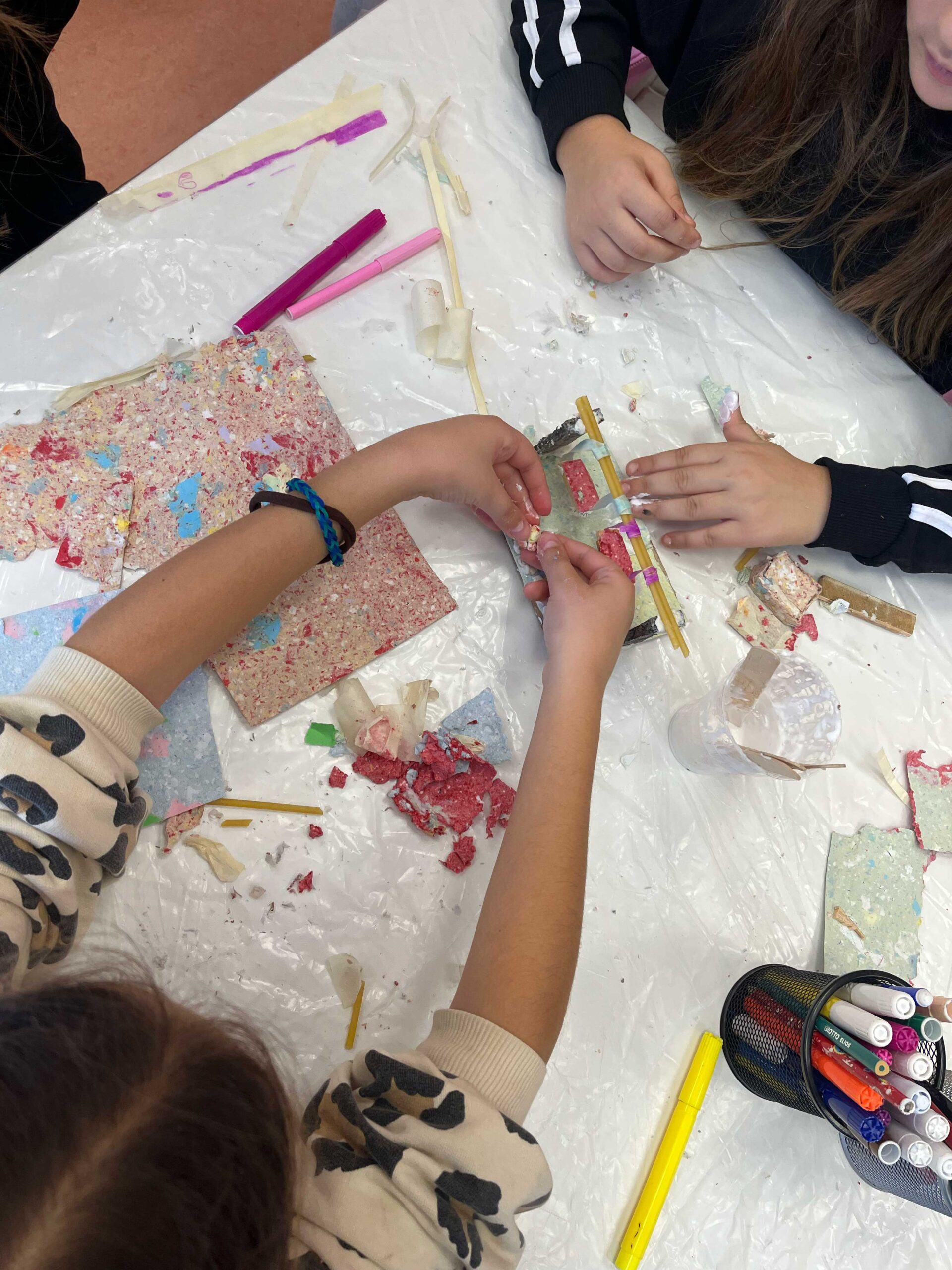
In the next session, those two-dimensional ideas were rebuilt in three dimensions. Using the recycled cardboard and pencil-shaving bricks made earlier, combined with pasta, offcuts of wood from the Scrapelo workshop and cardboard boxes, each class constructed miniature models of the interventions they wanted to see realised: kiosks, play structures, small shelters for animals, benches and tables, planting elements. Together, the classes assembled a small model village of proposals for their neighbourhood.
Choosing together: the Class Council vote
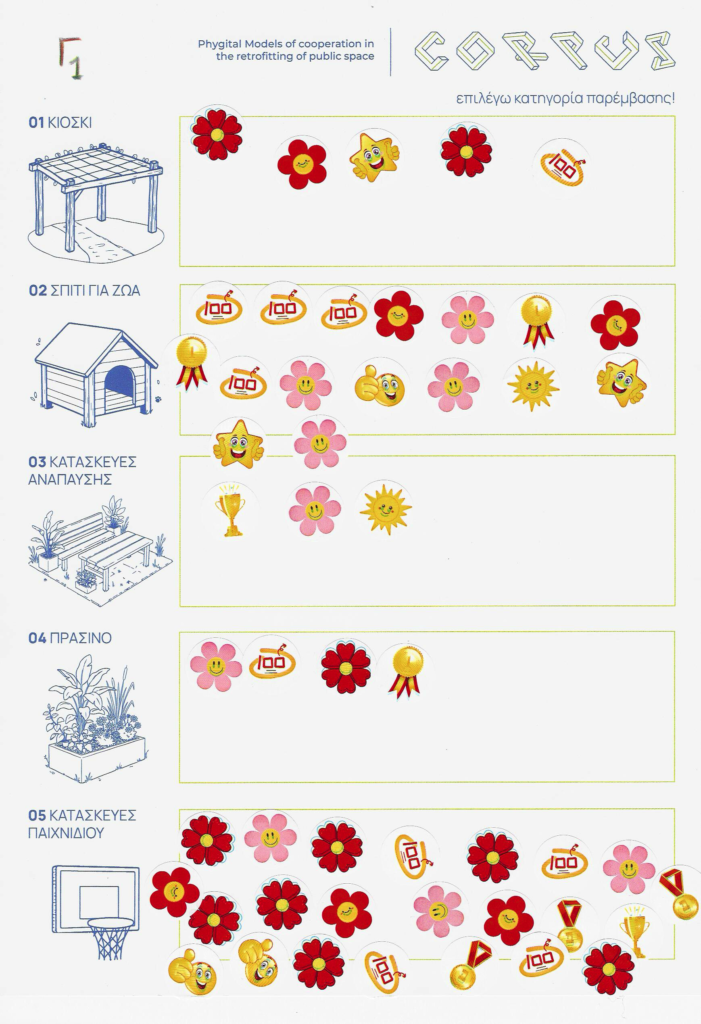
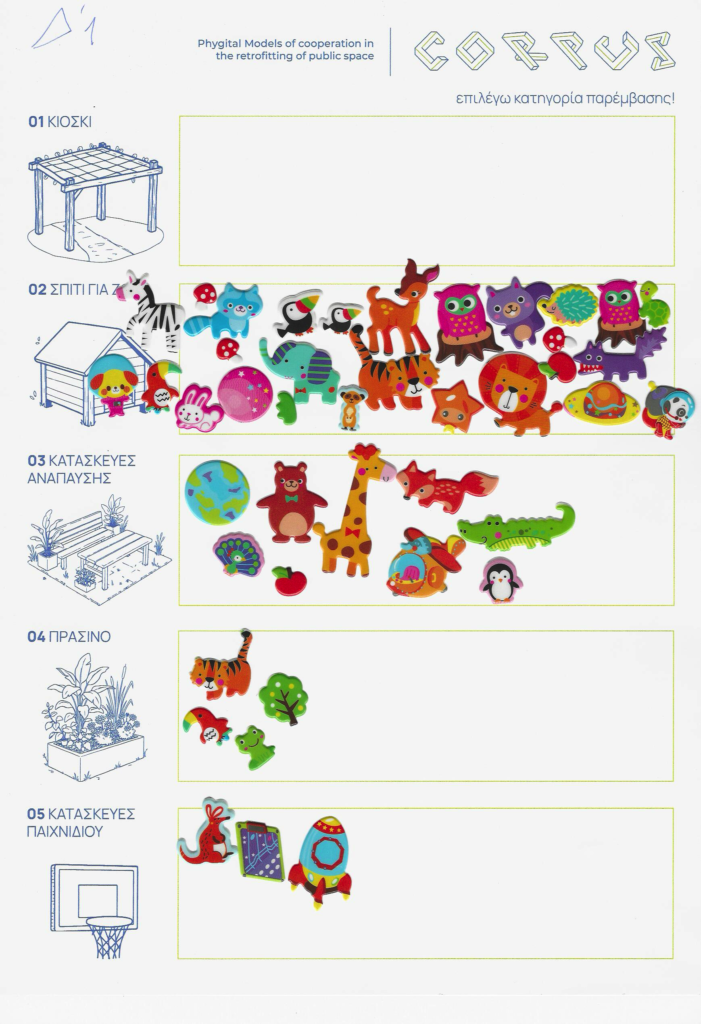
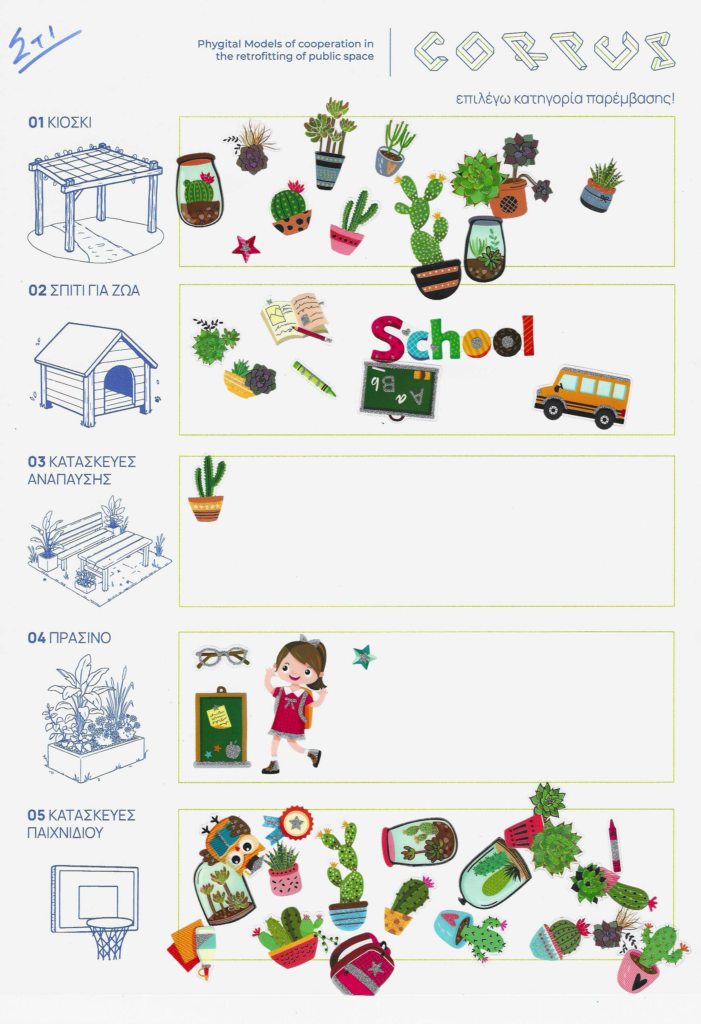
Voting the categories of interventions in classroom.
To move from many ideas to a shared proposal, the research team placed a voting board in each participating classroom, and the students themselves activated the Class Council as a decision-making format. In a first round, each class voted to narrow the five categories of interventions that had emerged from the workshops down to two. A second round, held over two weeks, refined those two further — defining additional uses and how they might be combined — with each class producing new collaged drawings that captured the agreed details. The collages were made collectively, through the Class Council, arriving at the features of each intervention through discussion.
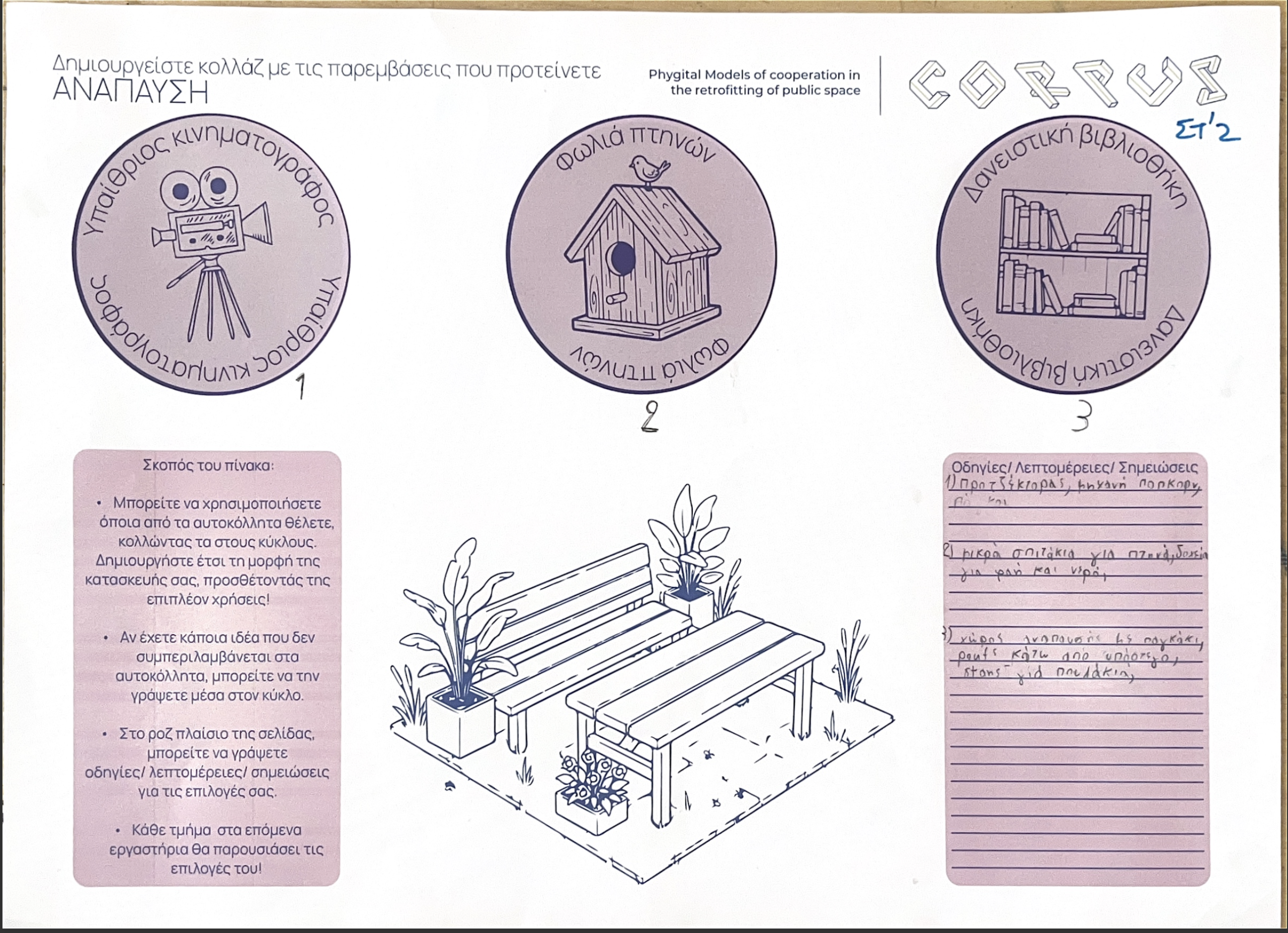
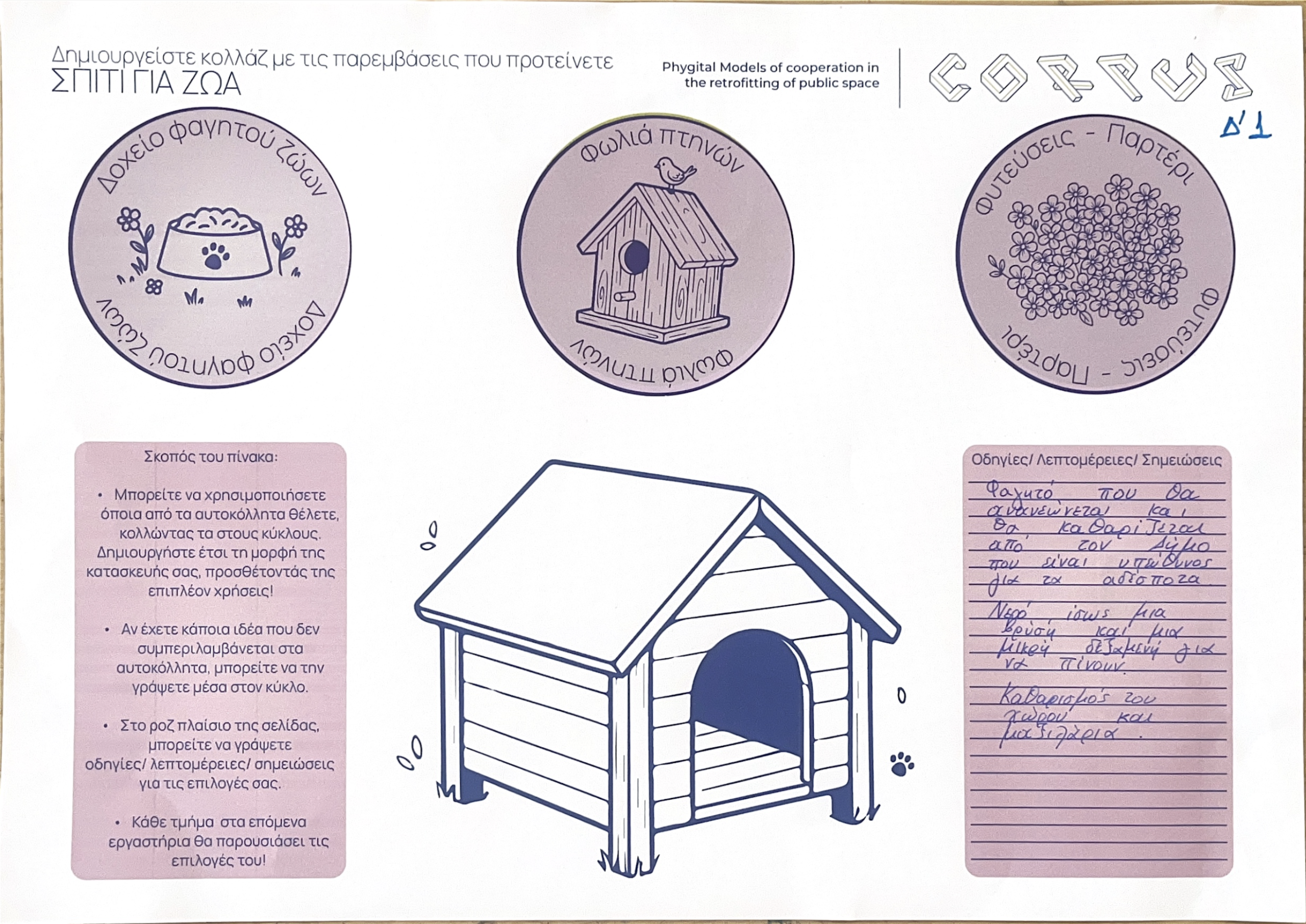
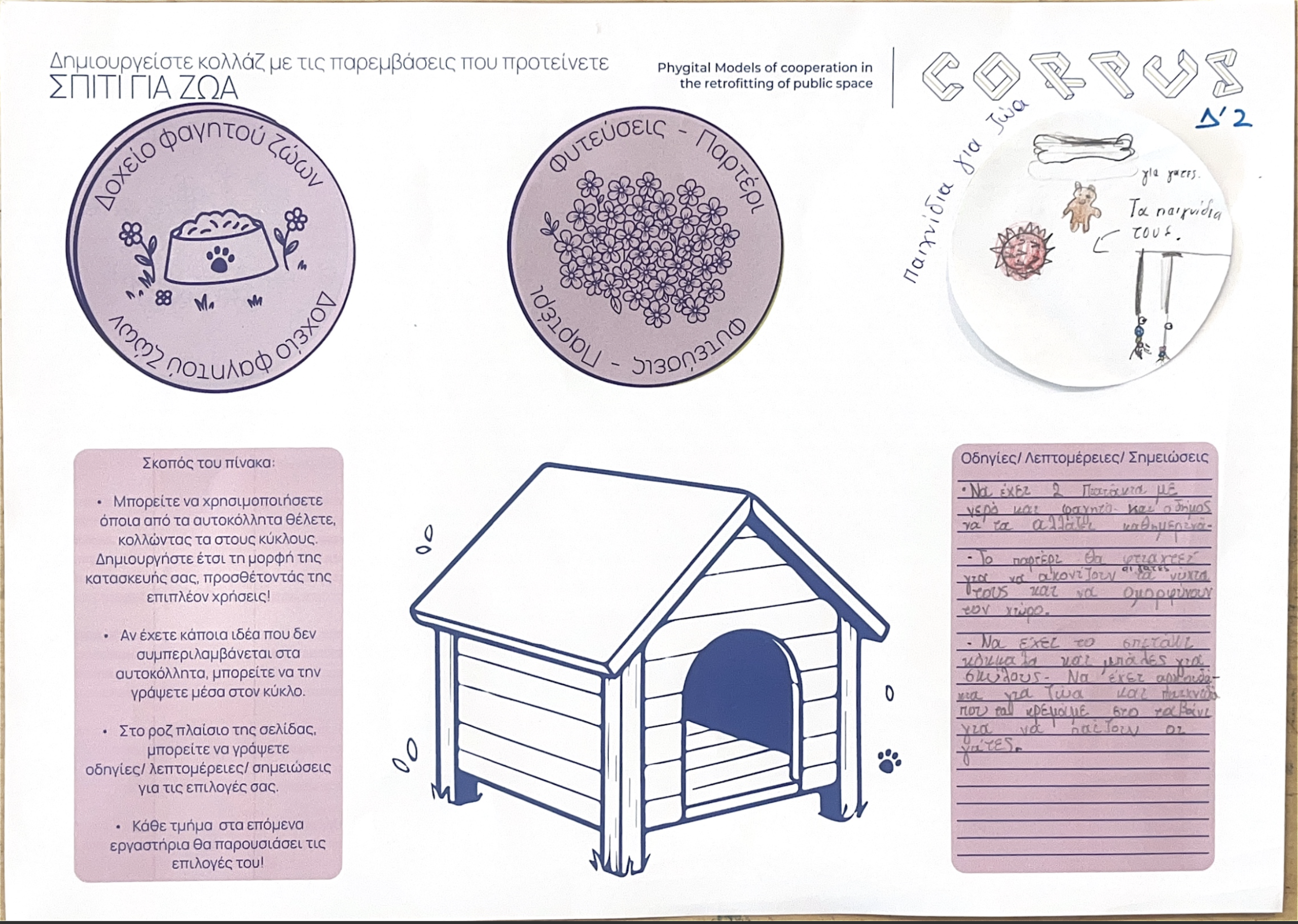
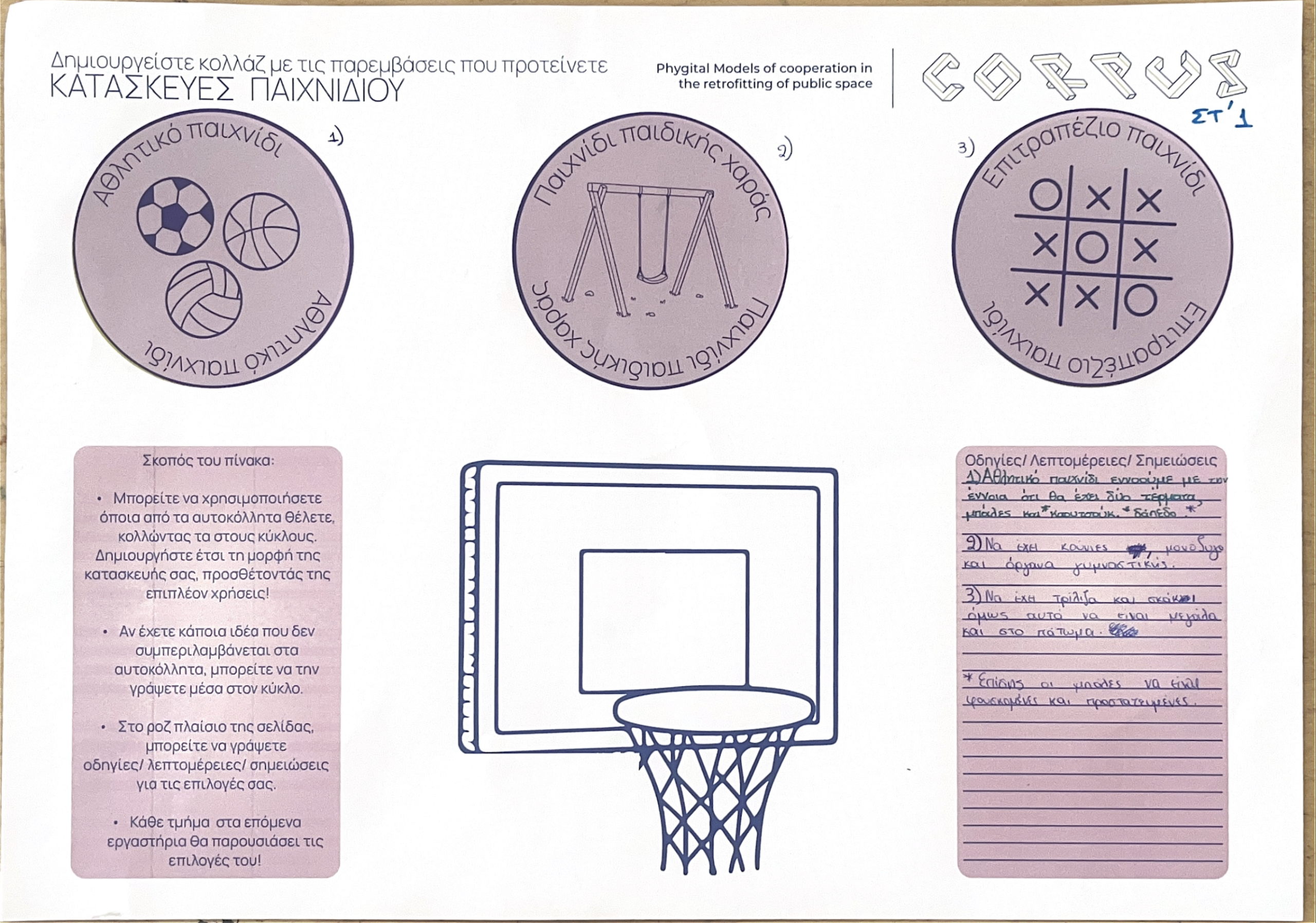
Choosing the additional functionalities for each selected category of intervention per classroom.
From proposal to design
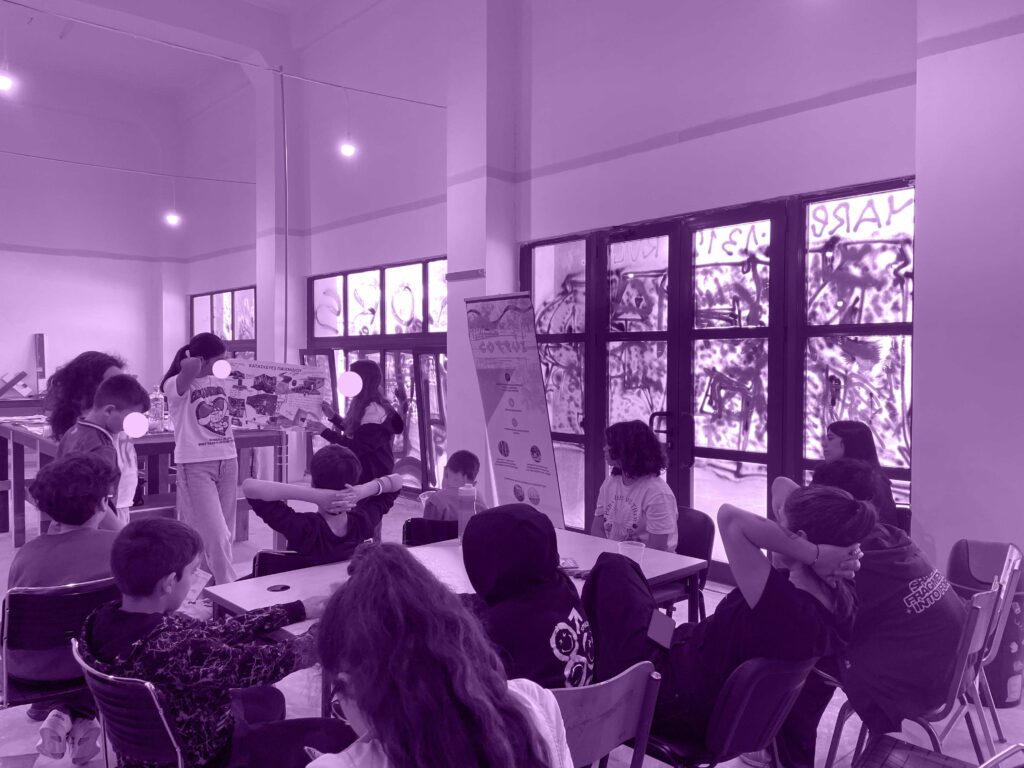
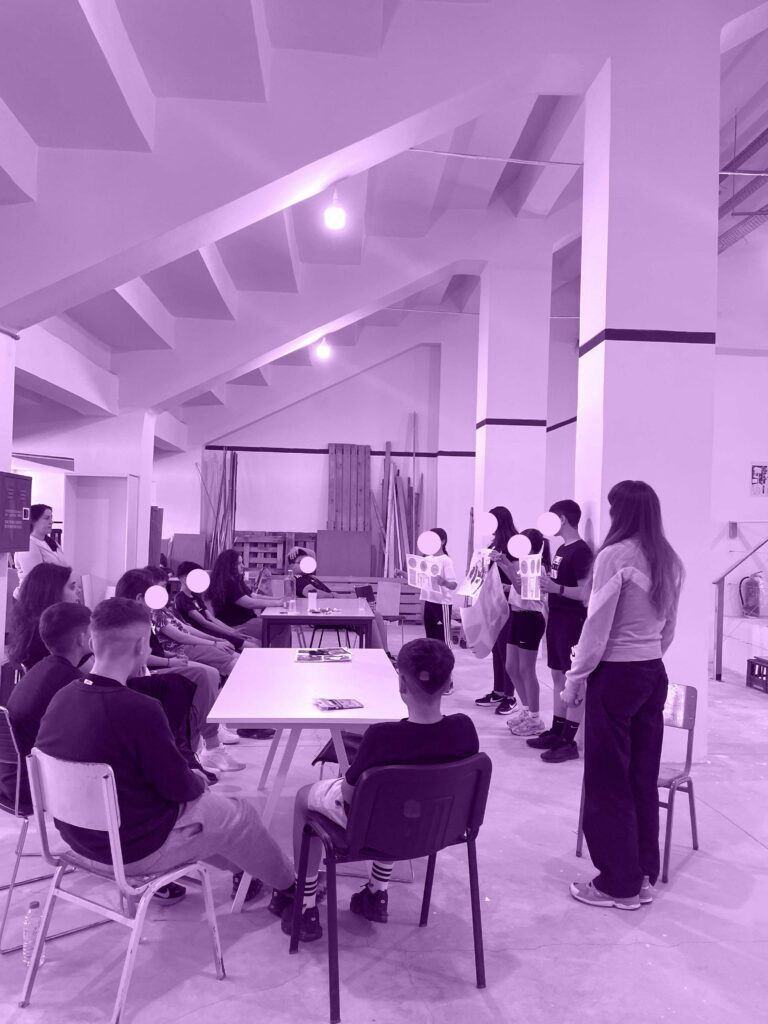
Presenting the collages of ideas in front of the rest of the classroom
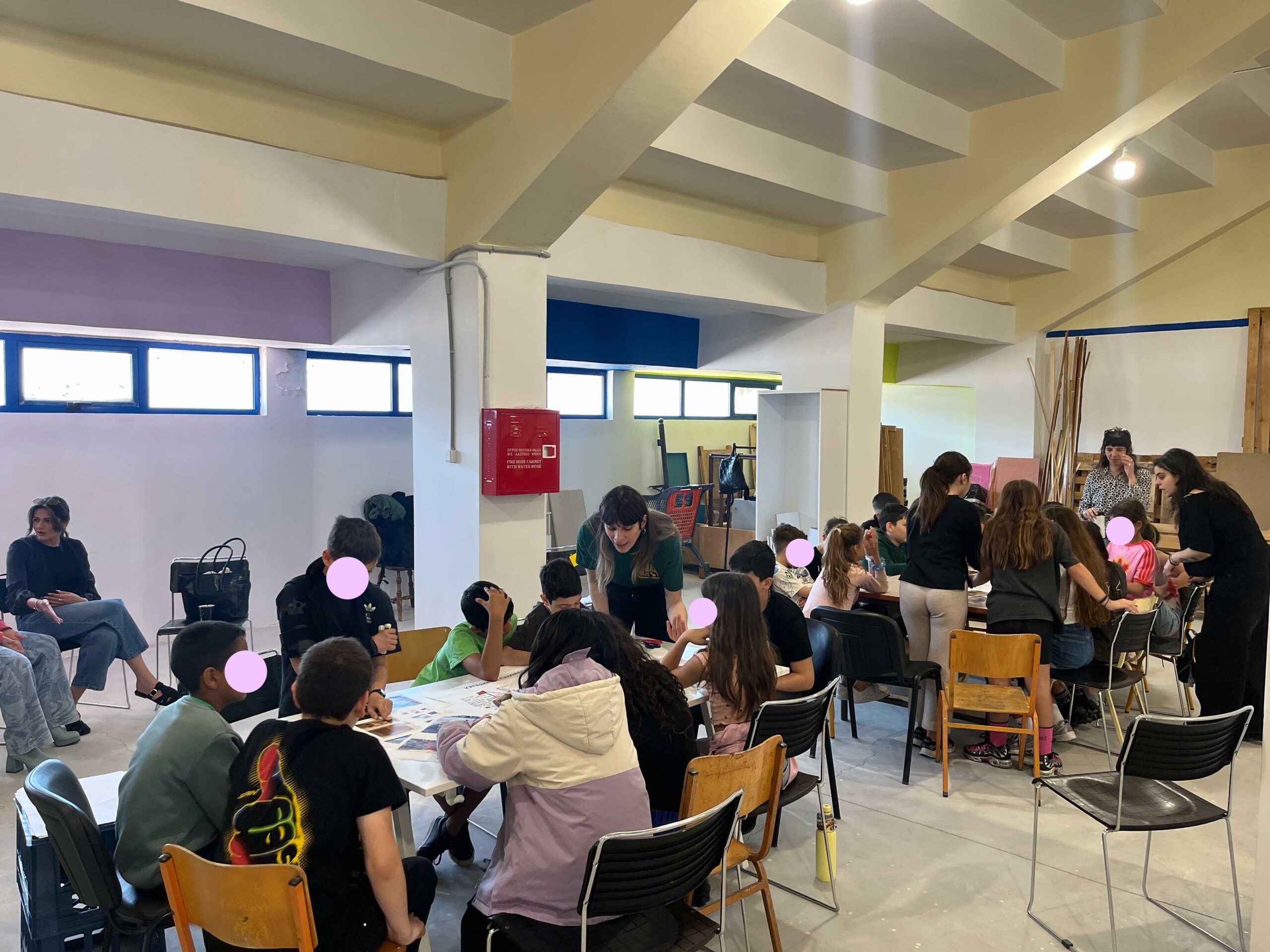
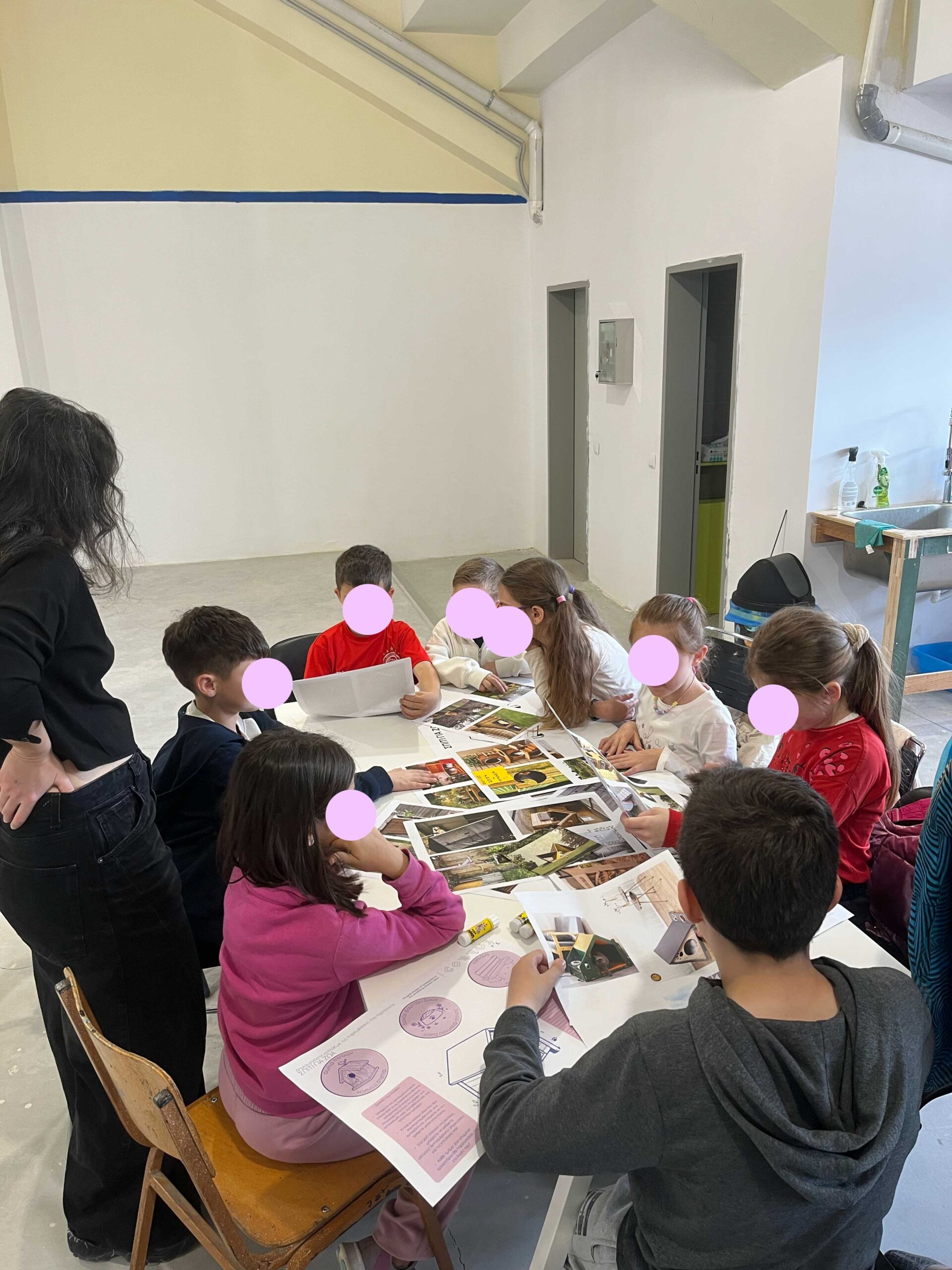
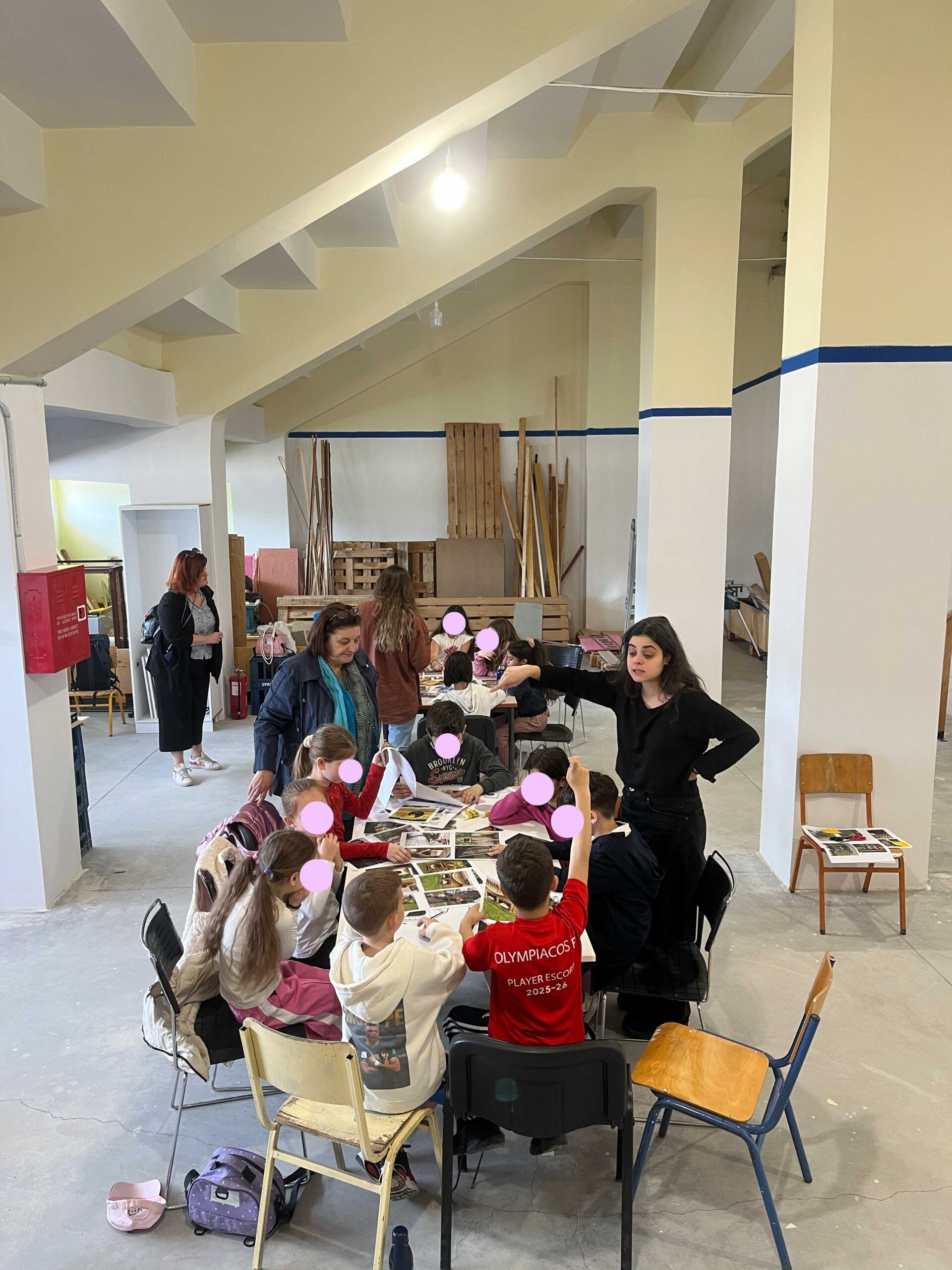
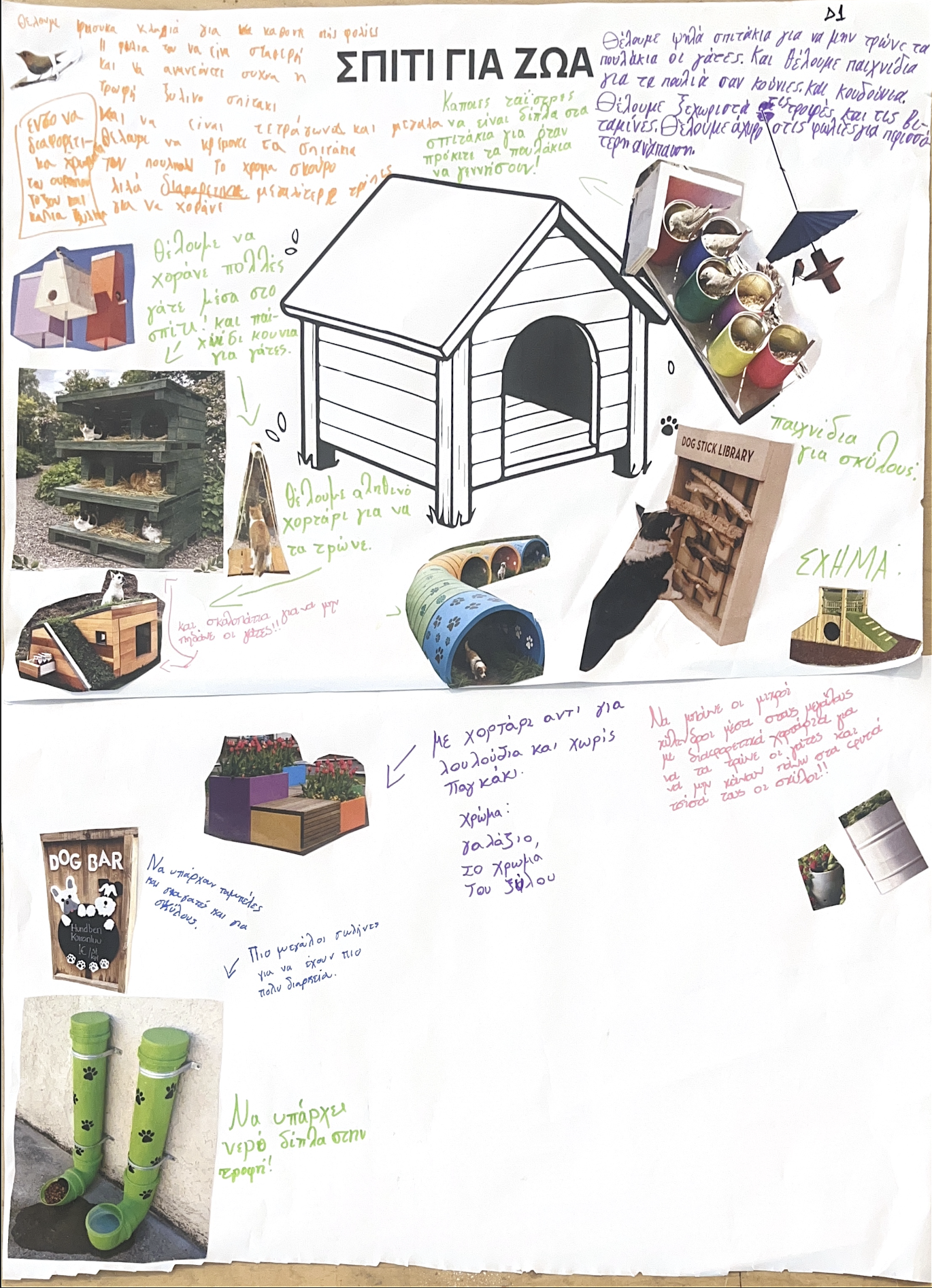
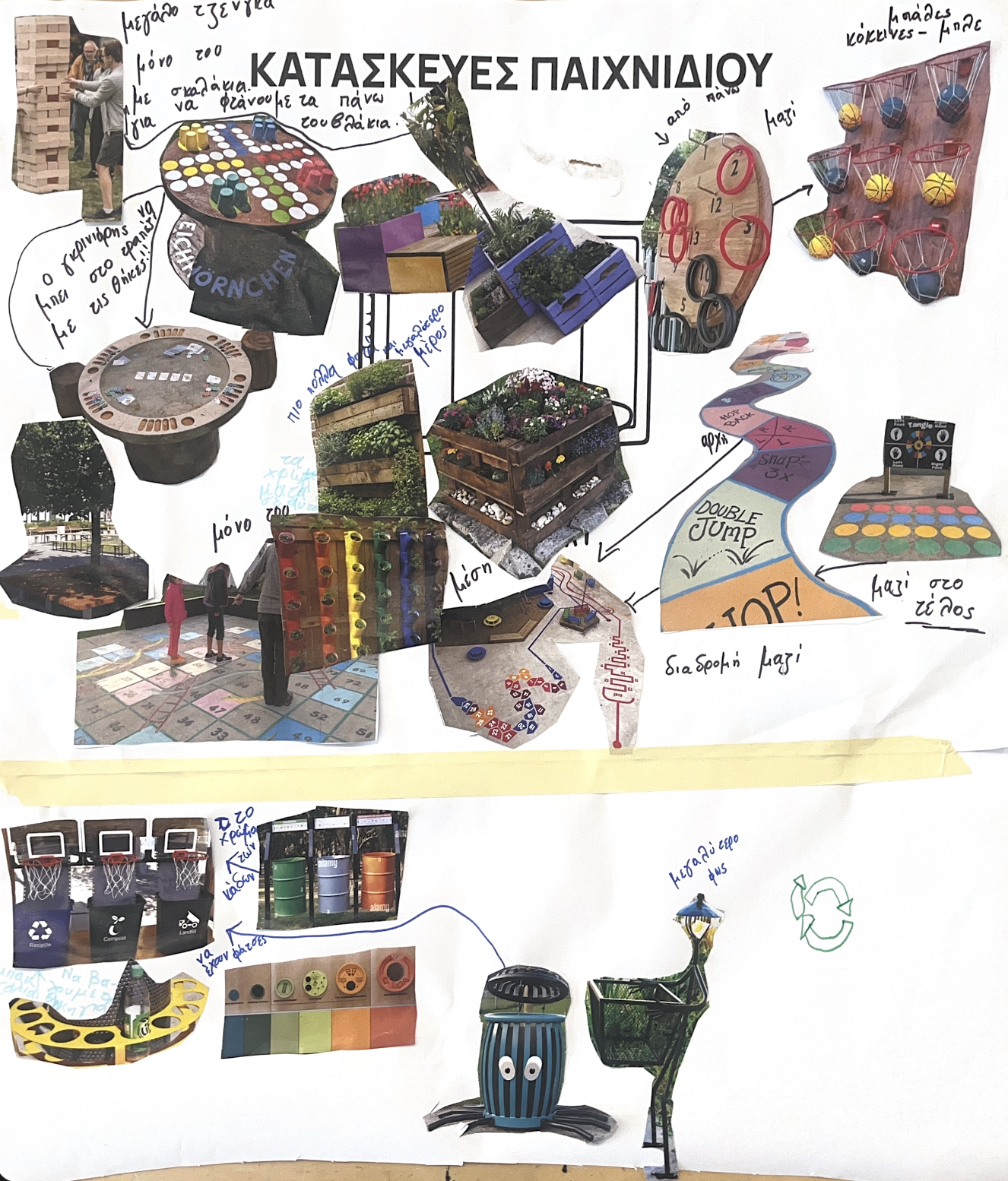
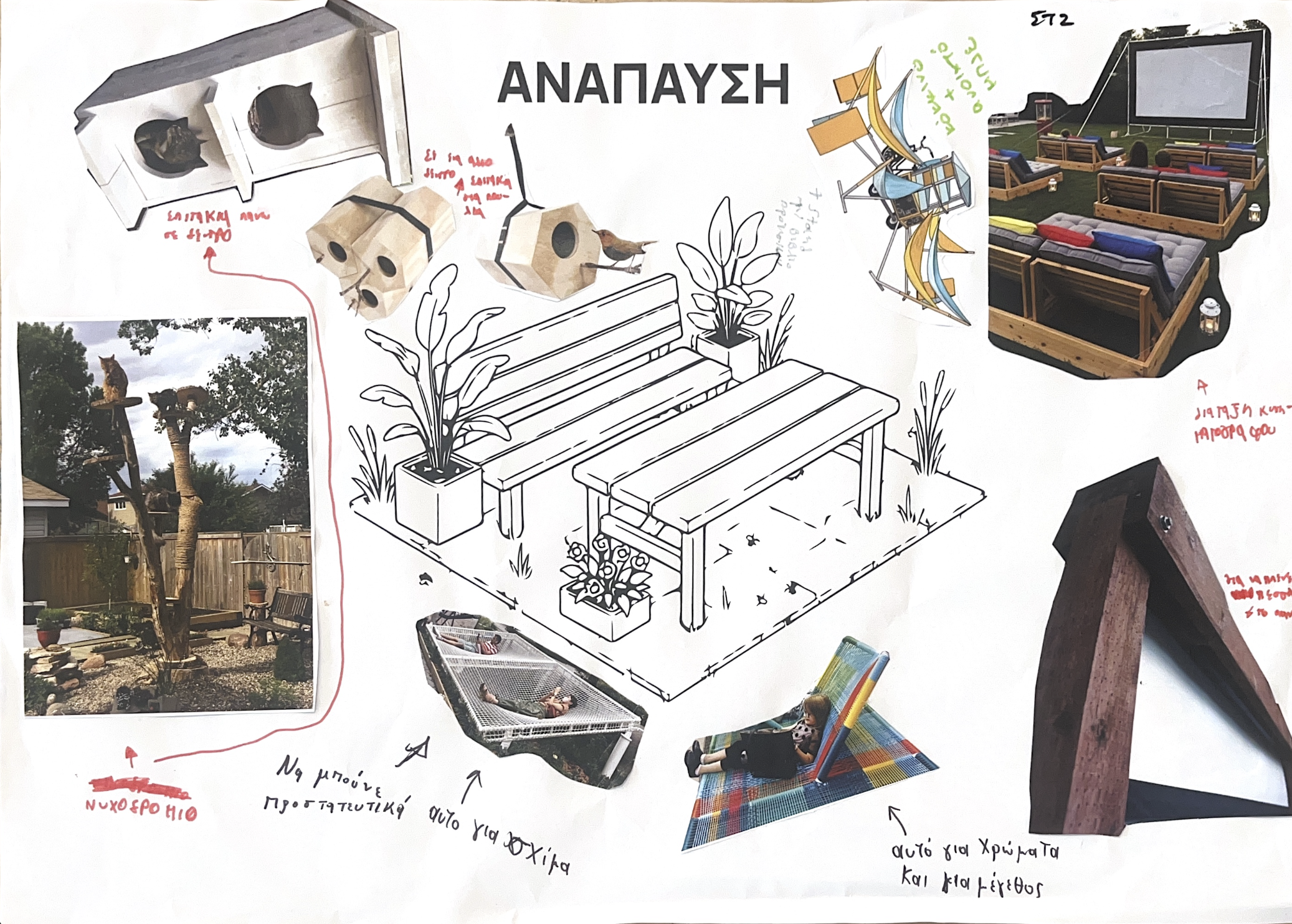
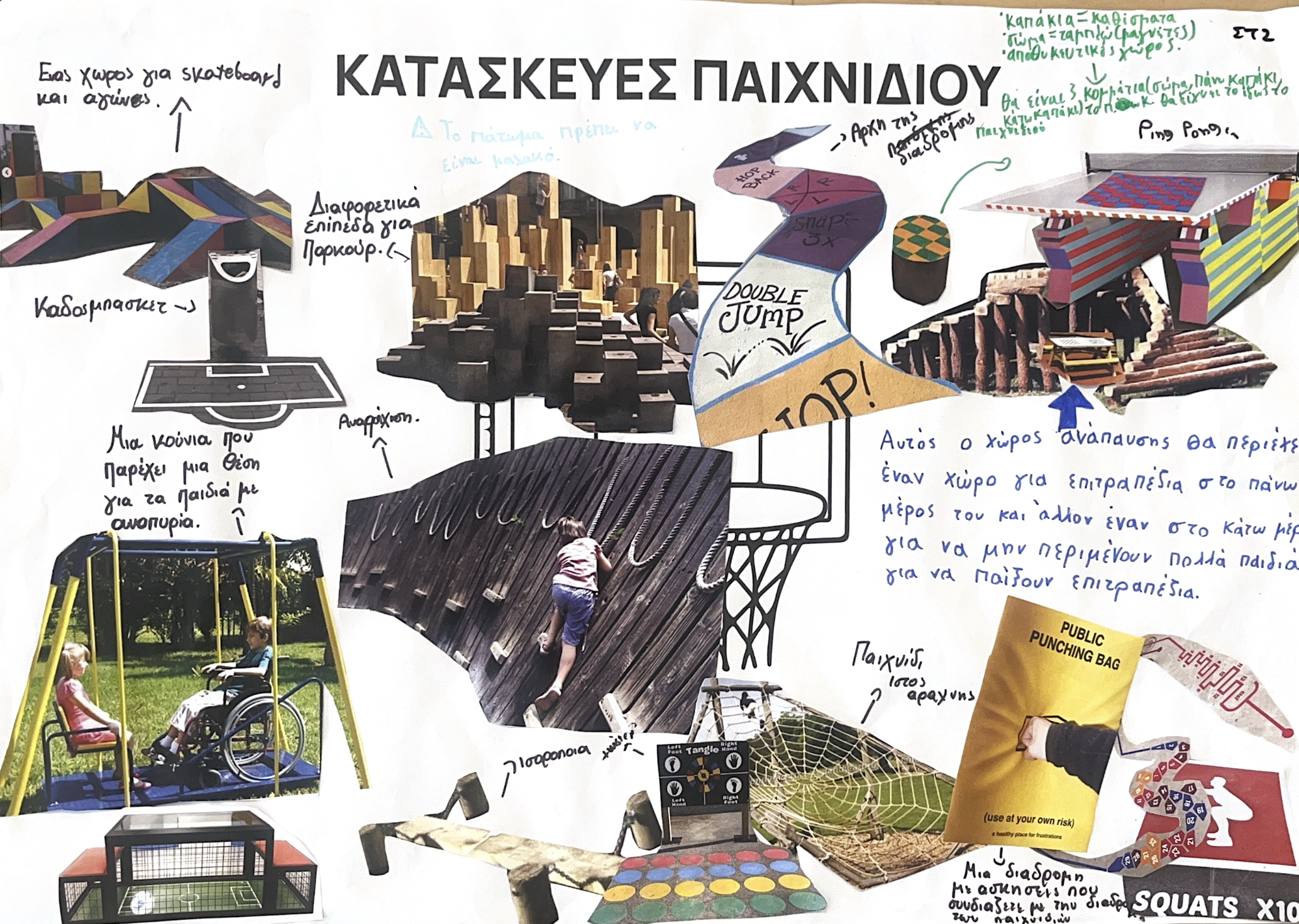
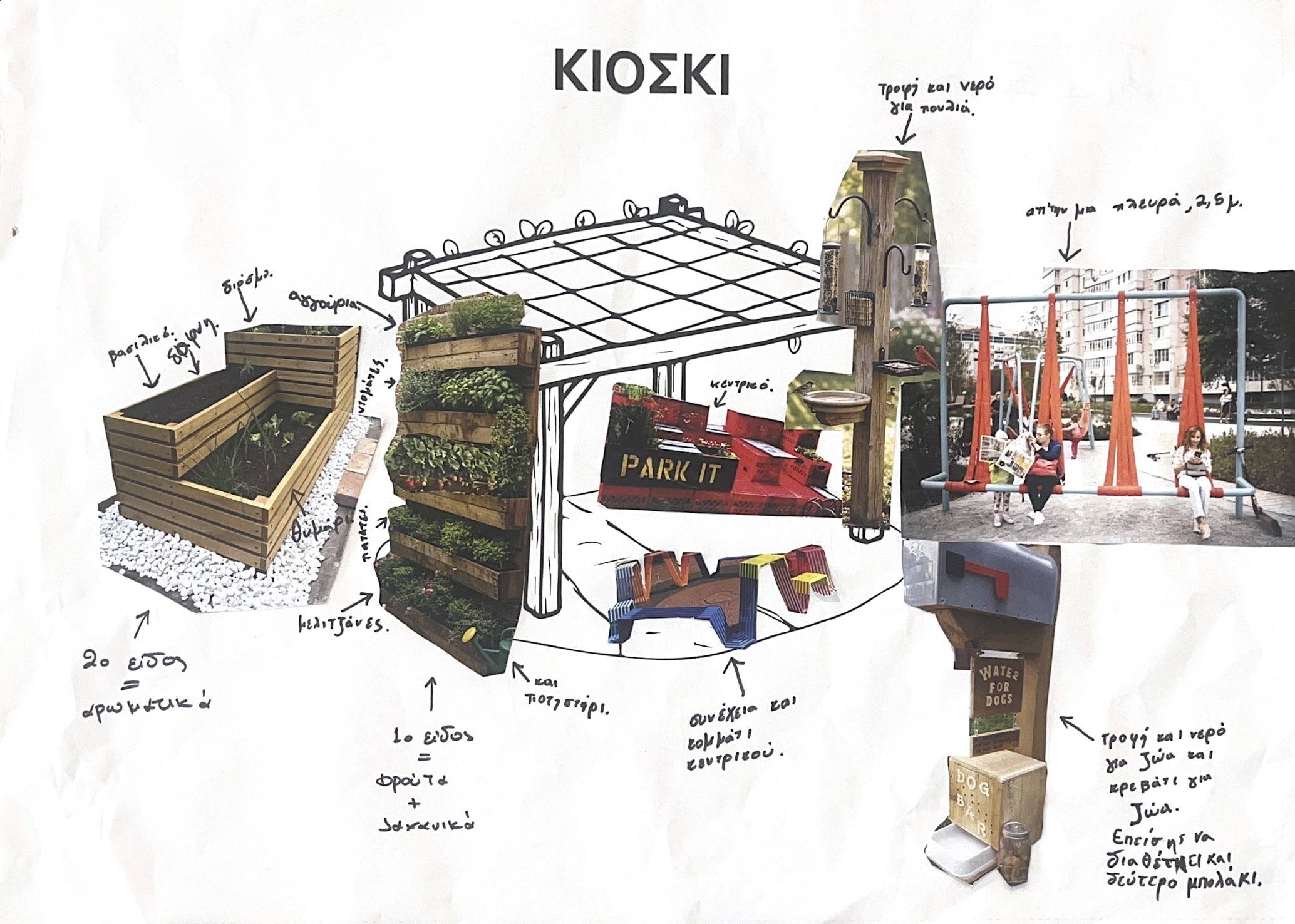
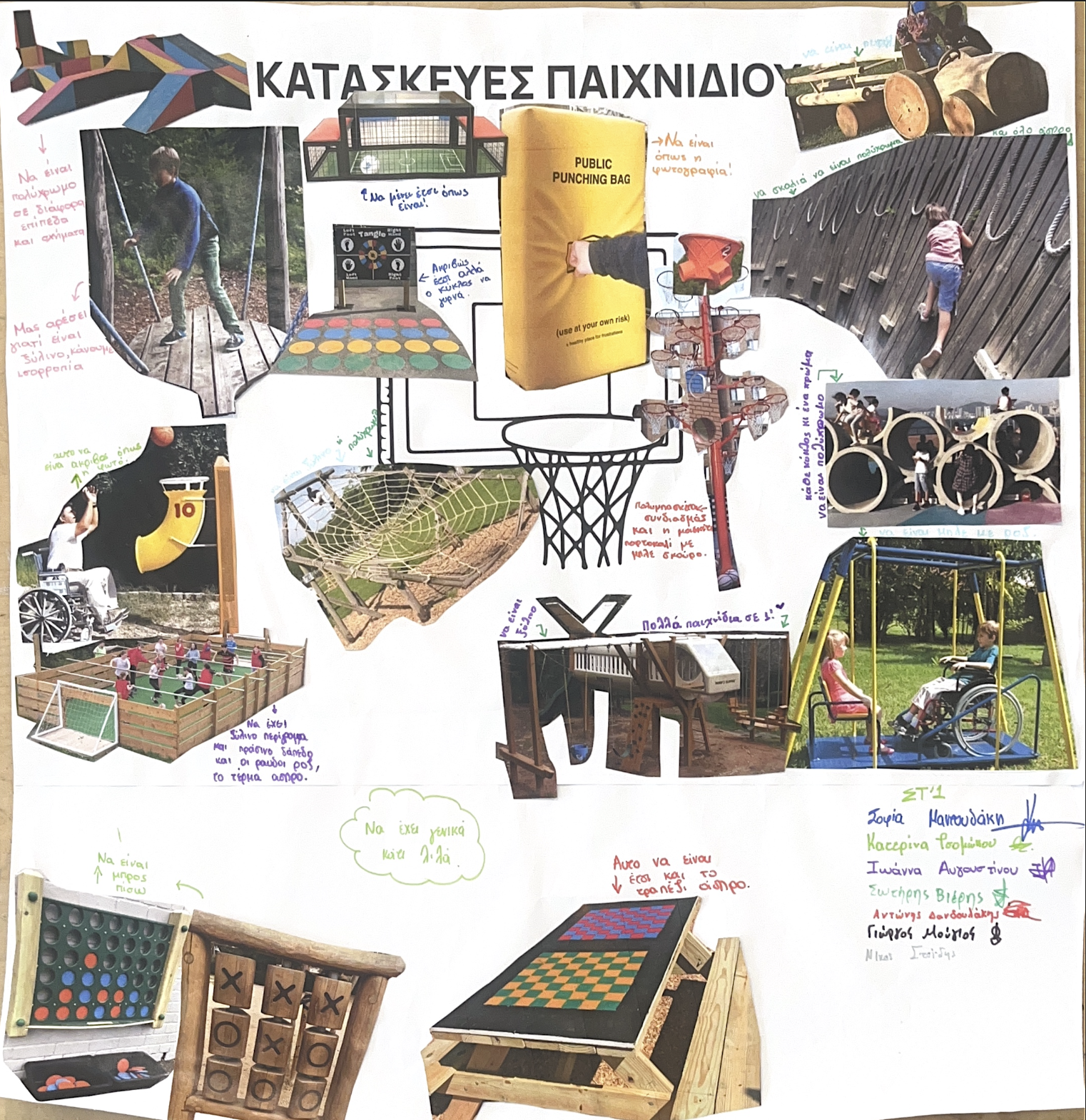
In the final activity of the cycle, students visited the Scrapelo Community Workshop for the first time, during the public exhibition of the material created since the start of the project. Guided by the research team, they were introduced to a range of reference images of urban equipment — benches, kiosks, playground structures, planters — to help them define the form of their selected intervention. Drawing on these references, each class produced new collaged drawings: colourful chimeras combining pieces of different reference objects, annotated with notes on colour choices and intended functions. The result translated votes and ideas into design proposals with defined uses and features, ready to inform the small-scale constructions that will follow in the square and playground.
Concluding thoughts

What made this cycle meaningful was not any single workshop but the way the whole sequence let children grasp, in practice, ideas that too often stay abstract. By turning their own paper and pencil shavings into cardboard and bricks, they understood sustainability, recycling and the second life of materials not as slogans but as something they had done with their hands. By activating the Class Council to narrow many ideas down to a shared few, they experienced democratic decision-making as a real process of listening, negotiating and choosing together. And most importantly, they saw that collaboration produces something tangible: a model village, a set of design proposals, and soon actual interventions in their neighbourhood square. The circular practices, the participatory tools and the collective spirit were not taught side by side but woven into a single experience — one where making, deciding and sharing became inseparable, and where a group of children could see their collective imagination take concrete form.