Introduction
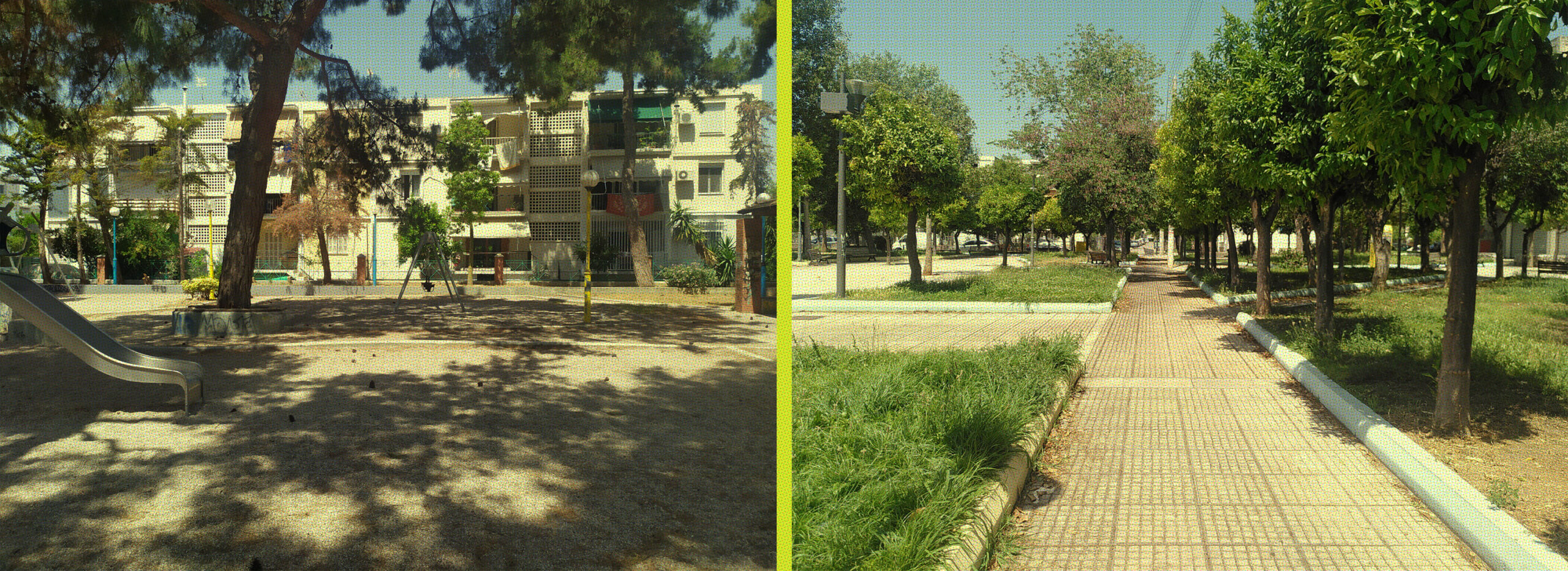
The Aigaleo Urban Living Lab unfolds in and around the square and playground of the Social Housing Complex of Egaleo — an open green space in a densely populated, low-income district about a kilometre from the city centre. Hemmed in by residential blocks, it anchors a network of smaller green pockets threaded between the housing units and acts as the social nucleus of a multicultural neighbourhood, home to residents from Pakistan, Syria and Greece and to second-generation migrants from Albania. The ground floors of the surrounding buildings hold a cluster of community life — a cultural association devoted to traditional Cretan music, another to traditional apparel, and a social centre for the elderly — so the park stays active from morning to night, used by people of every age, by the associations, and by pupils from the nearby primary school, and it regularly hosts cultural events. Yet decades of limited maintenance and redesign have left it short of the amenities its users actually need.
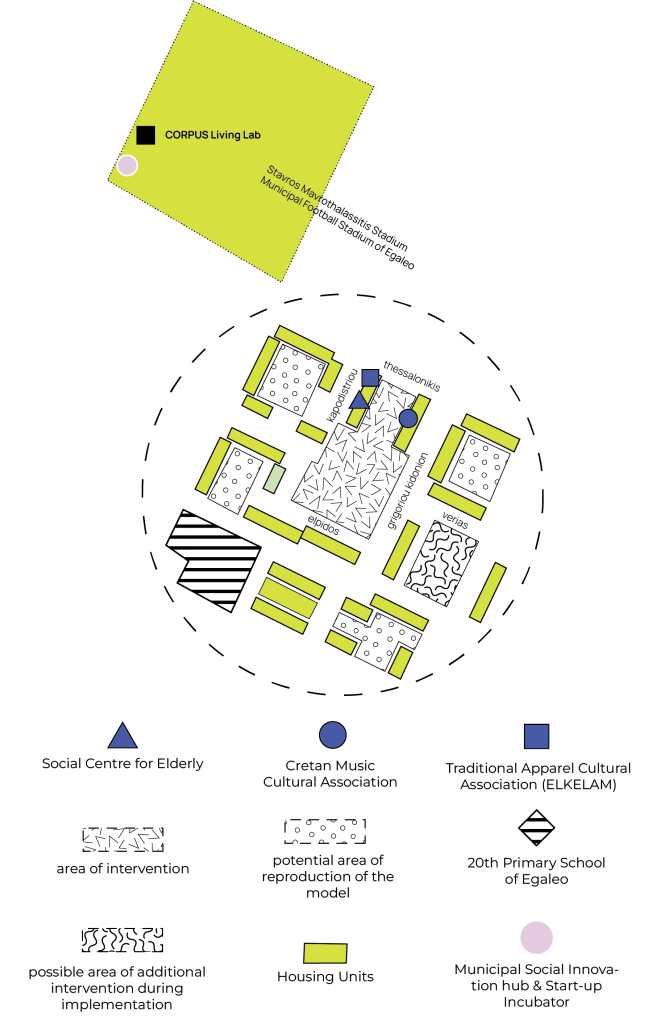
It is precisely this kind of degraded but intensely used public space on the urban periphery that CORPUS sets out to address. The project researches alternative ways of retrofitting public space at the neighbourhood scale, grounded in Circular Urban Economies and driven by the involvement of local stakeholders and citizens. In Aigaleo, that research takes the shape of a living lab built on cross-sectoral collaboration — between the Municipality of Aigaleo, the collectives Open Lab Athens and Rokani, and the architectural office FBW Urbanists + Architects — testing in practice how design, reuse and collective making can renew a shared space.
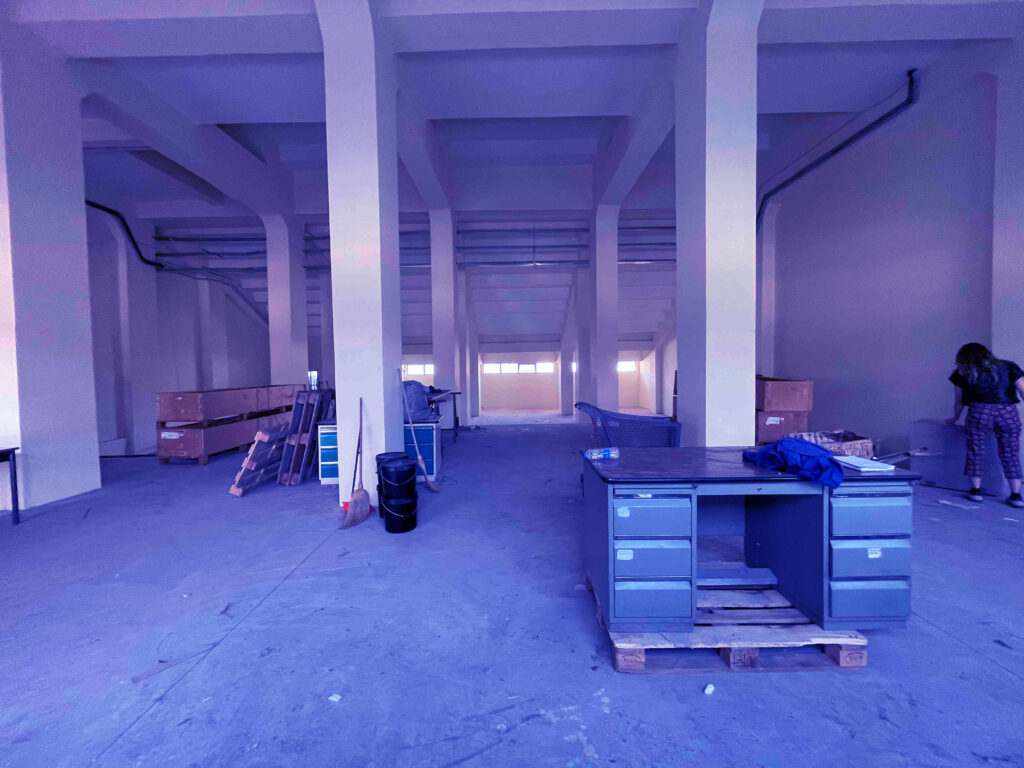
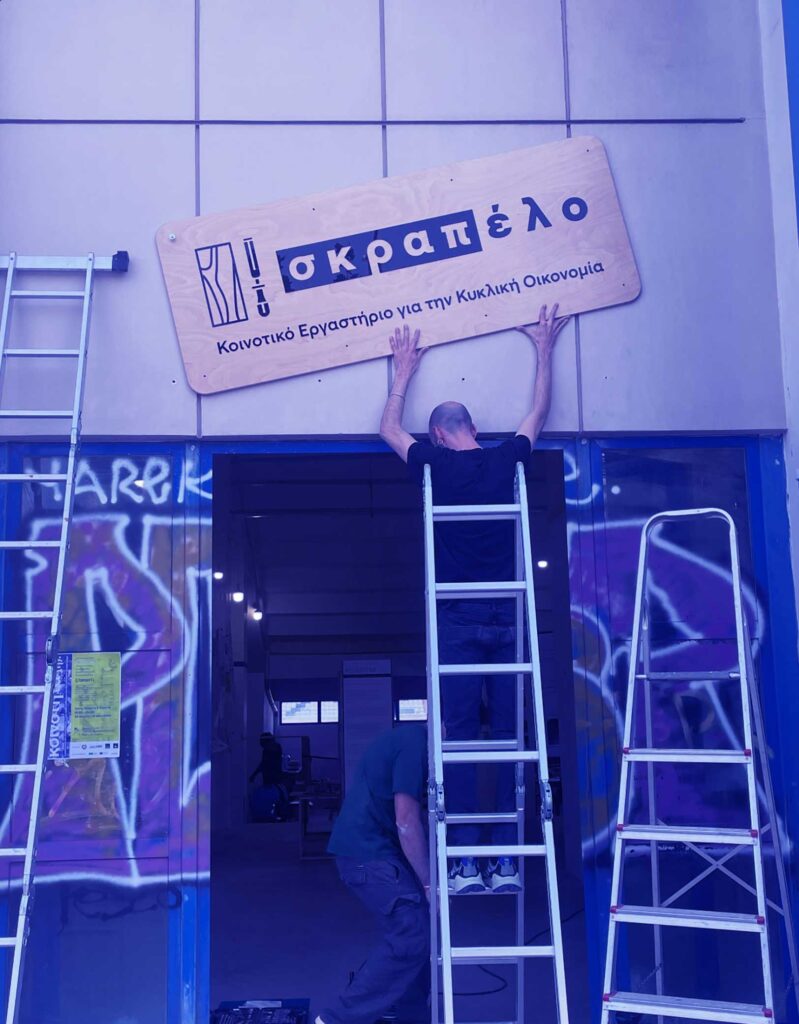
The lab is evolving step by step, and we share that journey here as a series of episodes. It began by approaching the local community and learning to see the neighbourhood through the eyes of residents and children; it continued by turning a forgotten municipal storeroom beneath the stadium stands into Scrapelo, a community makerspace for the circular economy where materials found on site are given a second life; it grew through work with local school students on circular practices and the design of public space; and it opens out to everyone with the inauguration of Scrapelo as a free, public municipal workshop. Each step brings the lab closer to its aim: a self-sustaining community resource where residents co-design and collectively build small-scale interventions for their own square and playground.