
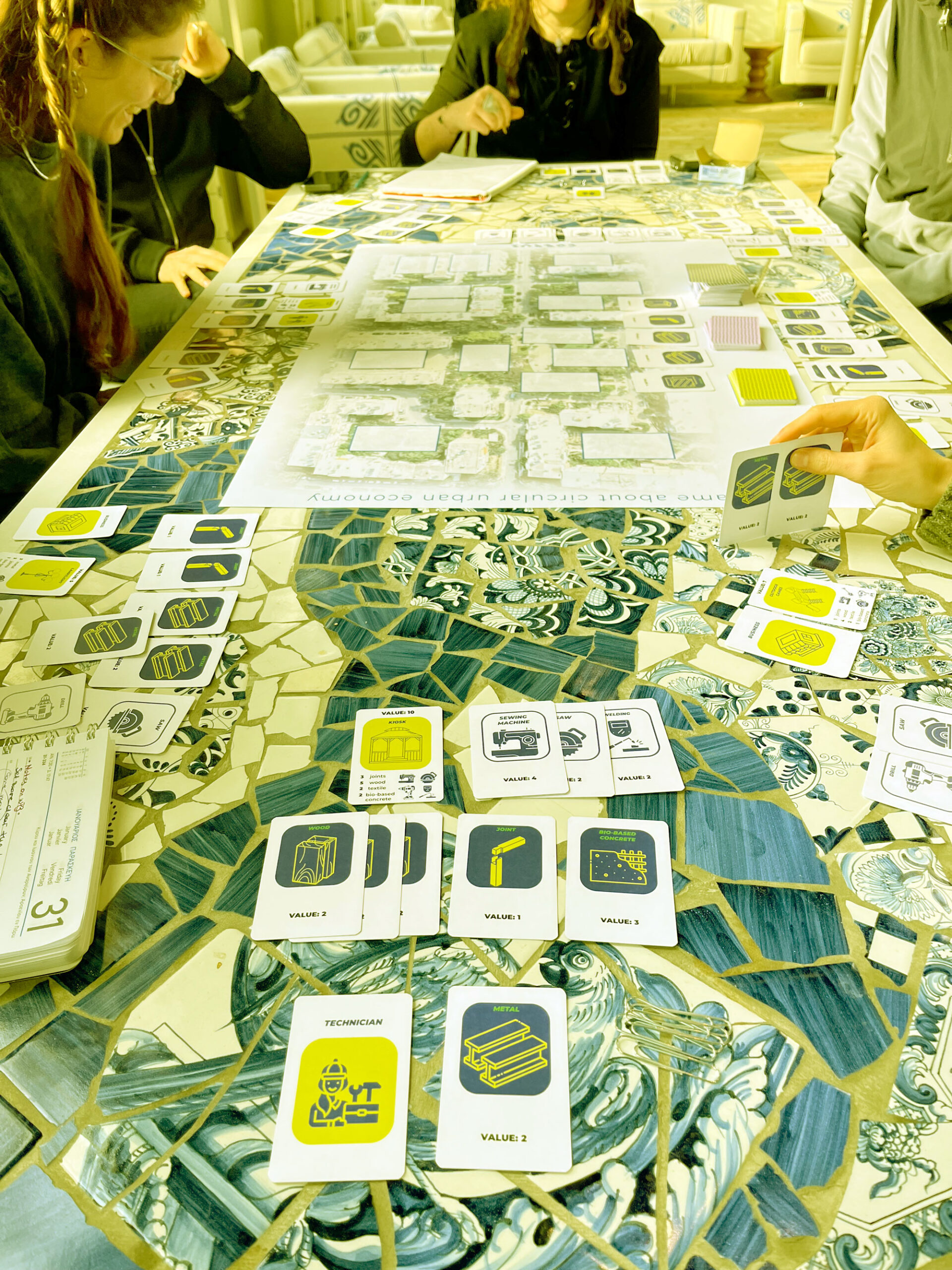
Investigating circular urban economies through play.
Developed by: Open Lab Athens, Municipality of Aigaleo & FBW Urbanists & Architects
Adapted by: University of Turin
Objective of the CORPUS game
The board game fosters upcycling, circulation, collaboration, and participation through an exchange value system. Players intervene in open urban spaces to develop infrastructures that meet the needs of various stakeholders—but beware! Different stakeholders may have conflicting visions. Success depends on negotiation, coalition-building, and strategic decision-making.
Components
Board: The board represents a neighborhood in an imaginary city with built and open spaces.

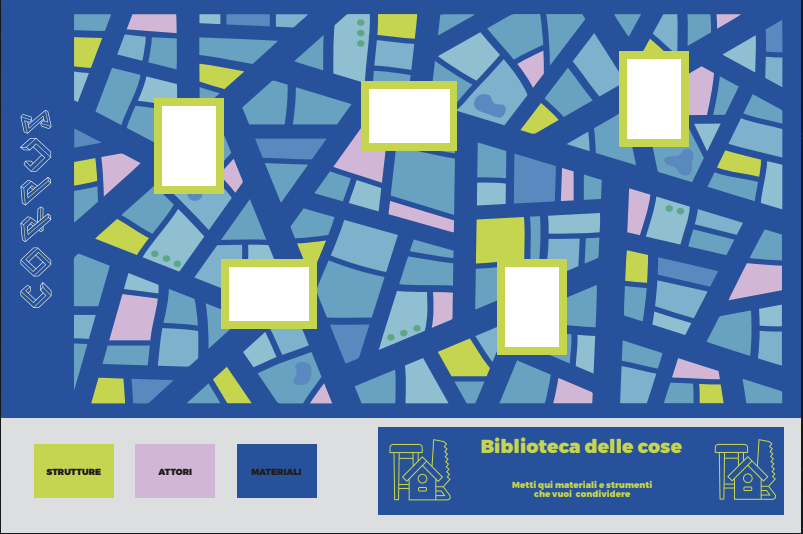
Turin Version Board:
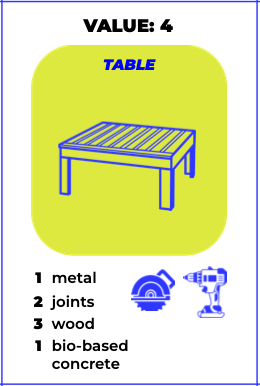
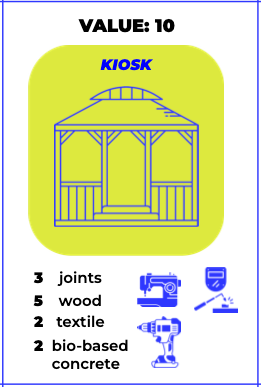
Structure Cards:
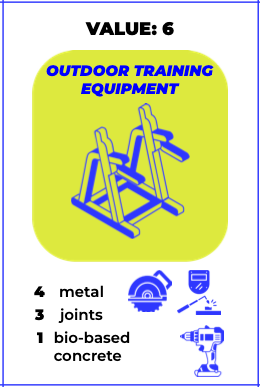
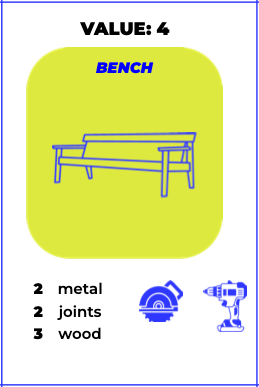
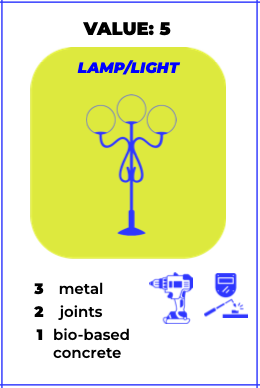
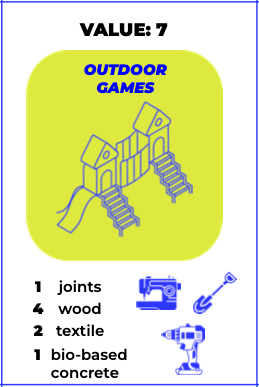
Material Cards (5):
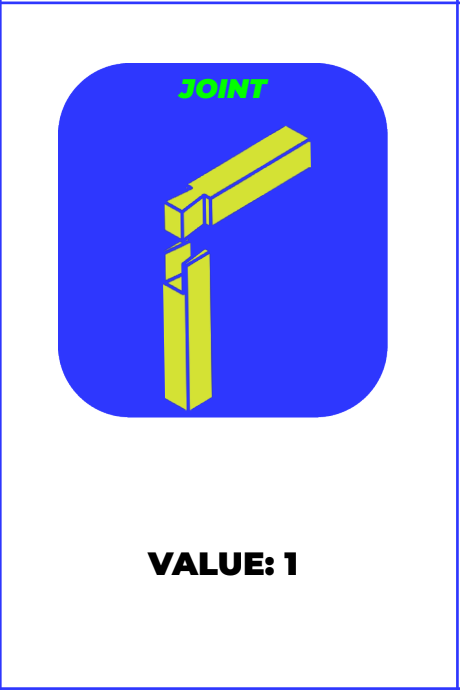
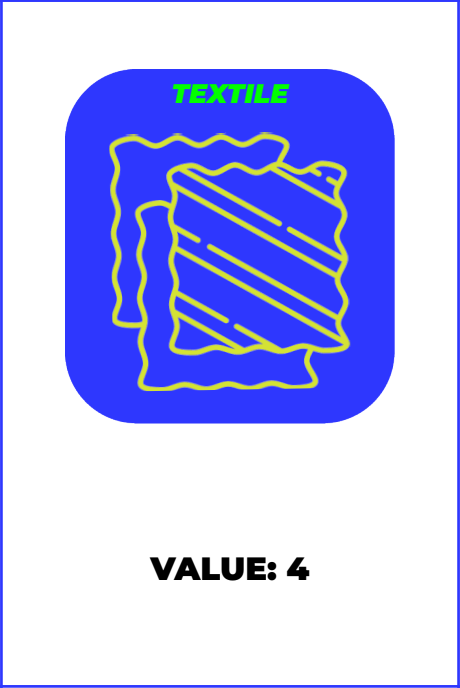
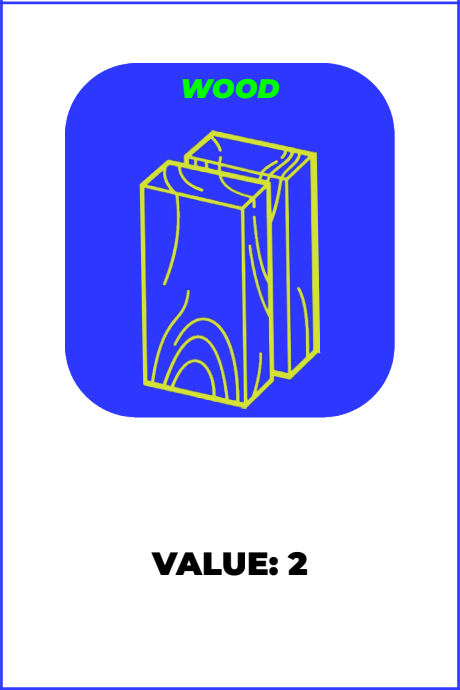
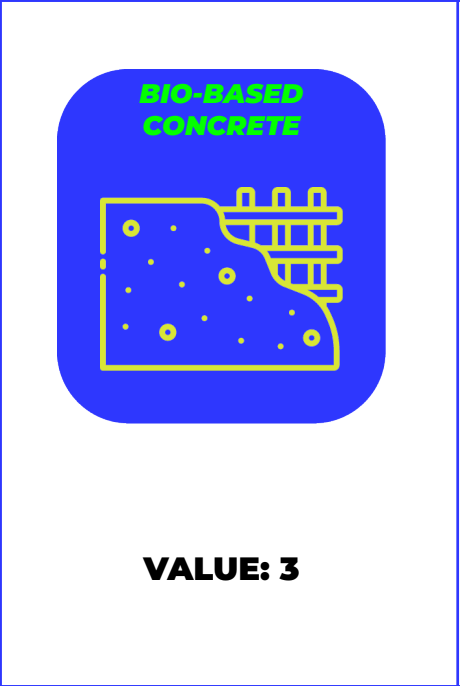
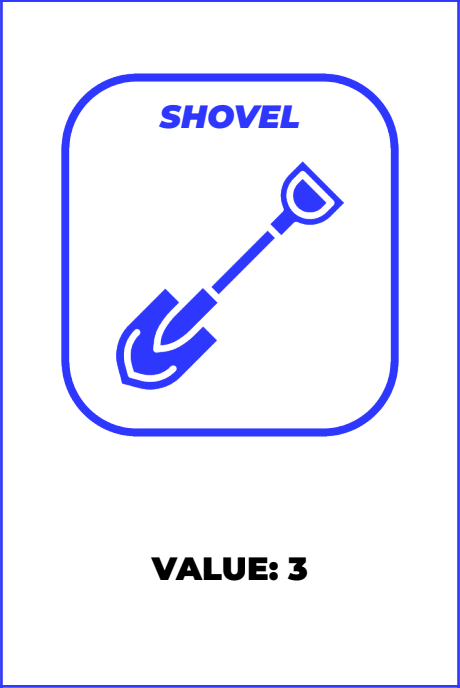
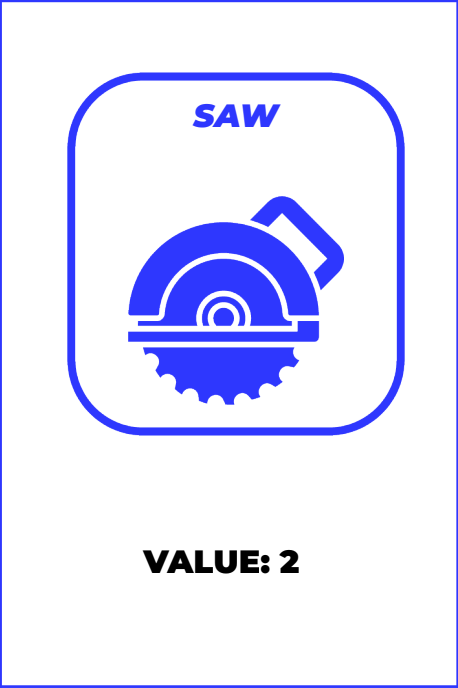
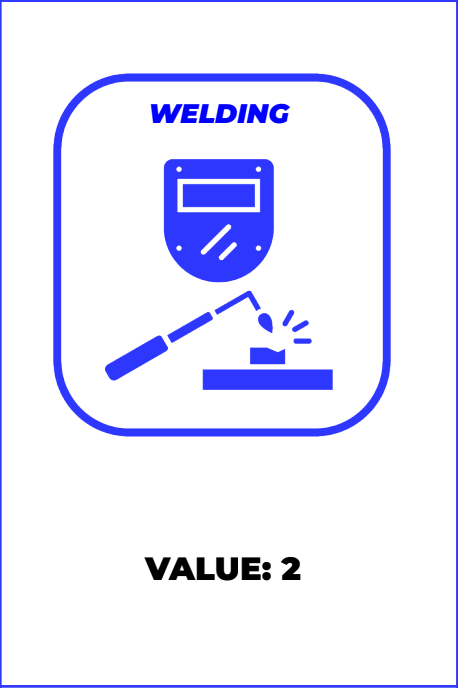
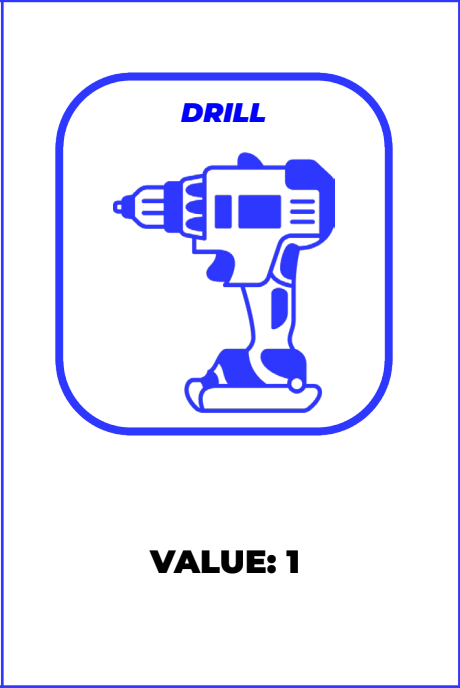
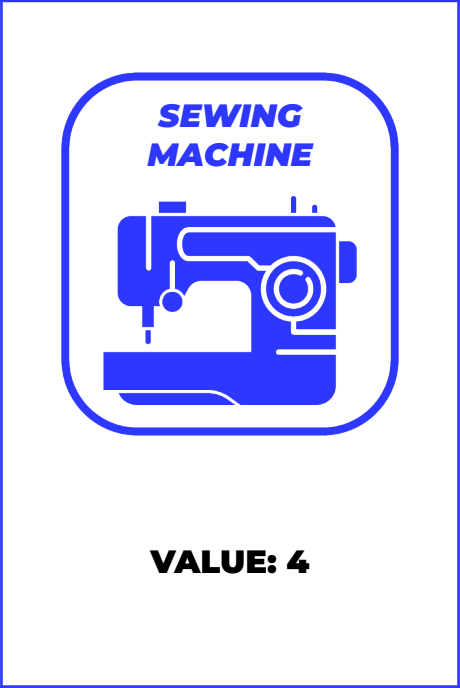
Tool Cards (5):
Tokens: Find something available in amounts in the place of meeting – could be leaves, screws, beans or paperclips. The role of tokens is to be: a. medium of exchange and unit of account (e.g. in exchanges between players, purchases from sellers external to the ULL, and borrowing from the ULL), b. (rather weak) incentive for the construction of common goods through upcycling practices, c. incentive for sharing between two players
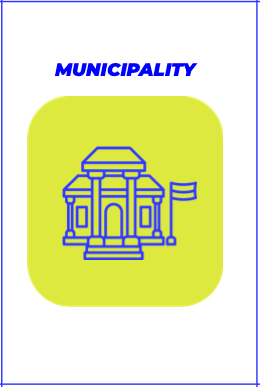
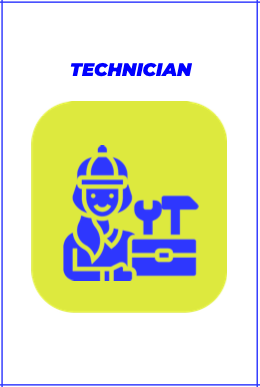
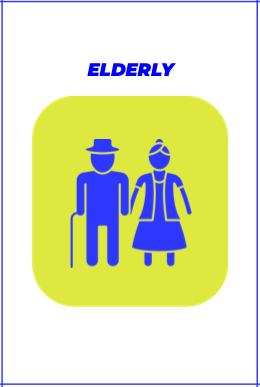
Stakeholders/Roles (6):

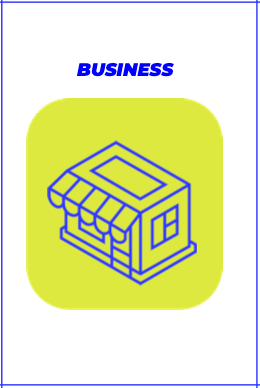
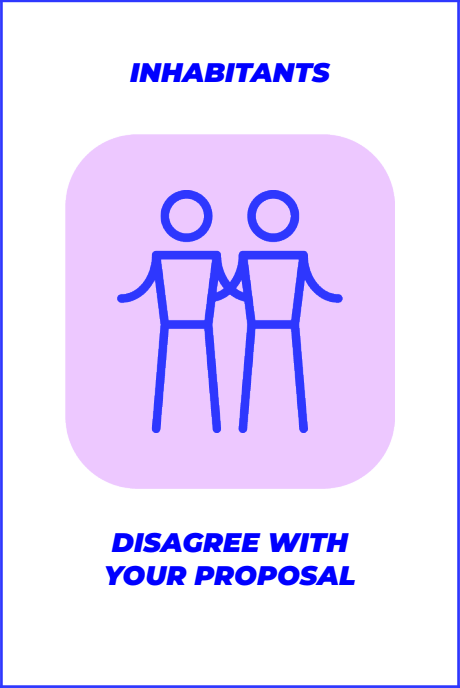
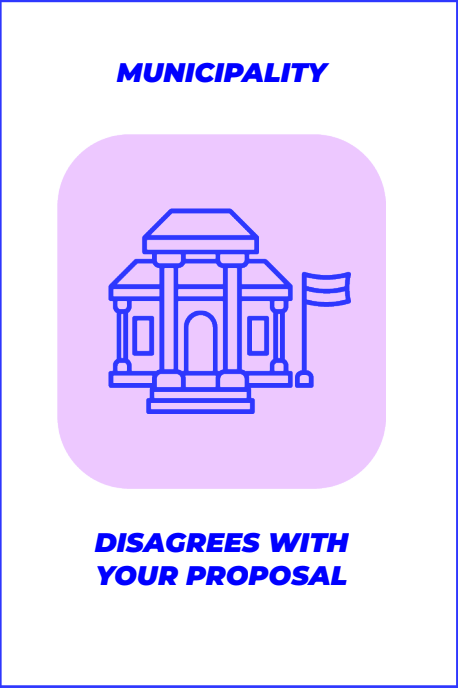
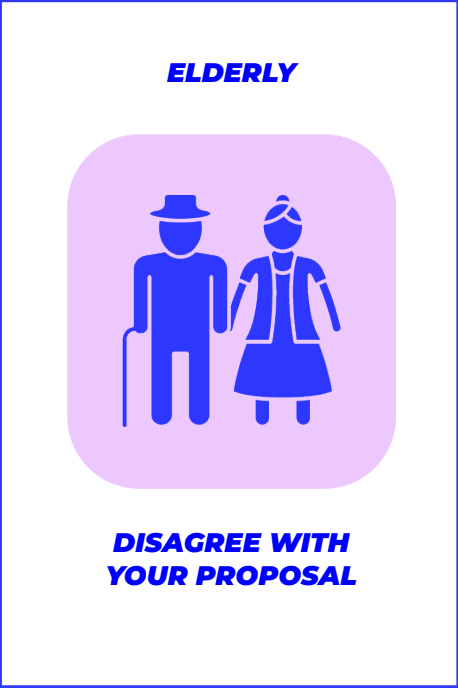
Decision-making Cards (6):


The Community Lab: Community space with a Library of Things and Materials
Circularity Reward Board: Players are awarded for specific behaviours during the game. Each player erases one CIRCULARITY sign on the personal board to keep track of the circular approach during the game. There is a possibility to use more than one board in case of players who succeeded to erase the 19 CIRCULARITY signs.

Setup
On the board:
- Place open cards of materials representing resources that can be gathered in the street on the cobalt blue squares in between buildings.
- Place open cards of tools outside the board. Place all closed piles of each card category on the kiwi, magenta & cobalt blue squares accordingly.
- A wider magenta square representing the space of the community lab where the library of things and materials is located. (empty at the beginning).
- When achieving a spatial intervention, place structure cards on the white squares.
Starting the Game
- Each player secretly selects a Role Card, clockwise.
- Each player selects secretly an Structure pile; they may swap it only before the second round begins if unsatisfied.
- Each player is secretly given 4 Material Cards and 2 Tool Cards.
- Each player gets a Circularity Reward Board and a pen to keep track of his/her circular behaviors during the game.
Once all players have their roles, structures, and starting resources, the game is ready to begin!
Second round and beyond
Each time a player is about to play has the following options:
- take one open material card from the cobalt blue squares in between buildings and get one CIRCULARITY Reward or two closed cards from the pile of materials
- exchange materials or tools or combinations of them with other players – each exchange is awarded with 2 tokens for both parties
- take one structure card in order to have an additional goal to accomplish
- choose a new tool you need by burning collected tokens by the open pile of tool cards outside the board. Players could choose the tool they want
- borrow a tool (to be returned after using for building the structure) or exchange a material from the community lab by giving something of the same value in return (tool, material or token)
- build a structure and earn the respective tokens mentioned on the card. In the case of a player using at least one tool or material from the Community Lab, then the player gets one CIRCULARITY Reward
Additionally, each time is a player’s turn, is allowed to give materials or tools to the library and get one CIRCULARITY Reward:
– When he/she has more than 15 cards (mandatory)
– Tools or materials that are not useful to play (materials from the closed pile or tools after using them for building)
In order to build an intervention you have to collect the respective resources that are mentioned in the structure card. When one player decides to build has to take a decision making card. This is a discussion challenge which refers to all players.
Example:
The player representing Elderly has collected all the materials cards needed to build a bench in the public space and has the tools:
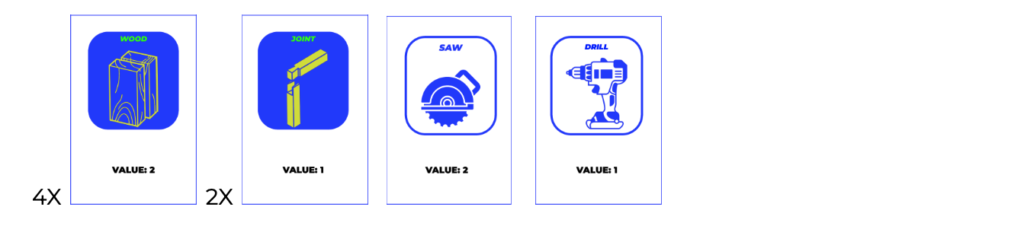
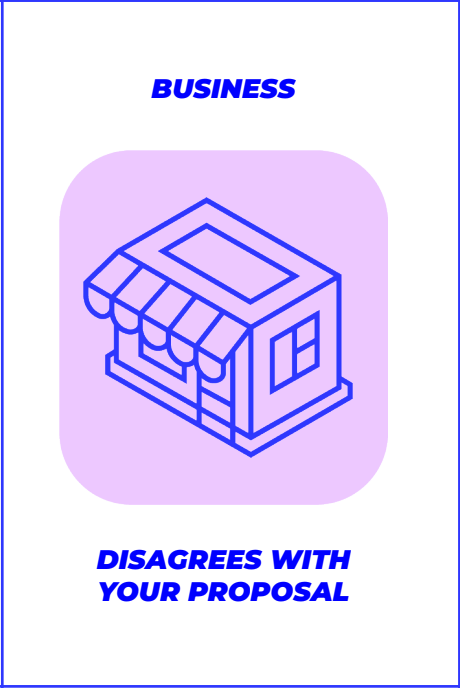
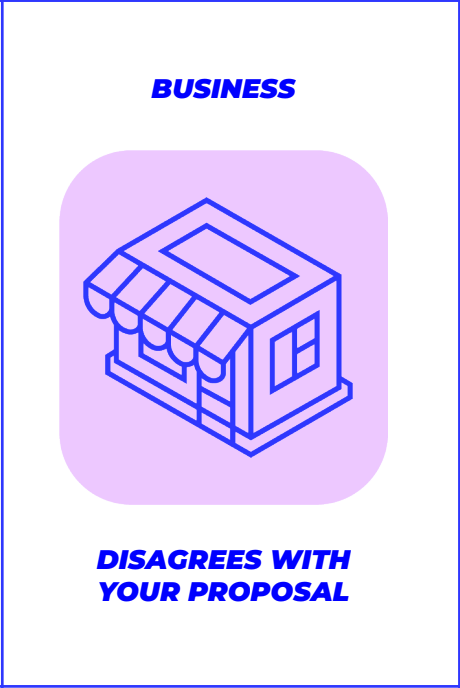
The player takes one decision making card. The player who has the role of local business represents the stakeholder who is against the intervention. All players participate for 5 minutes in an open discussion with arguments to decide if the intervention should be made. In the end players vote for elderly’s intervention or against it to decide if Elderly will build the bench and take the reward tokens.
Token Collection: It is an important aspect of the game and relates more with the progress of the player during the game, in order to become capable of building structures in the public space.
Reward Collection: It is an additional approach to the game which has a focus on the promotion of circularity and the support of the Community Lab.
The game ends after a predefined time or when all positions of interventions are occupied. The players before starting playing has to decide about the way of defining a winner by choosing one of the following options:
- Winner of the game is the one with the most tokens collected
- Winner of the game is the one with the most rewards collected
- We have a collective win against the game only if we succeed to build structures in all available positions
Additional rules
- There is a limit of 15 cards that a player can have. The excess should be placed in the community lab without any reward of tokens.
- If you choose a decision-making card same as your role, then you choose another one and continue playing.
- Once a player collects all necessary tools and materials for their structure, they have to wait until the next round to build it and after selecting a decision-making card.
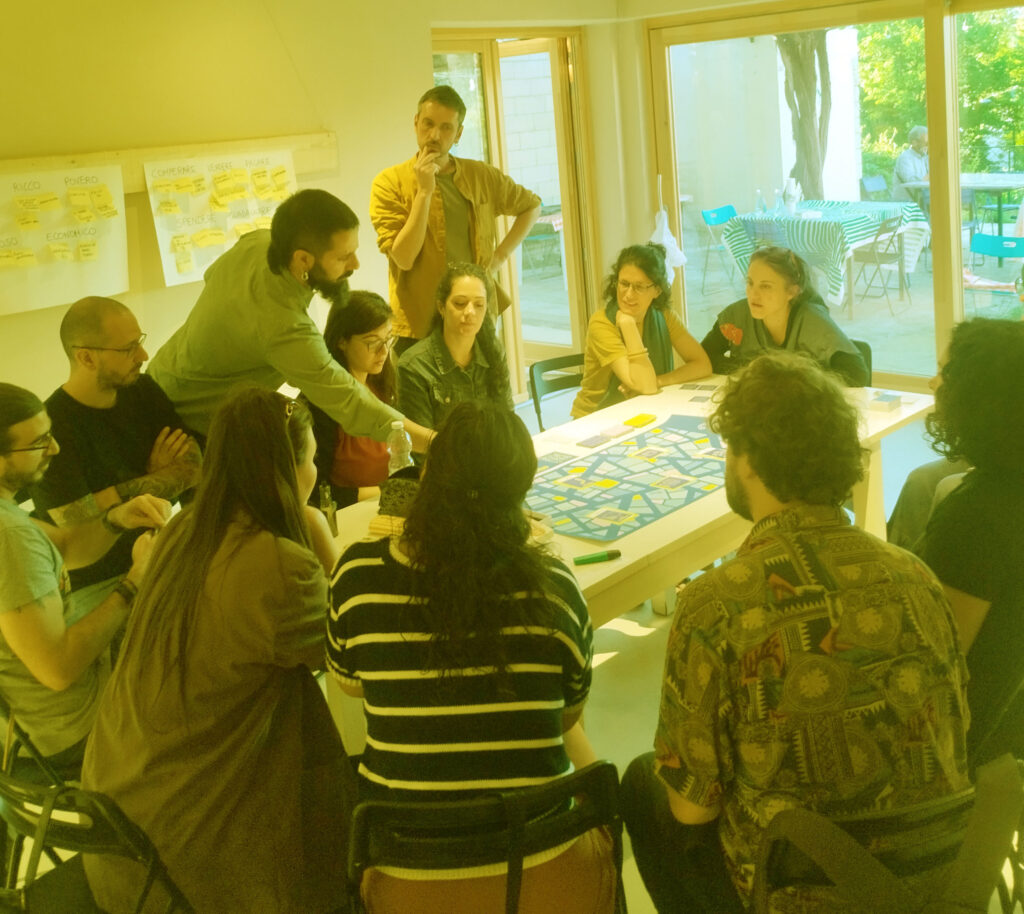
Testing of the game as an engagement tool in terms of the Turin Urban Living Lab (see more here).
Hints & Tips
- Feel free to form alliances – but don’t hesitate to break them when needed.
- Avoid the use of language and perception of tokens as ‘capitalist’ currency (‘if I burn tokens, I become poor’, buy, expensive, pay). Try to think of a different lexicon.
- There is no universal rule or term for exchanges or borrowing tools and materials from the community lab implied by the game itself. It’s a matter of negotiation between players.