
constructing the physical space of the urban living lab
In August 2025, the CORPUS research team—Open Lab Athens, the Municipality of Aigaleo, and FBW U+A, with the construction expertise of the Rokani Social Cooperative—began transforming a 300 m² municipal space beneath the stands of the Stavros Mavrothalassitis Municipal Stadium into the physical home of the Aigaleo Urban Living Lab: the community workshop later named Scrapelo*.
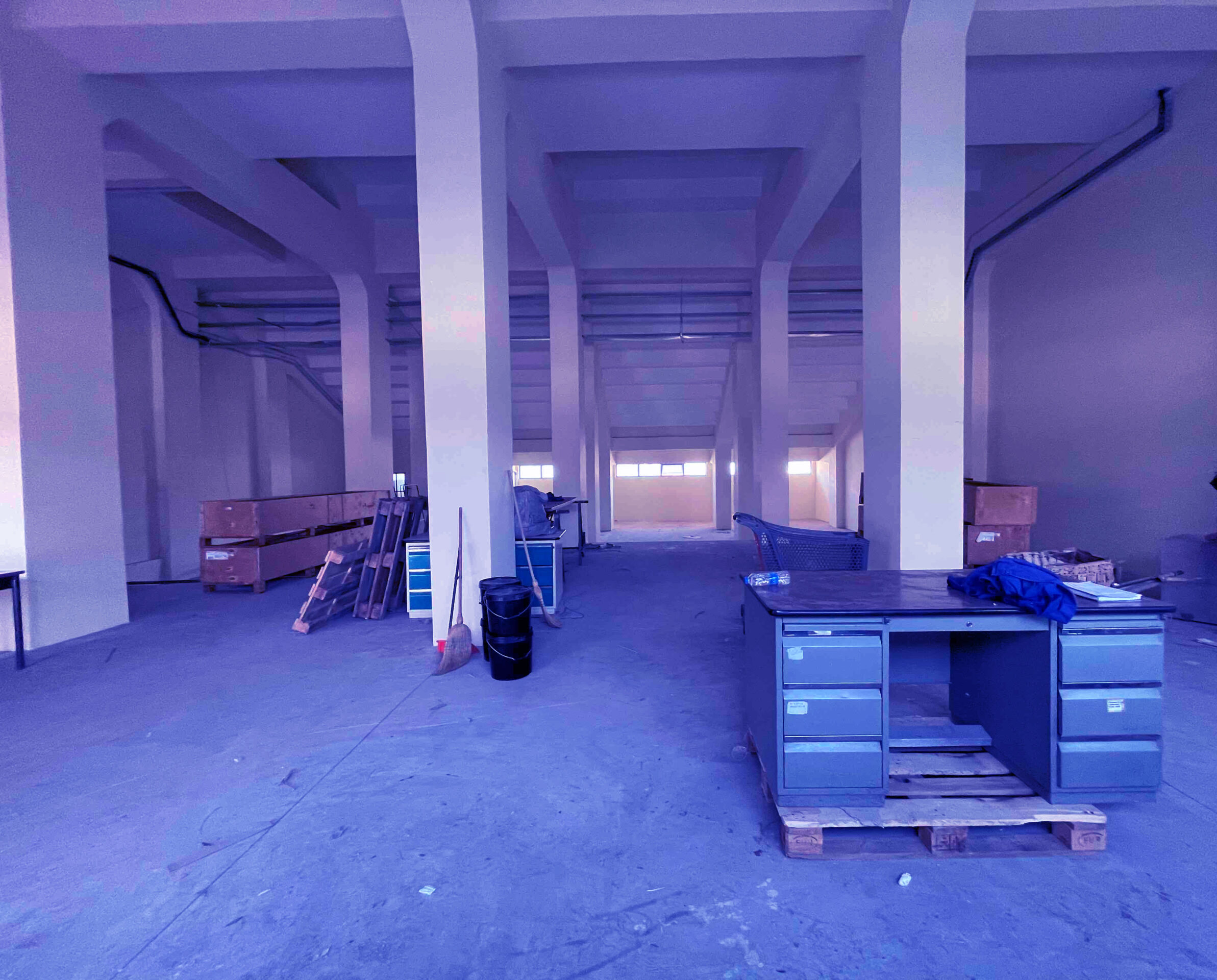
If Episode 1 was about approaching the neighbourhood, this chapter is about the activation of a municipal space through circular practices and reuse of materials. The story of Scrapelo begins not with new materials, but with a forgotten room, a broom, and a question: what is already here, and what could it become?
* The name is a play on two words: the English “scrap” — the discarded material we give a second life — and “σκαρπέλο,” the Greek word, with Italian roots (scalpello), for a chisel, the craftsperson’s tool for carving and shaping by hand. Scrap meets chisel: a place where leftover material is patiently reworked into something new.
Cleaning and reclaiming the space
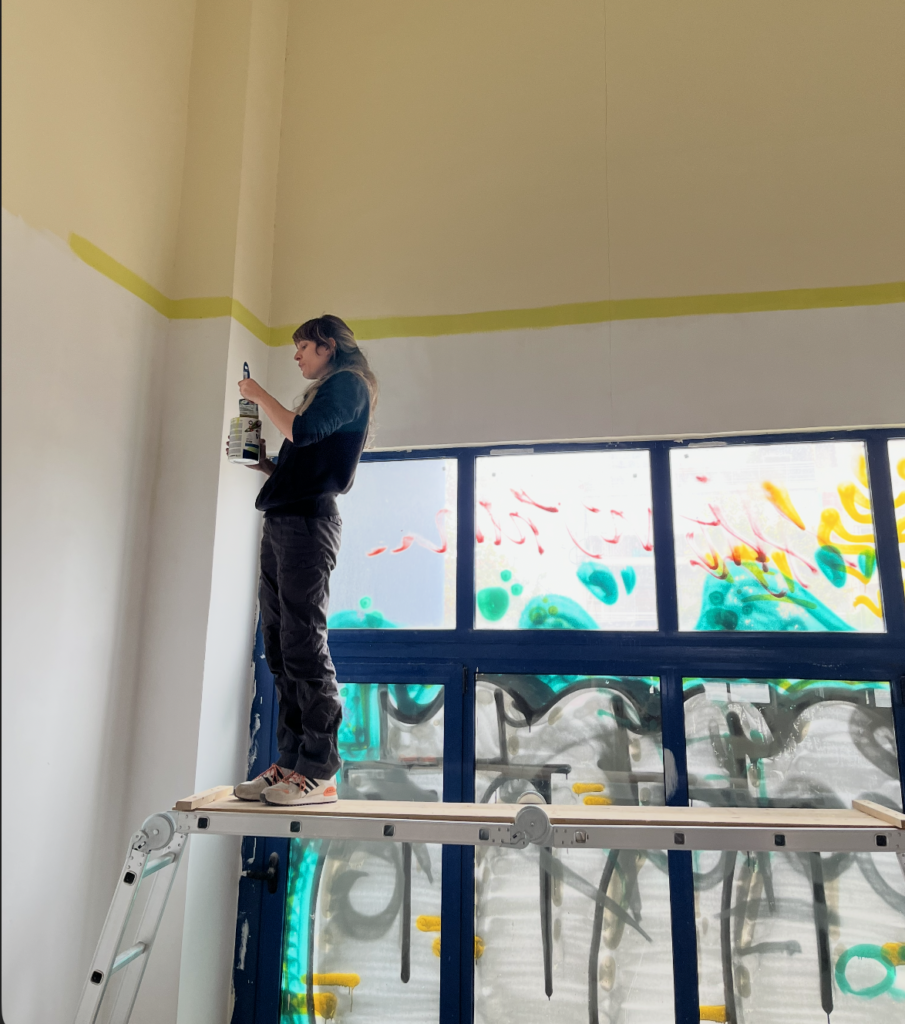
The room had served as a warehouse for the Municipality’s technical services—a space that had quietly filled with things no longer in use. Our first task was the most ordinary and the most symbolic: we cleared it out, cleaned it, and gave the walls a fresh coat of paint.
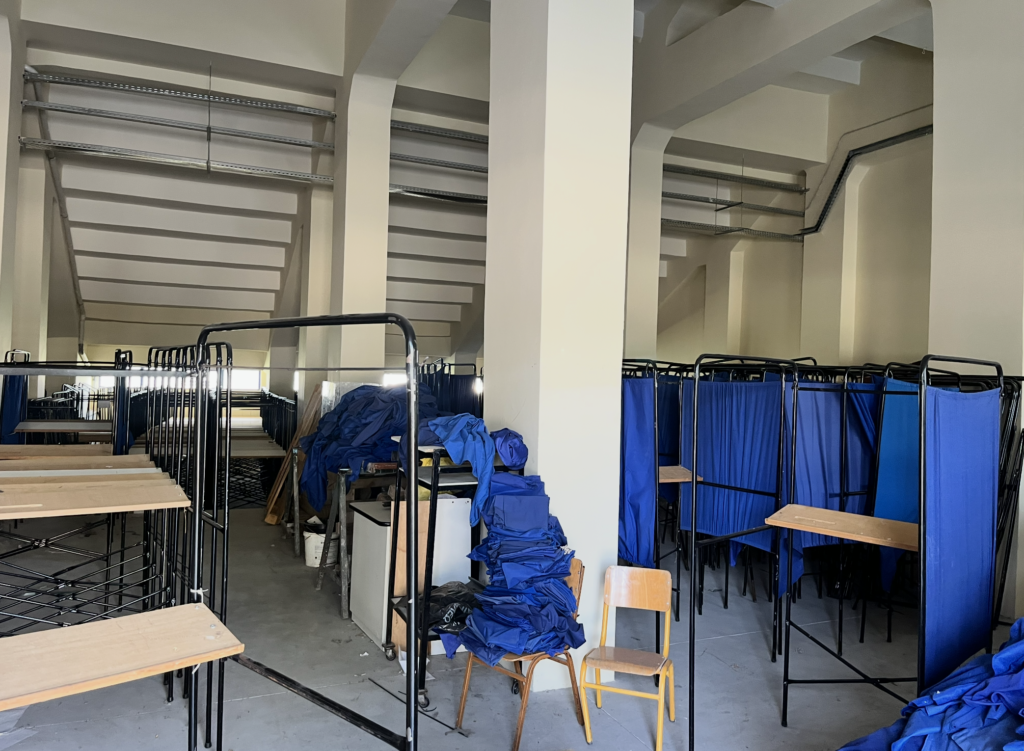
Alongside this, a series of preparatory works prepared the space for everyday, safe use. Once the room could breathe again, we installed the first basic woodworking tools and machines so that the upcycling of materials could begin.
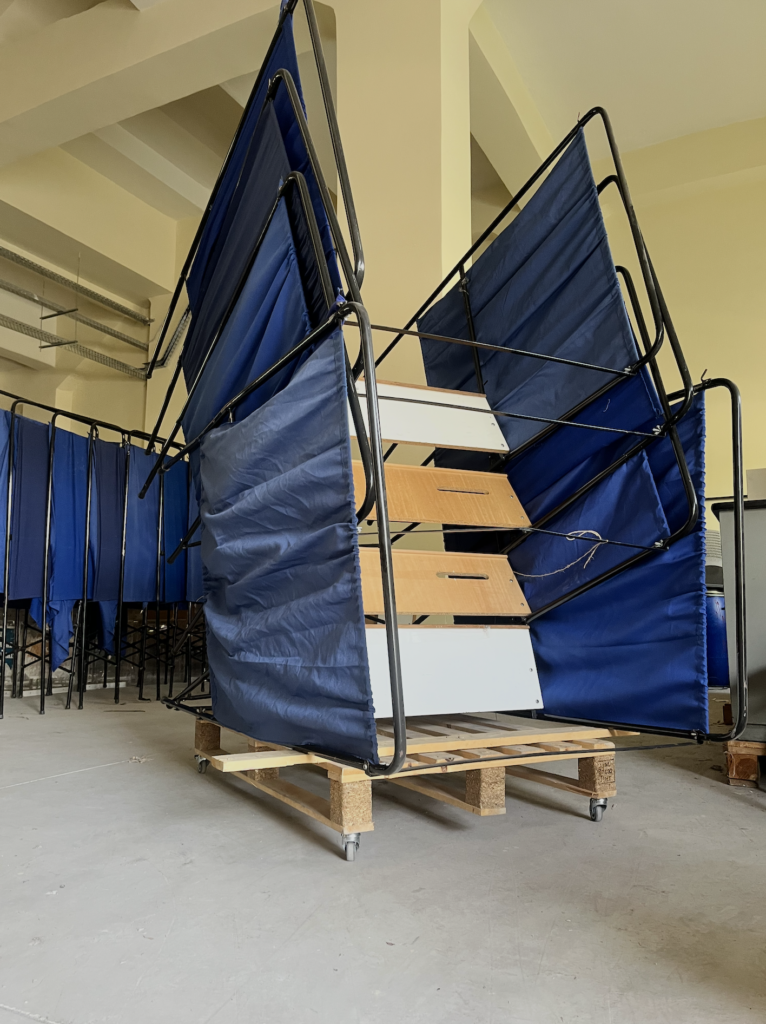
the first contruction in the space. A DIY cart
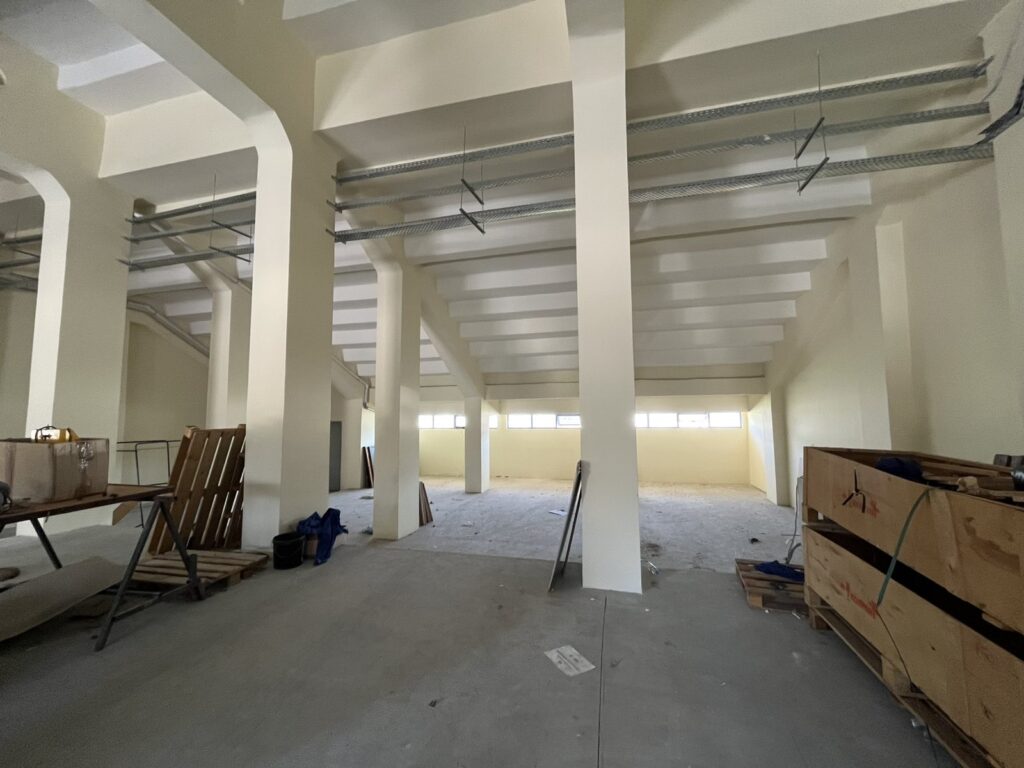
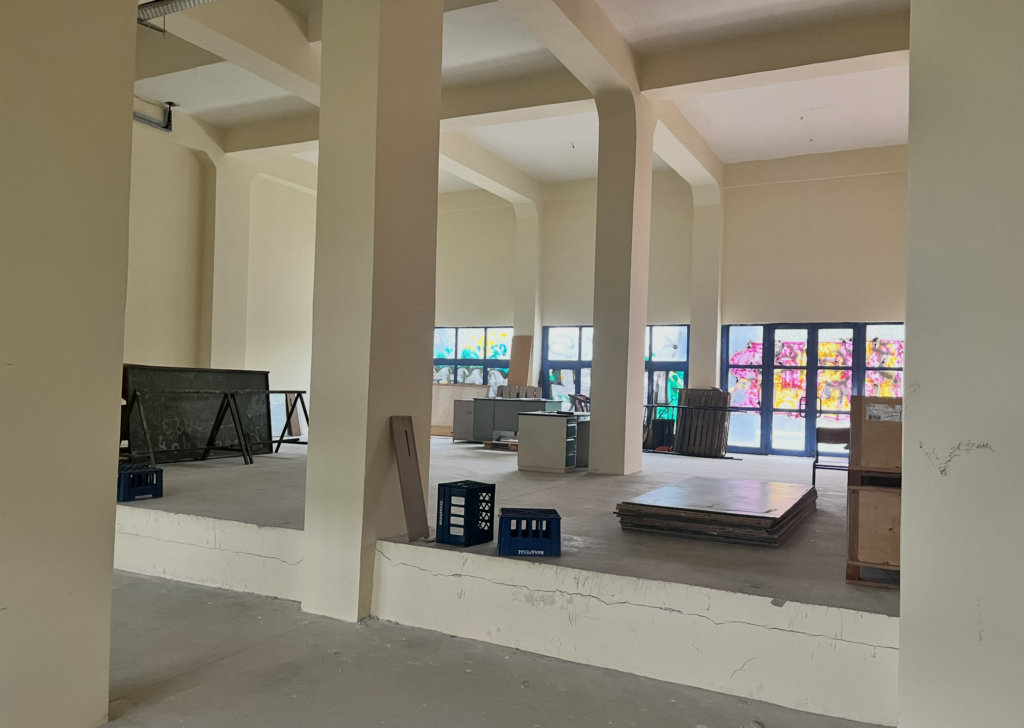
A former municipal warehouse, emptied and repainted—the first, plain act of turning storage into a place of making.
The materials we found
Inside the warehouse we discovered a satisfying volume of timber—wood that had been sitting unused, simply taking up space. Rather than treating it as clutter to be thrown away, we sorted and catalogued it, and in doing so created the workshop’s first materials library: the reserve we now draw on to build the lab’s own infrastructure and furniture.

This is the heart of the idea. Materials like wood, which carry a high cost when bought new, can often be found within a very short radius—sometimes in the very room you are standing in. The space was organised around three zones that make this logic visible day to day: the materials library, the processing and construction area, and an area for offices and other types of public workshops. Among the finds were 14 wooden school blackboards—the unlikely starting point for our first build.
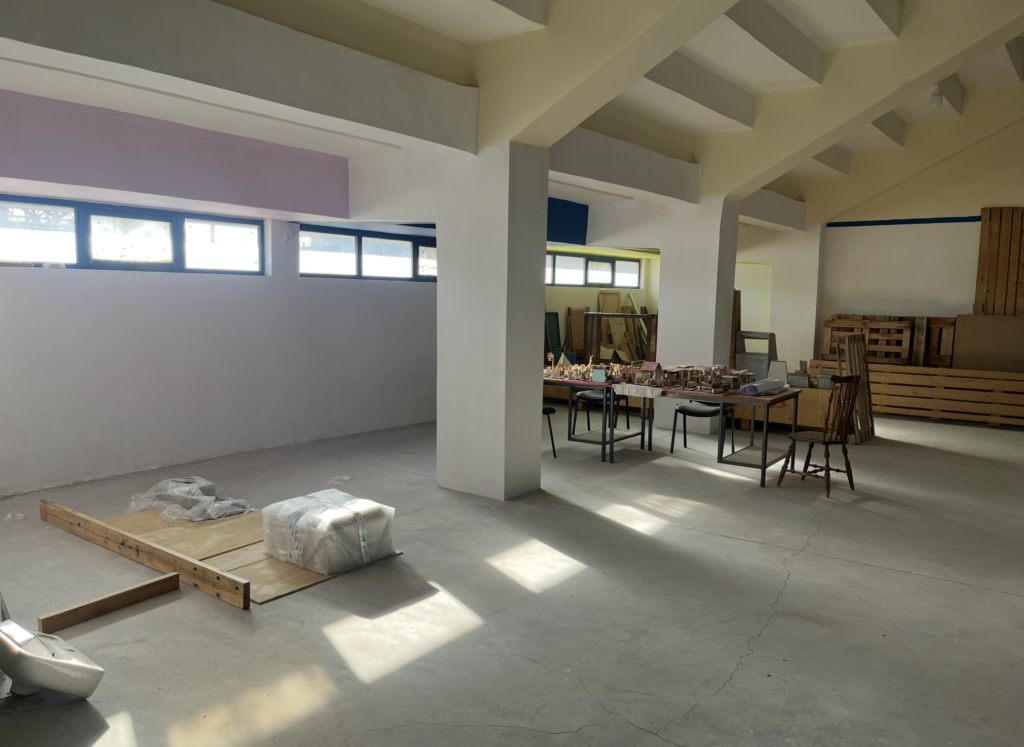
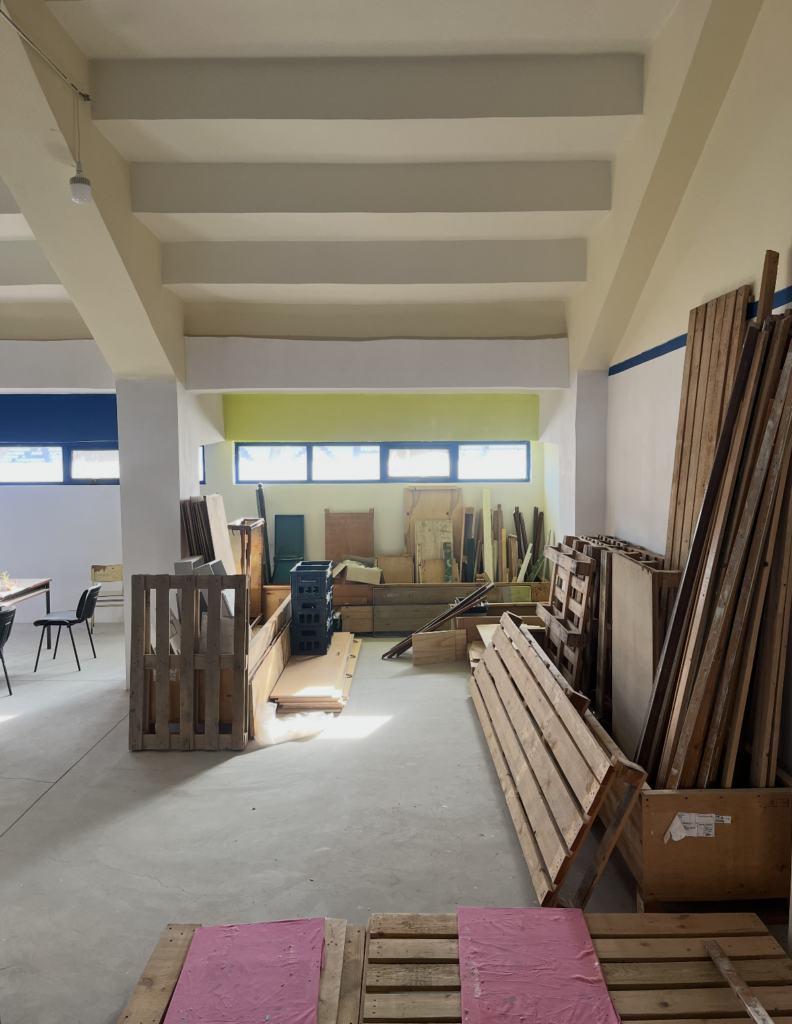
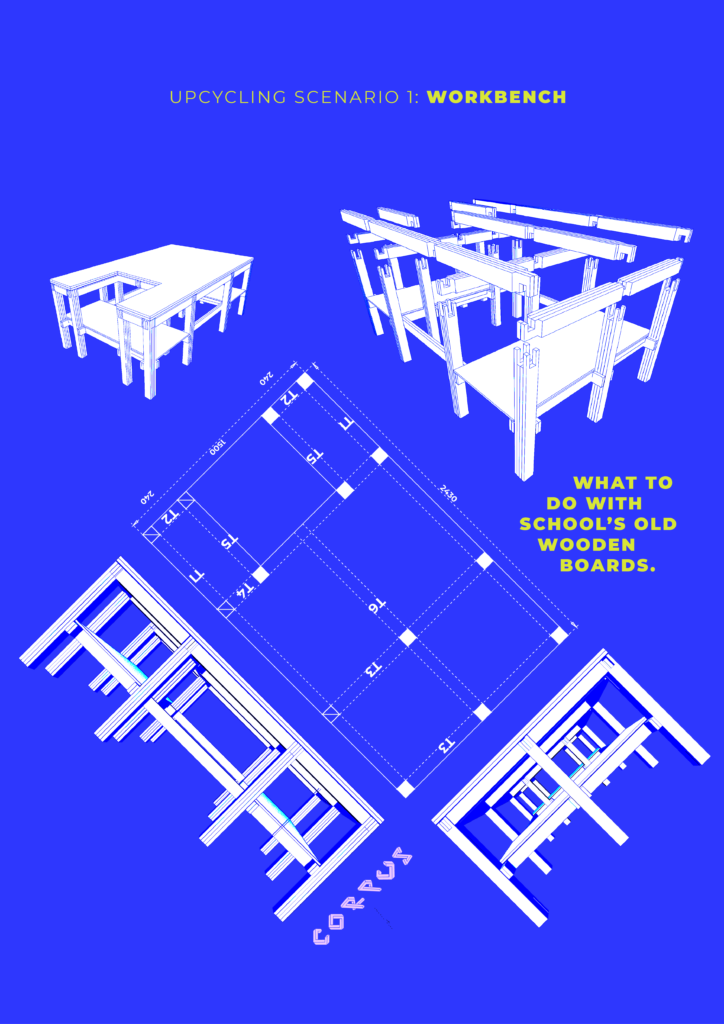
Upcycling scenario 1: the workbench
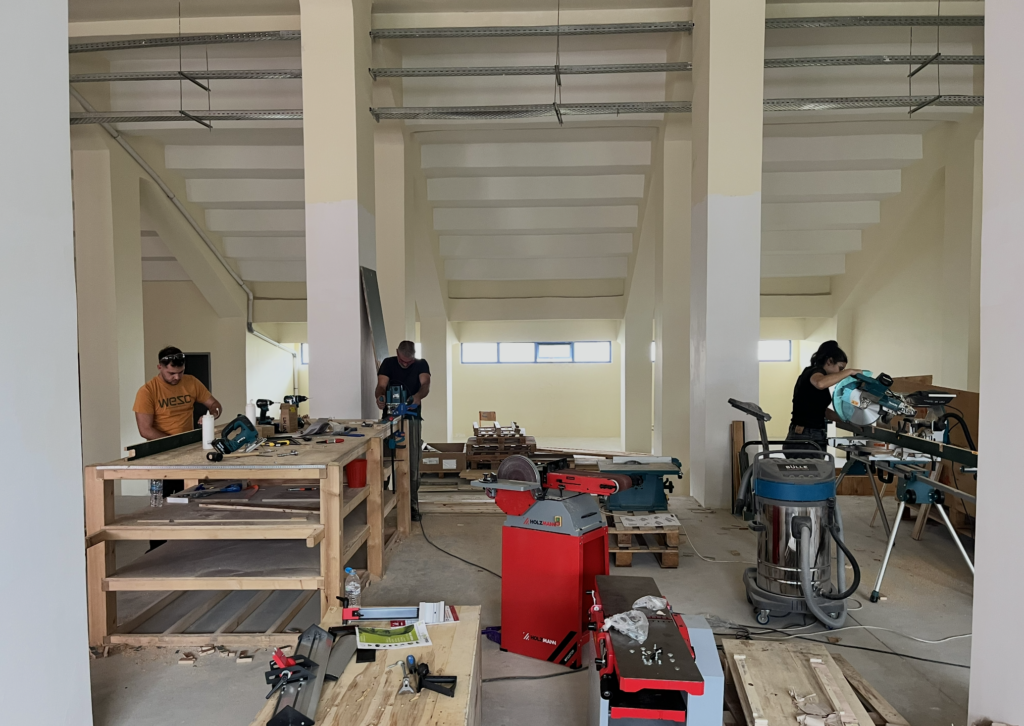
Our first upcycling project took shape over two months inside the makerspace, with the guidance of the Rokani Social Cooperative. From the start it was conceived as a learning process for the CORPUS team—a chance to get to know the tools, the machines, and the construction techniques while collectively building real, functional infrastructure for the space. The object we chose was the most demanding one a workshop needs first: a workbench, the heavy, load-bearing heart of any wood workshop.
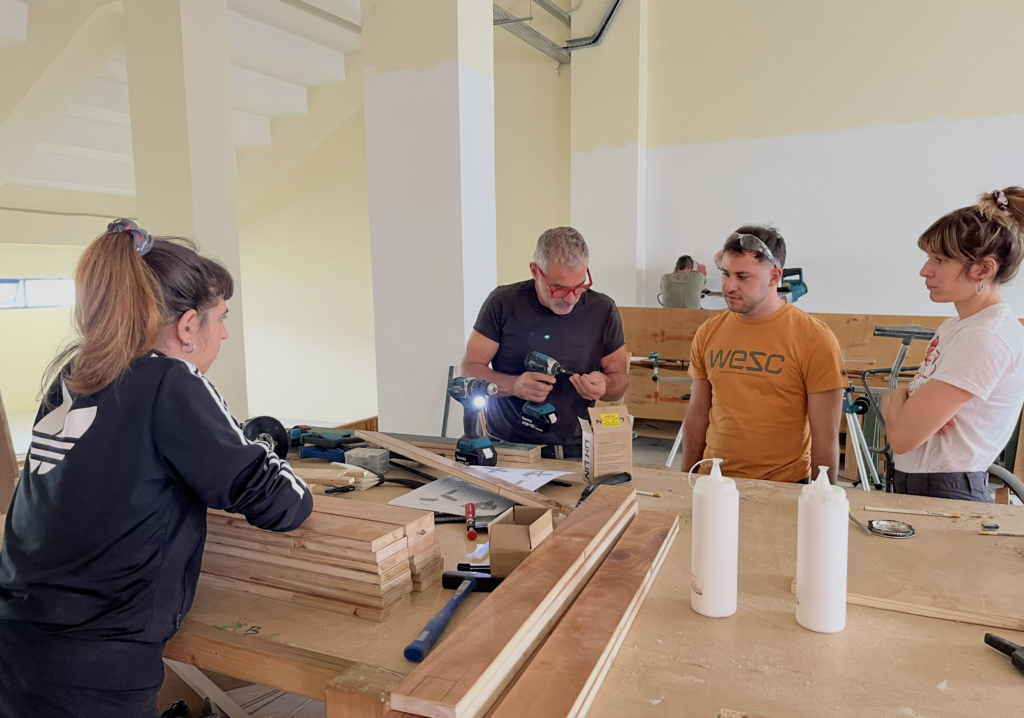
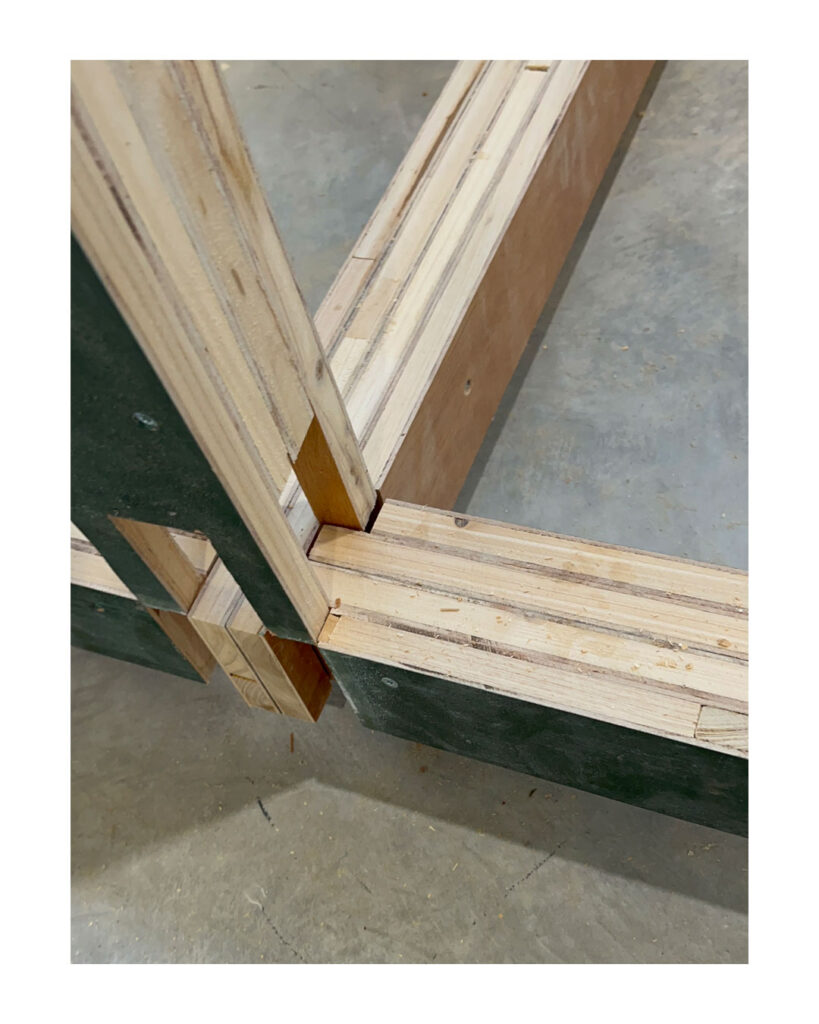
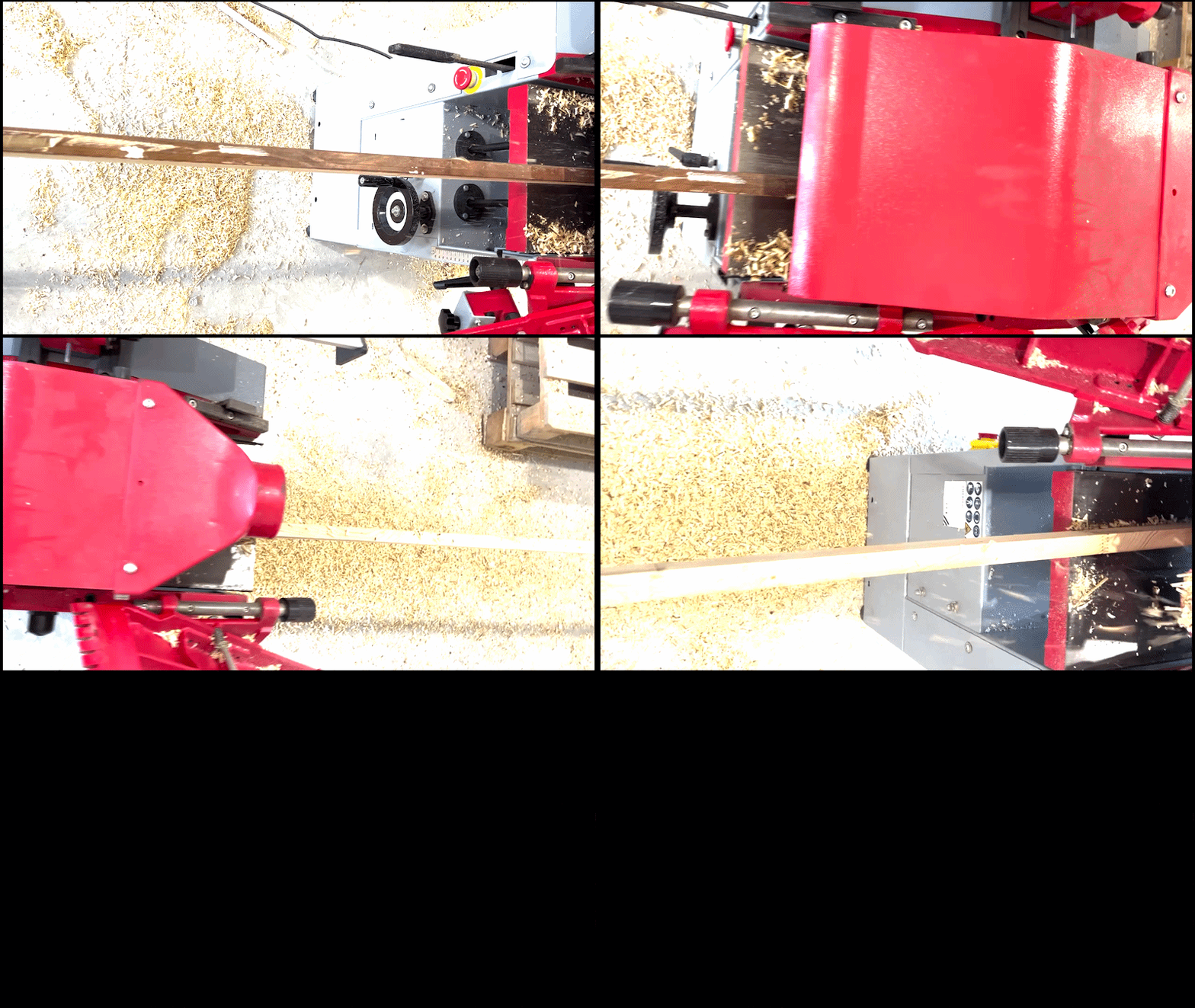
The structure came entirely from reclaimed material. Its load-bearing skeleton and its working surface alike were built from the reclaimed school blackboards—six in all. Rather than relying on screws, we experimented with Japanese joinery, and we built the bench’s robust structural elements by laminating 8 cm wooden planks—bonding reclaimed timber back into beams strong enough for heavy work.
The first version, finished in November, was already solid enough to support our renovation activities—even before the table saw arrived.
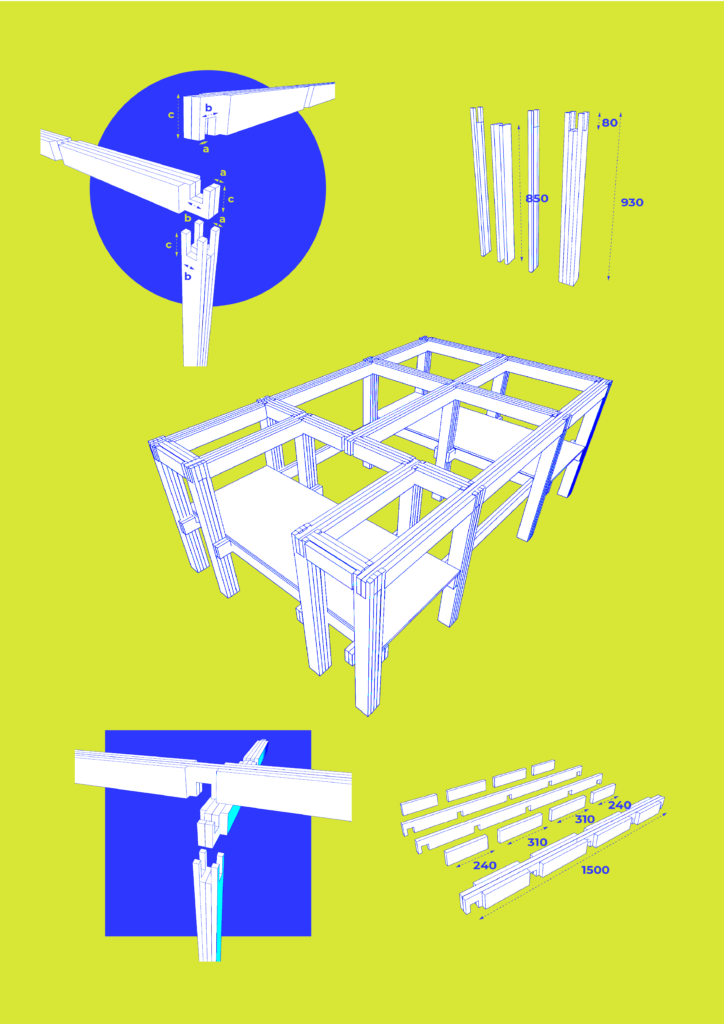

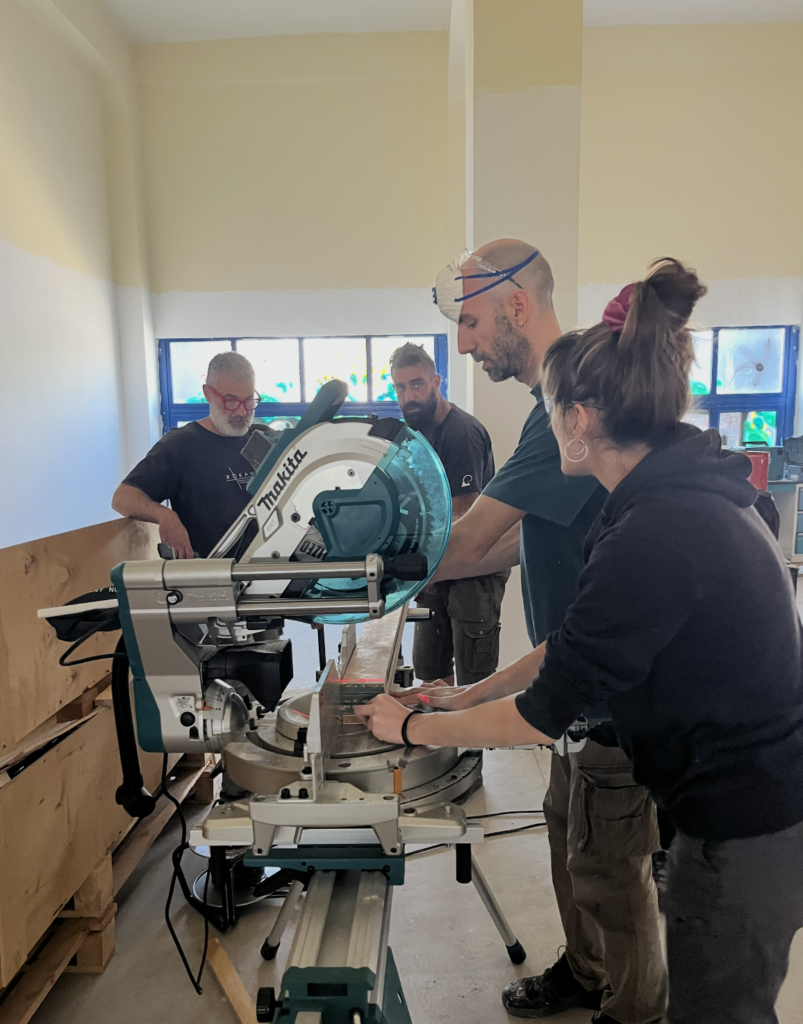
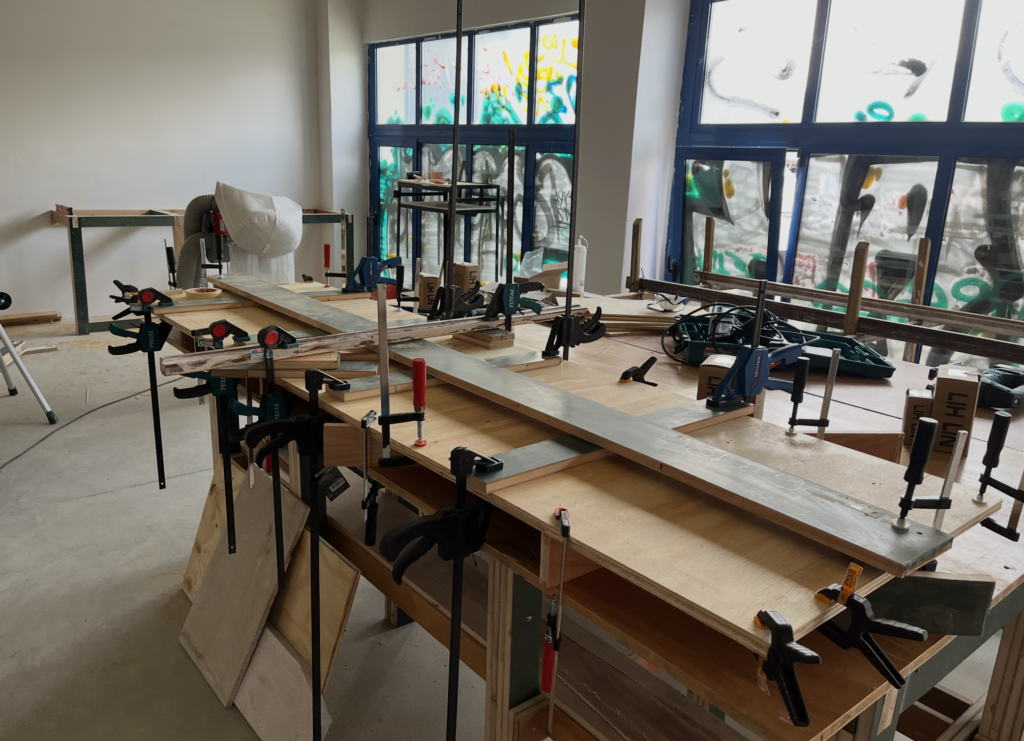
The second and final version introduced that table saw, turning the bench into a DIY station for longitudinal cuts and large-surface processing. Integrating the machine meant adapting the original structure: we modified the work surface so the saw’s guide could travel freely, raised the surface to suit the machine’s operation, and built a custom shelf to keep the saw and the bench in precise alignment. Pushing the build this far also stretched our skills—it took us to Rokani’s own workshop for an introduction to welding.
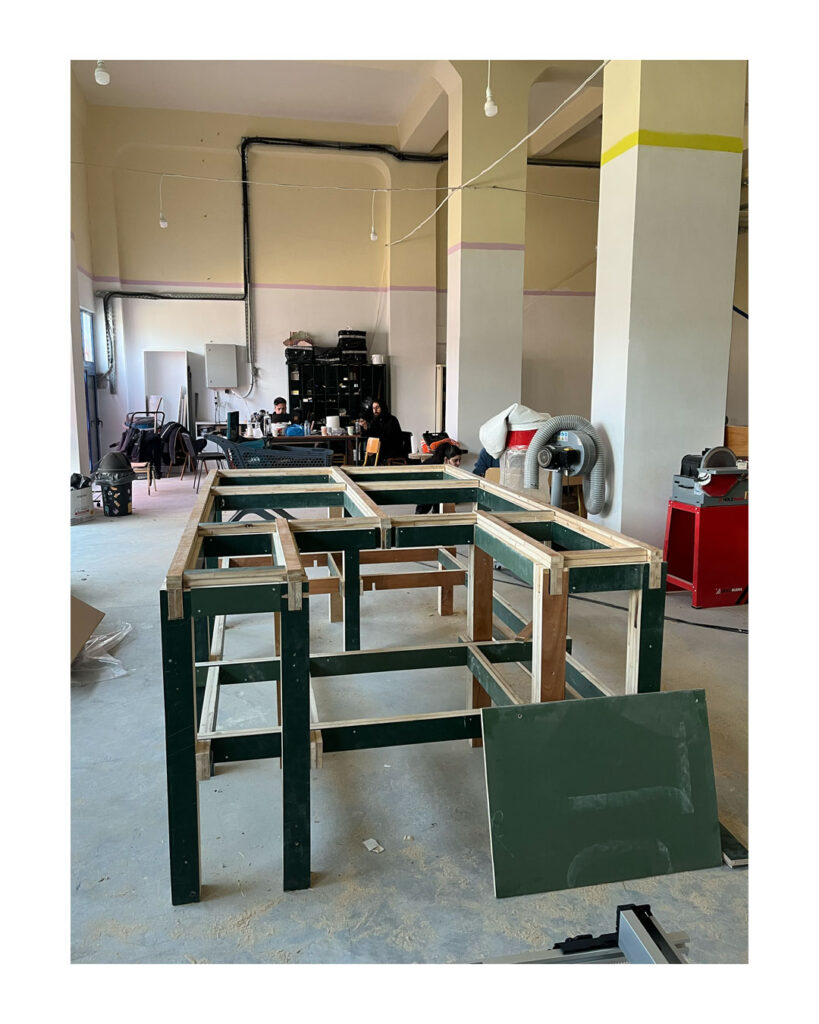
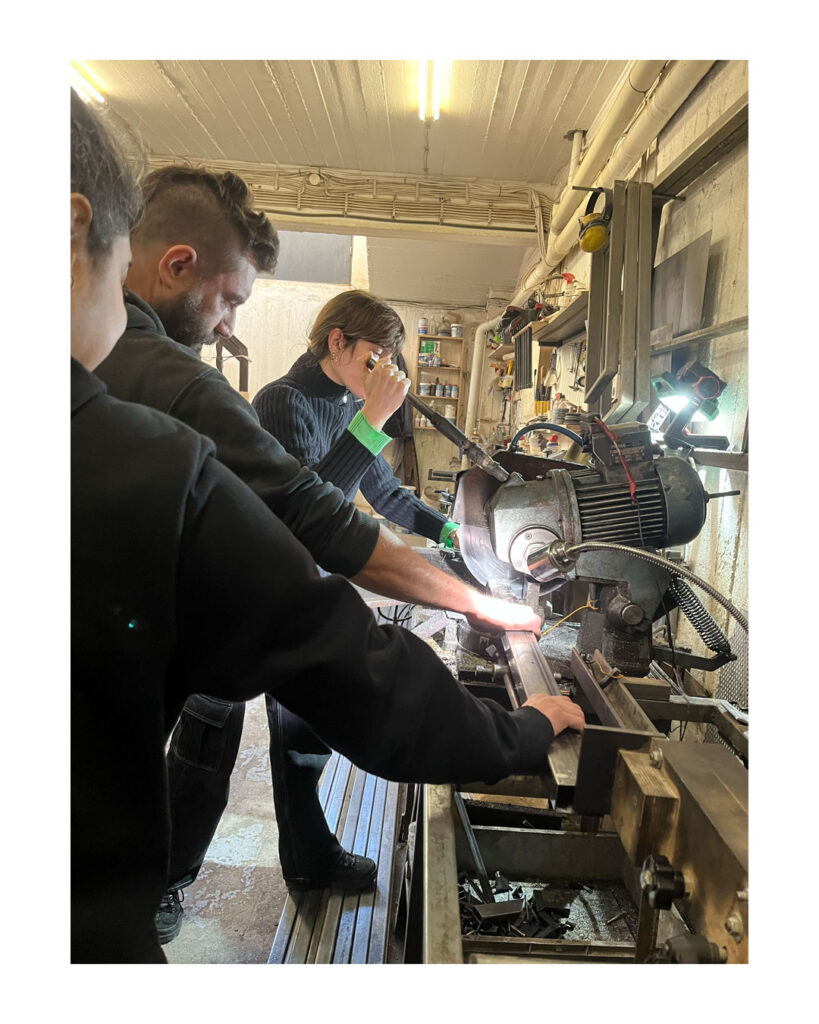
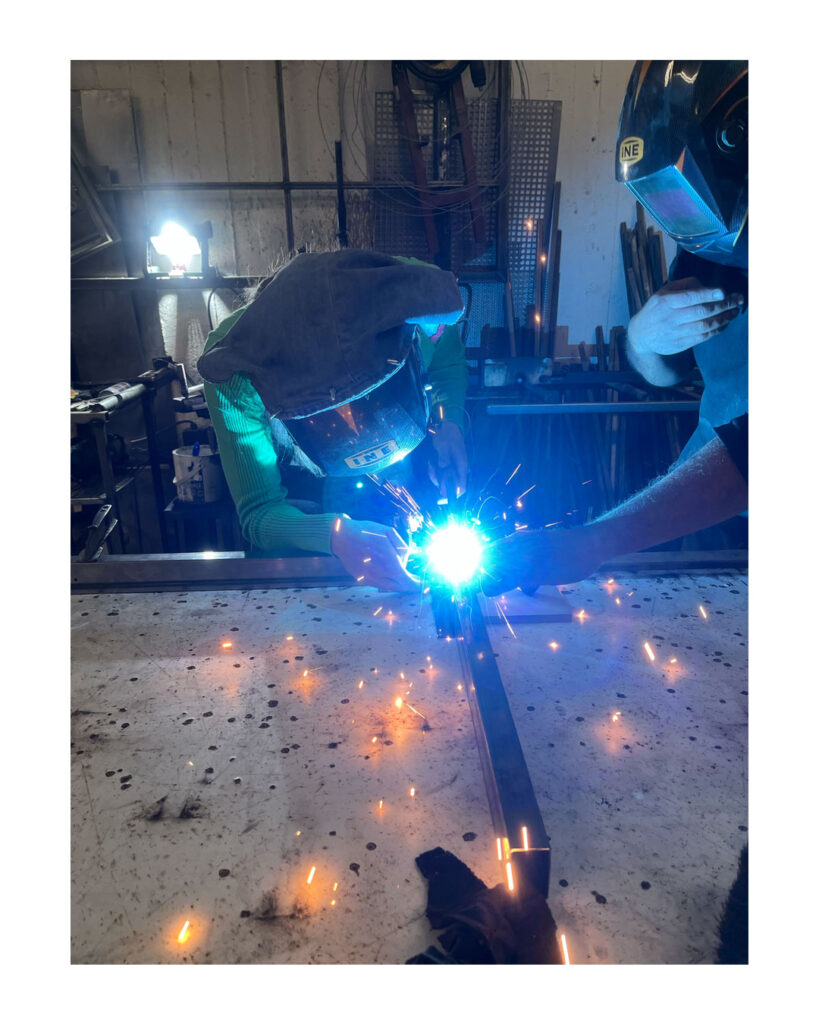
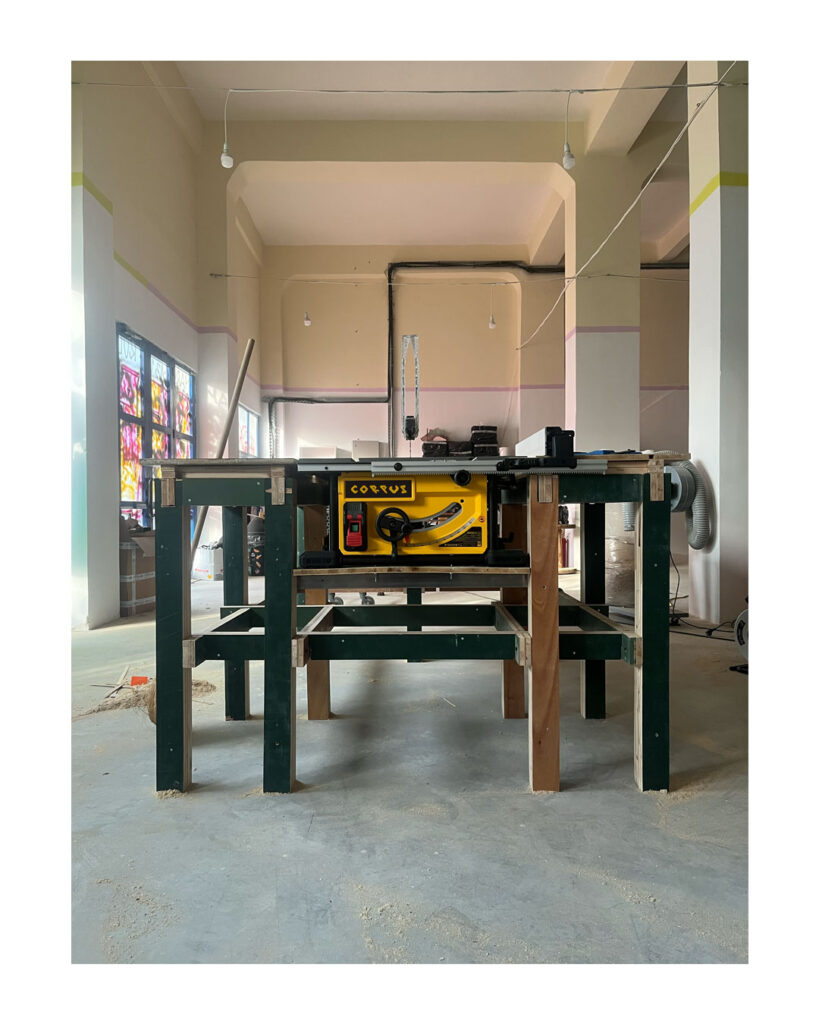
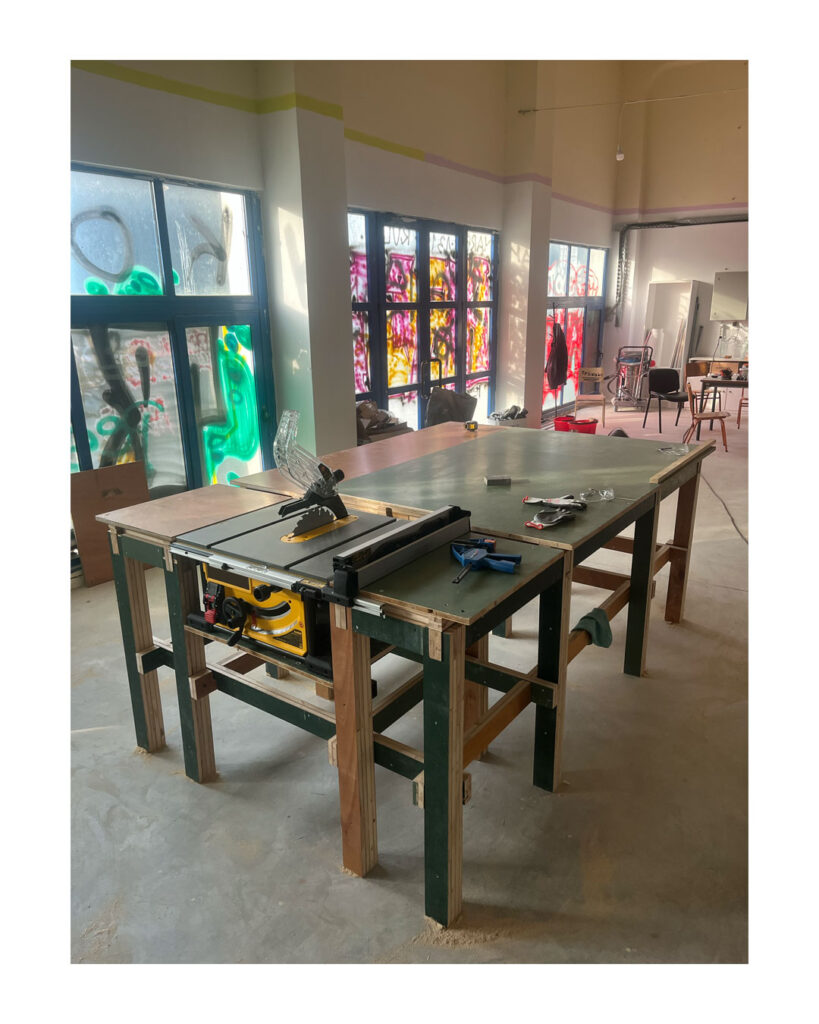
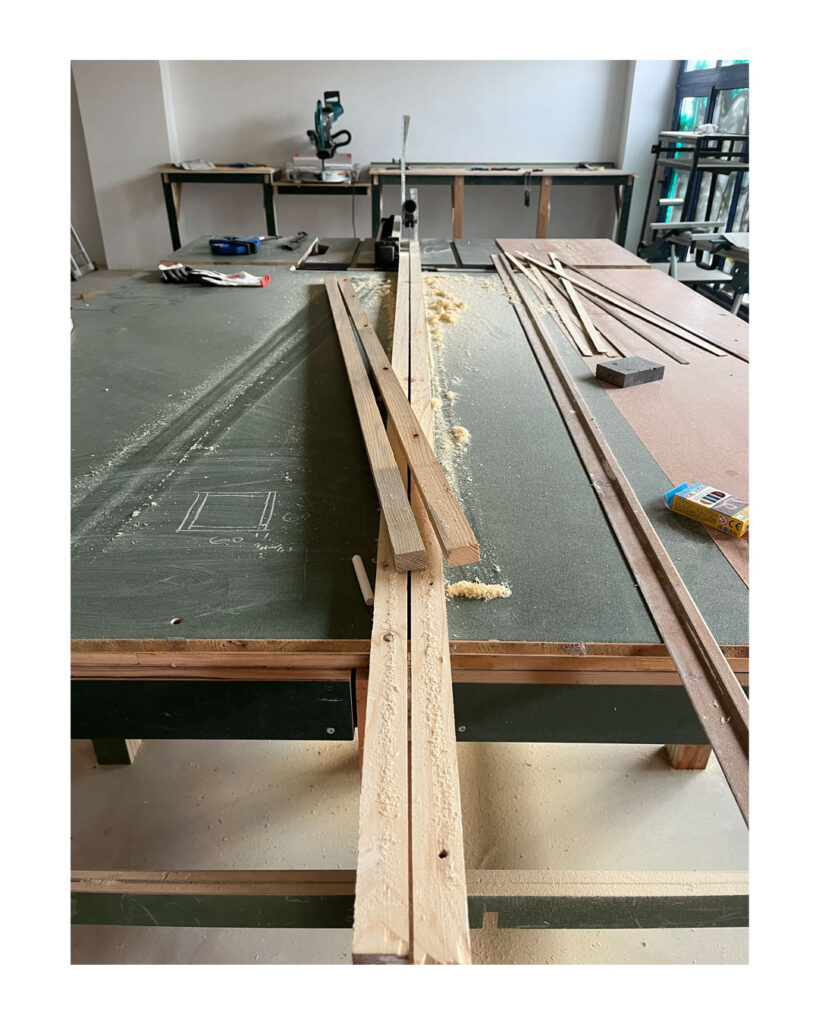
Built almost entirely from reclaimed school blackboards, our first workbench grew from a hand-built frame into a full DIY table-saw station.
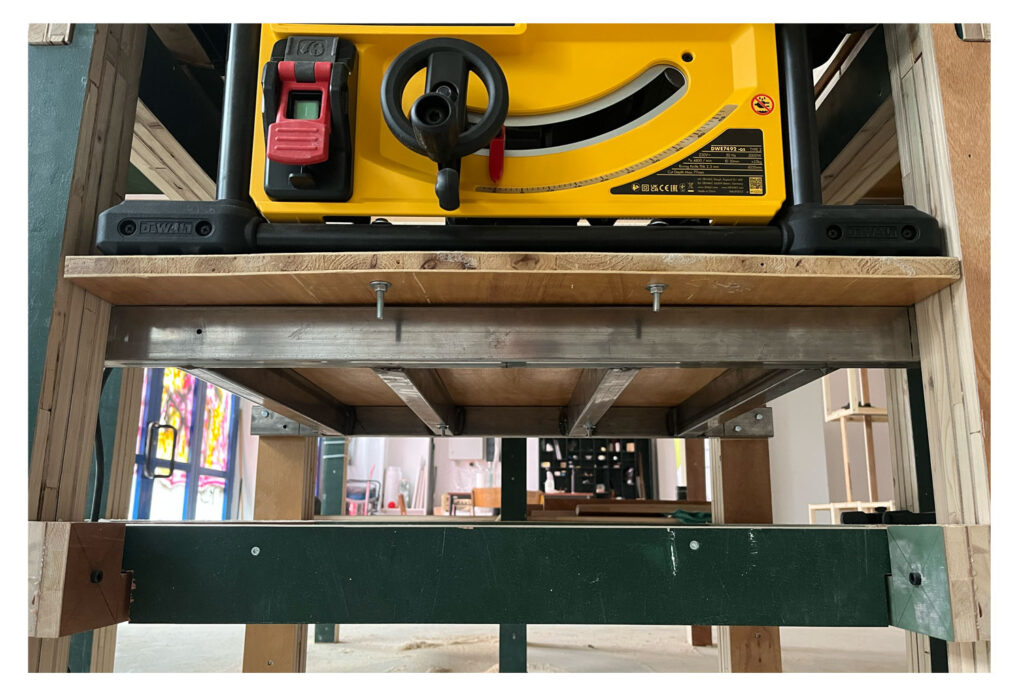
Furnishing the space: six more builds from the same materials
The workbench was only the first of a series. As the team grew more confident, the same handful of materials—recycled blackboard timber, the salvaged blackboard frames, debris from the Papanikolaou square kiosk, and plywood offcuts from Rokani—were upcycled into the rest of the infrastructure the makerspace needed. Six further builds followed:
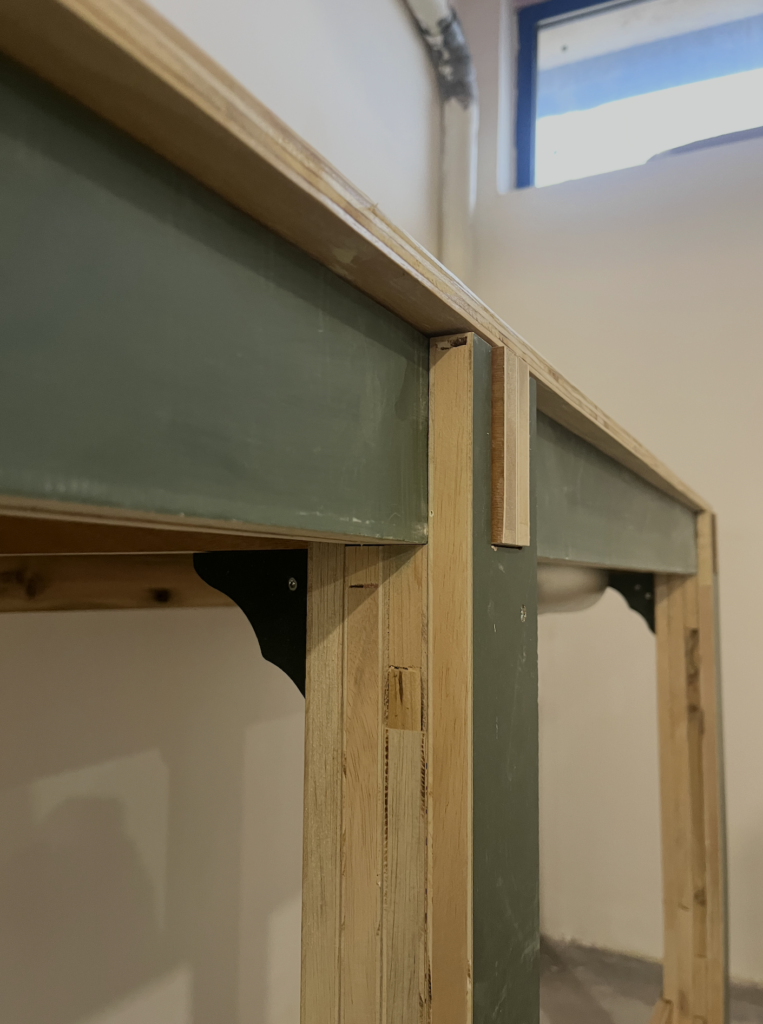
1. A wall-mounted workbench — both frame and surface made from recycled blackboard timber together with a section of the Papanikolaou kiosk rubble.
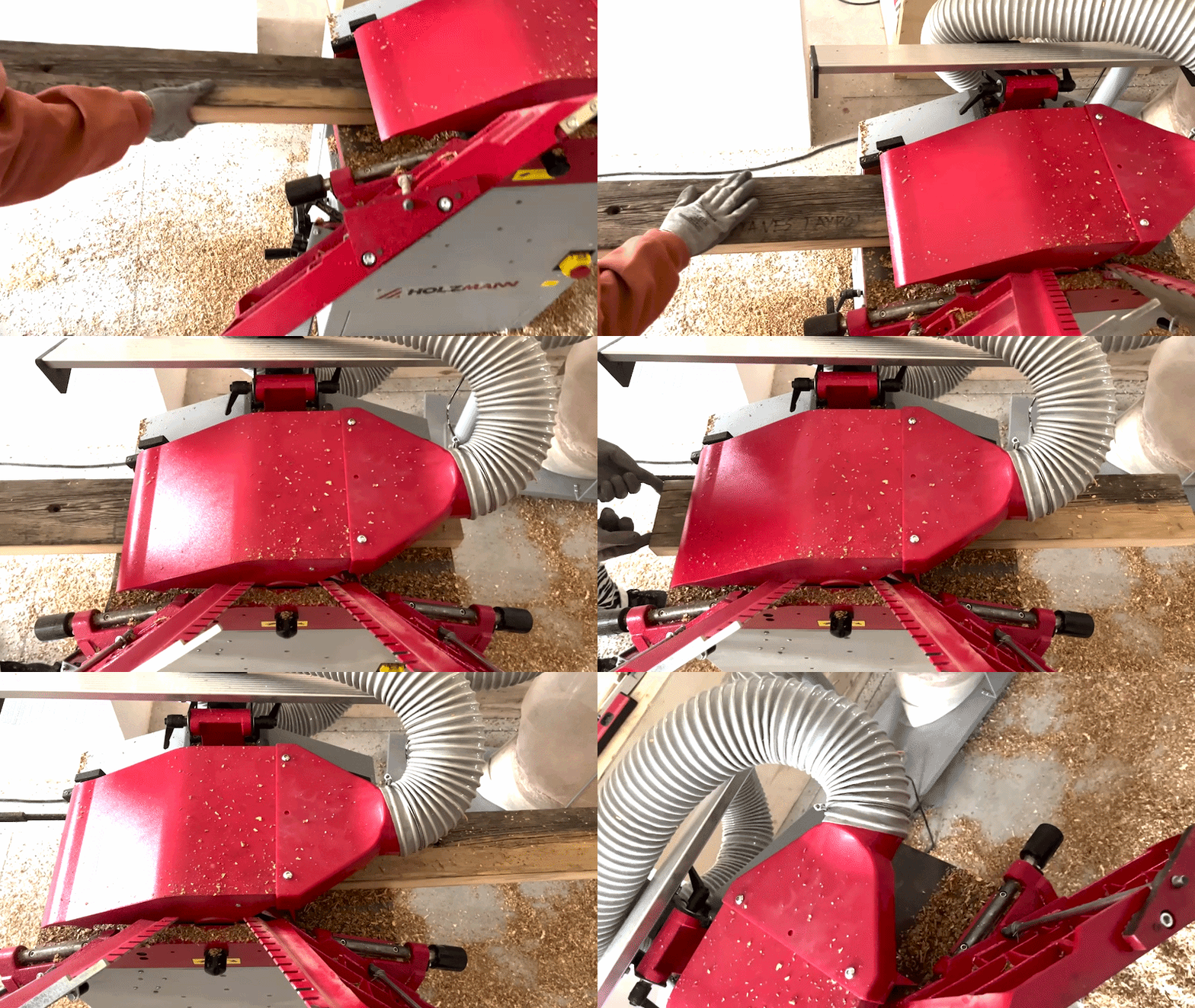
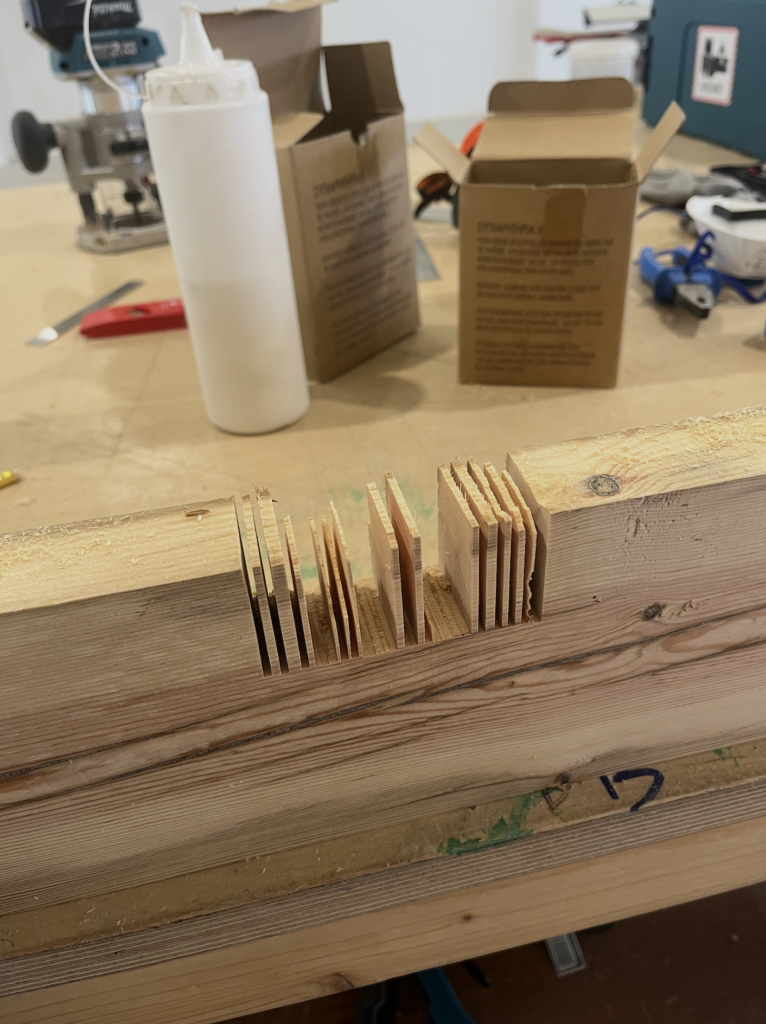
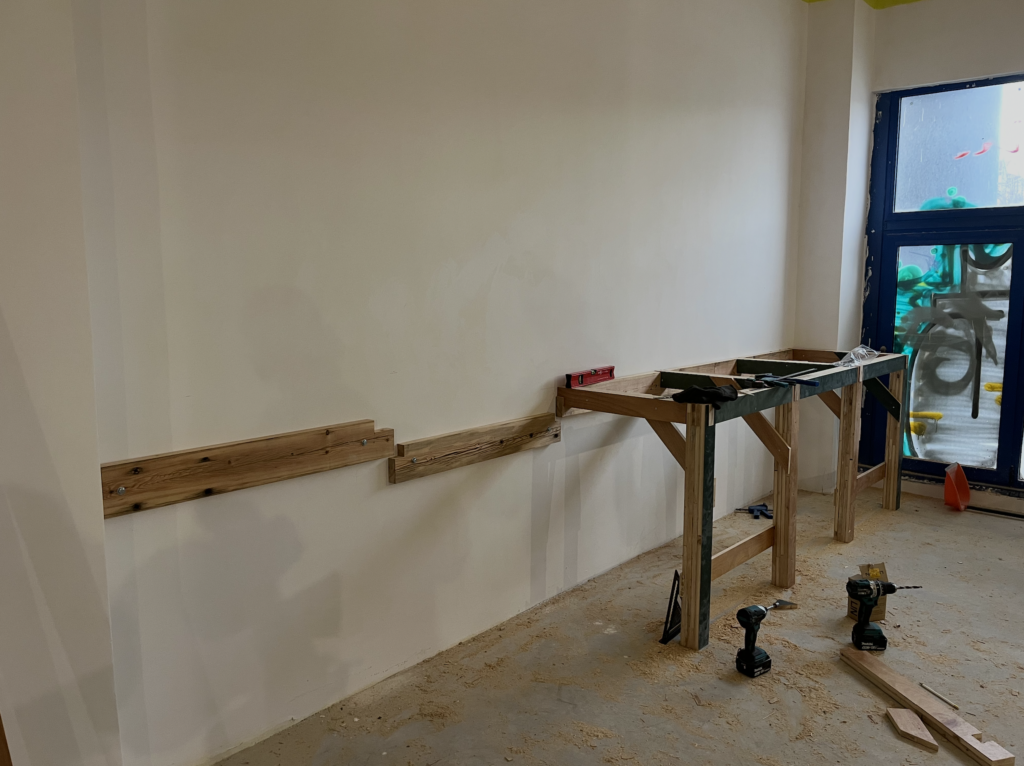
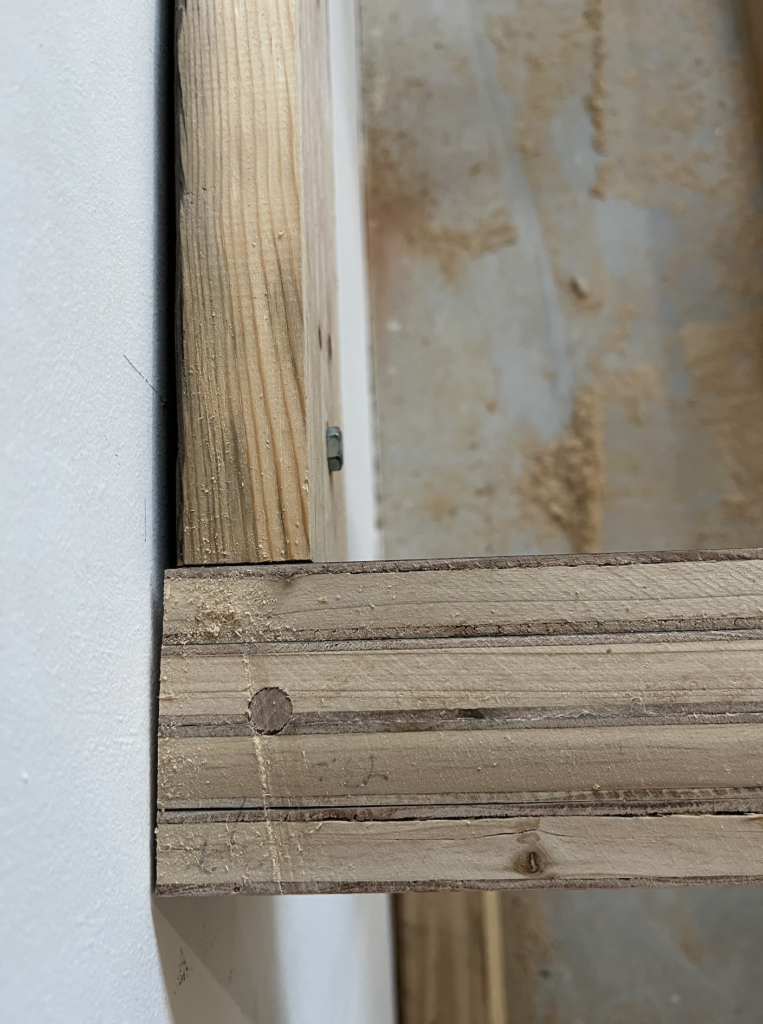
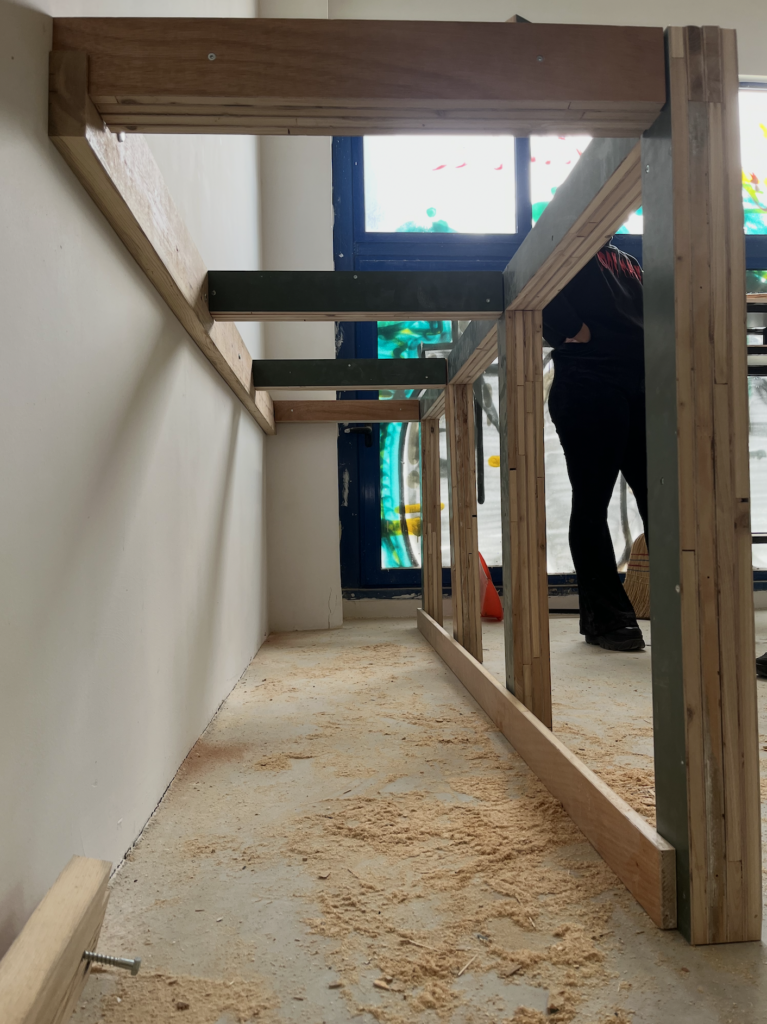
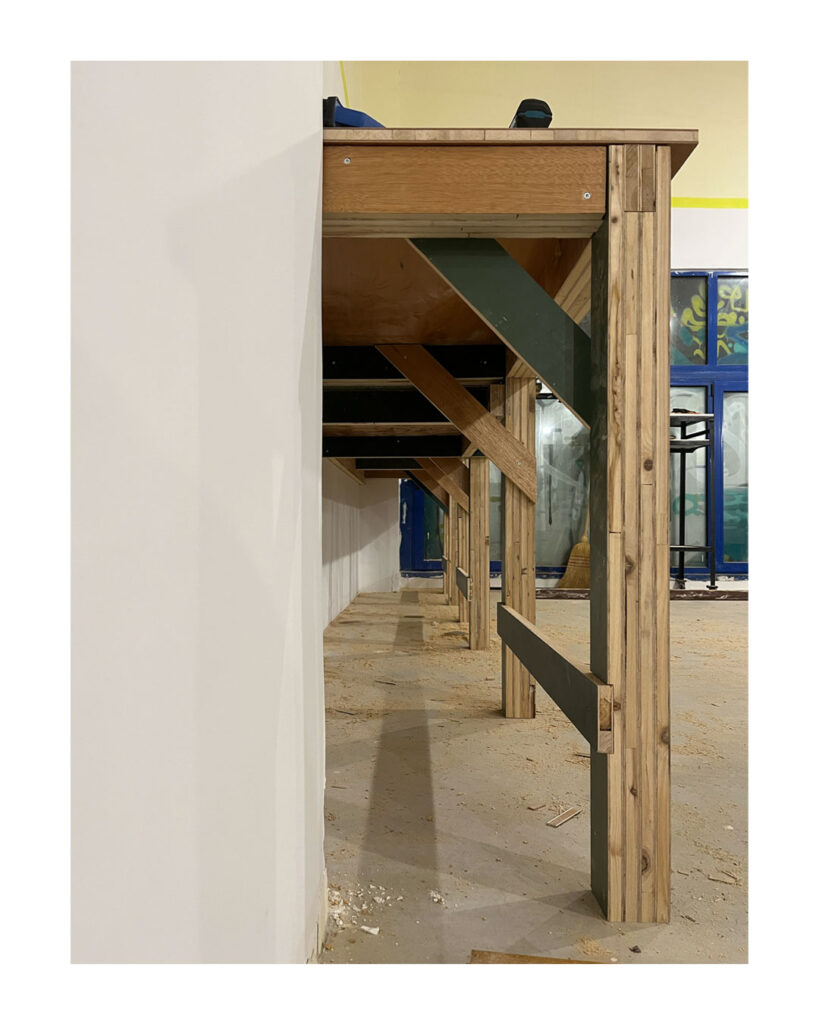
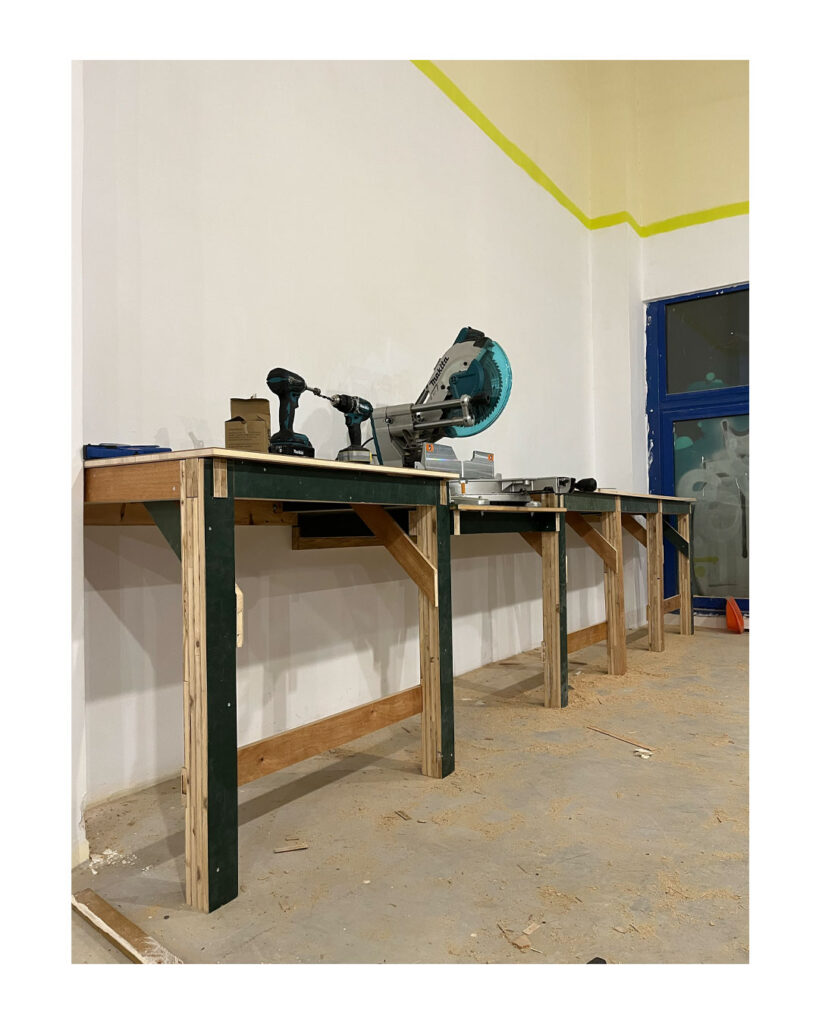
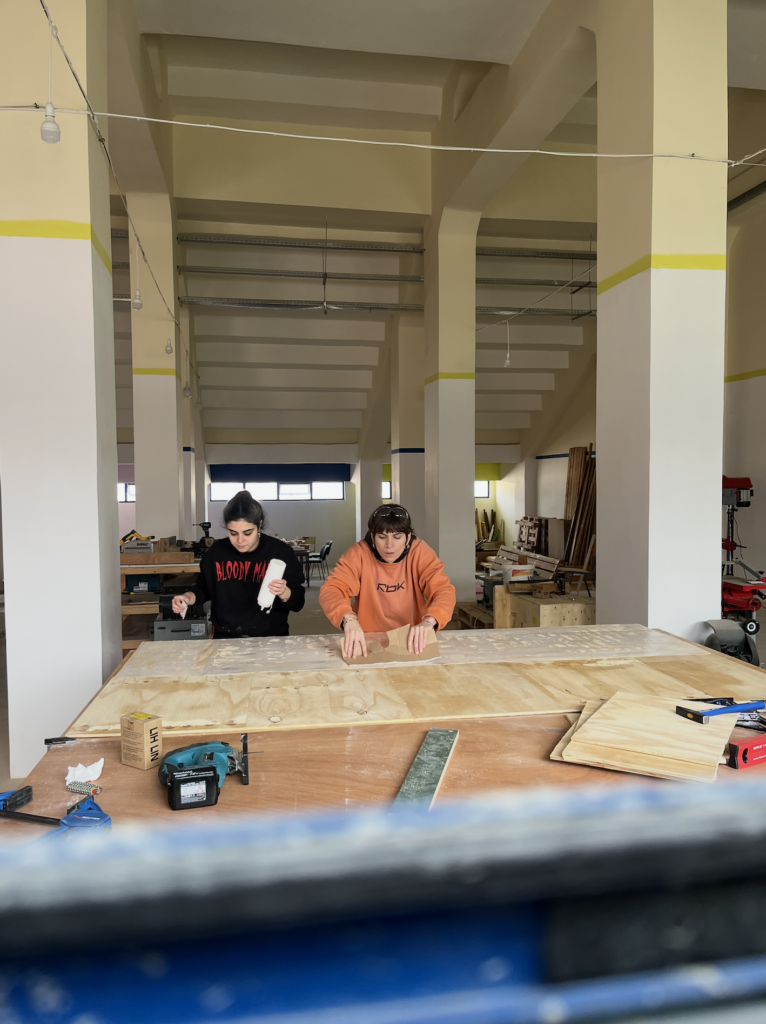
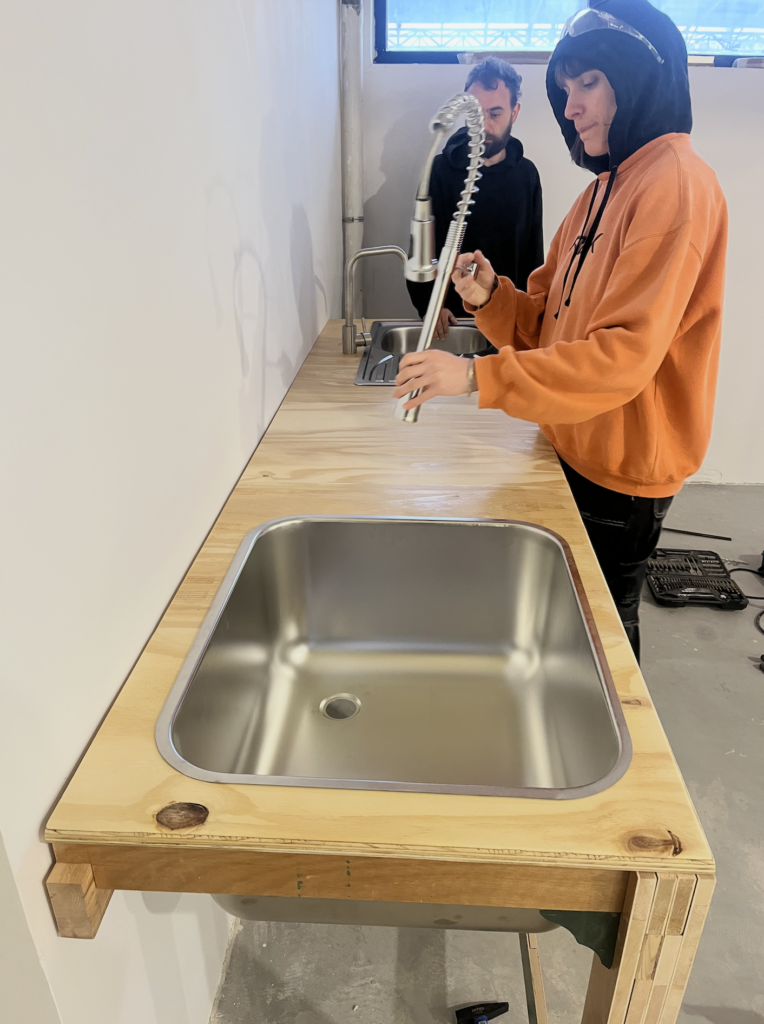
2. The kitchen counter — a frame of recycled blackboard and reclaimed kiosk timber, topped with a surface of plywood offcuts donated by Rokani.
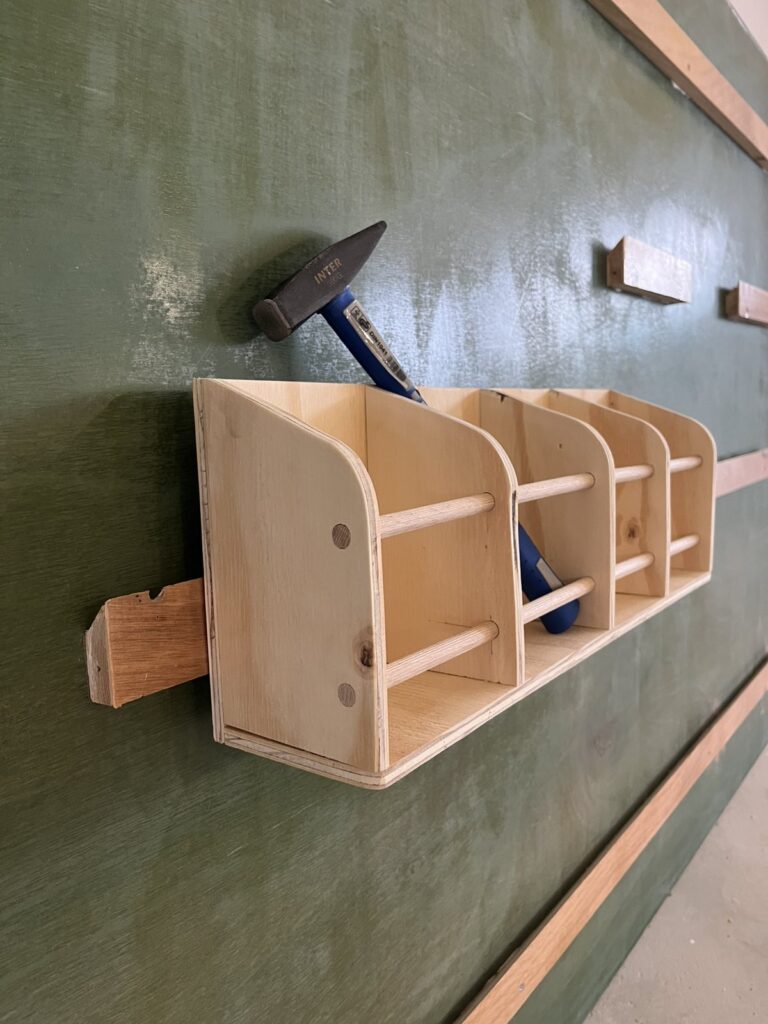
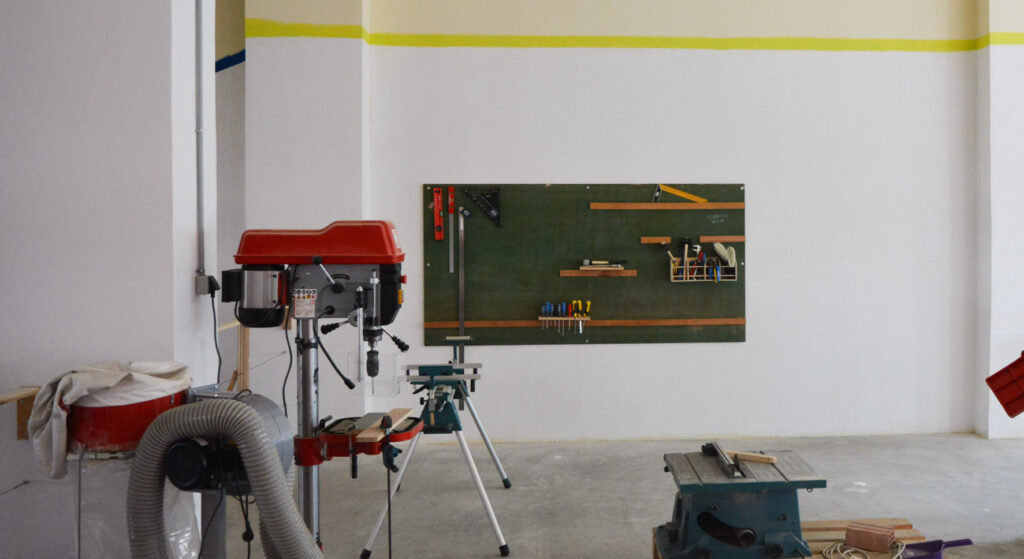
3. A wall-mounted tool board — its surface cut from a single recycled blackboard, keeping the hand tools visible and to hand.
4. An exhibition structure based on CLOUDS for COMMONS — a reproduction of the open design by LUDD Lab, built from recycled timber reclaimed specifically from the blackboard frames.
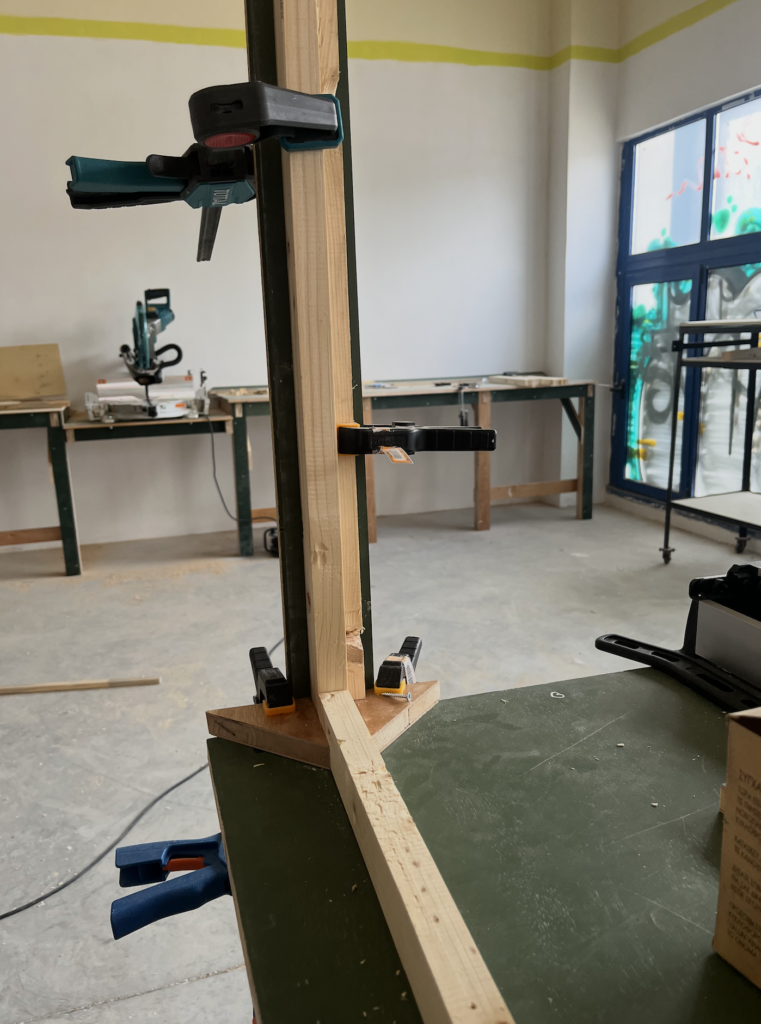
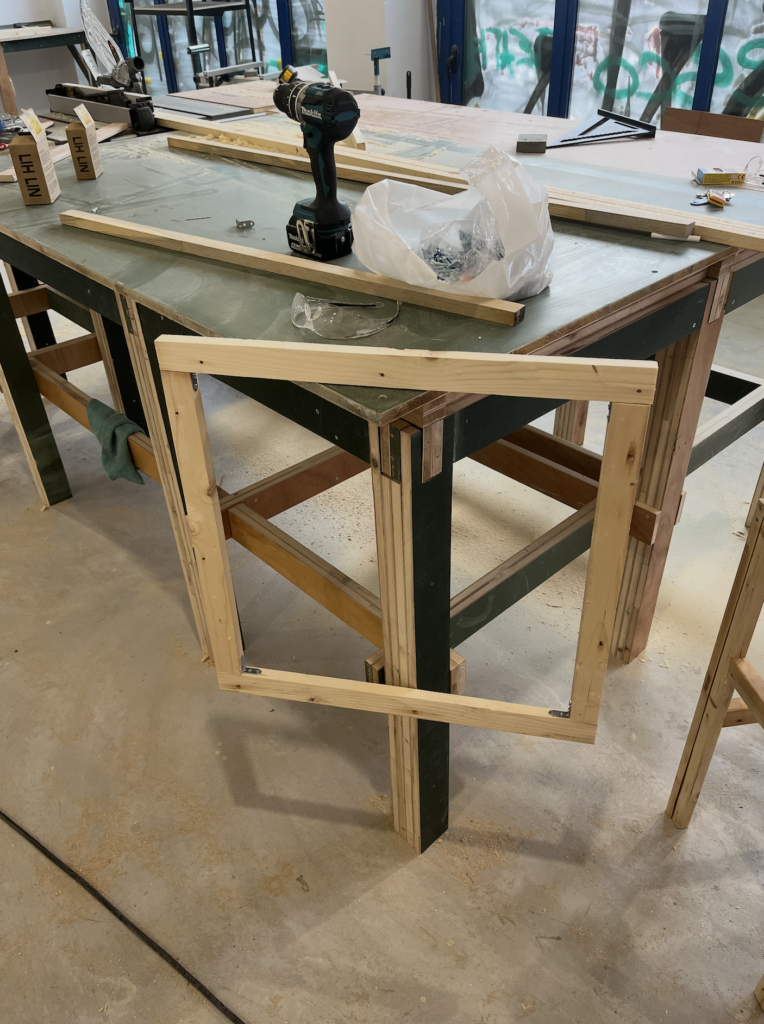
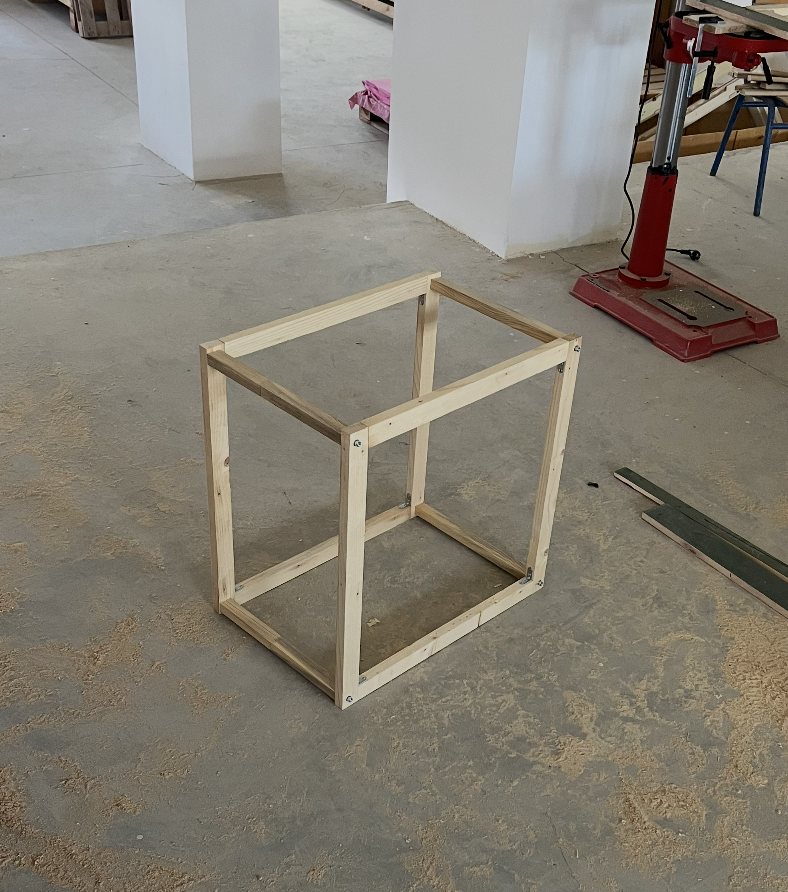
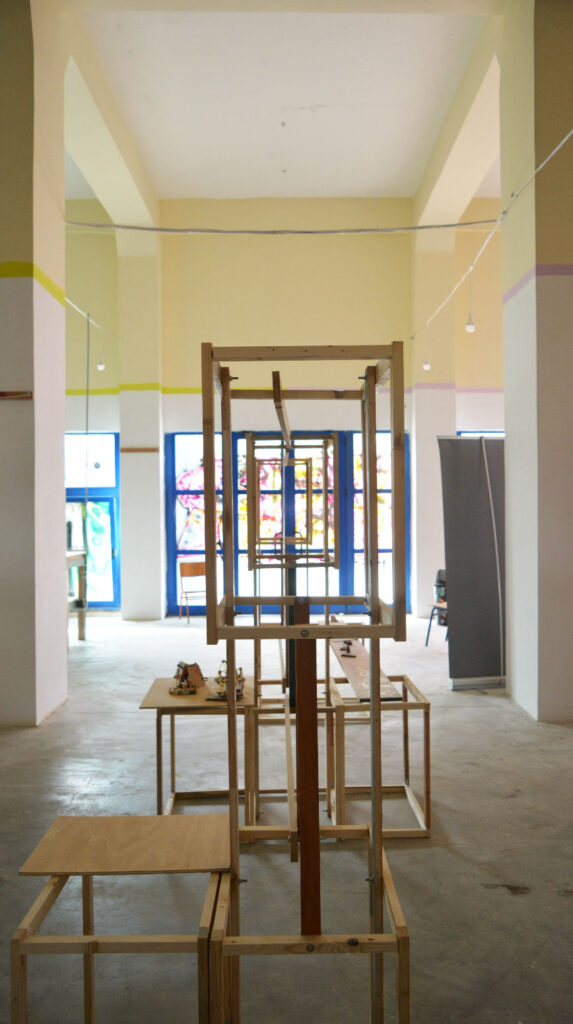
5. Railings (safety bars) — legs made from recycled blackboard timber, with handrails formed from the blackboard frames.
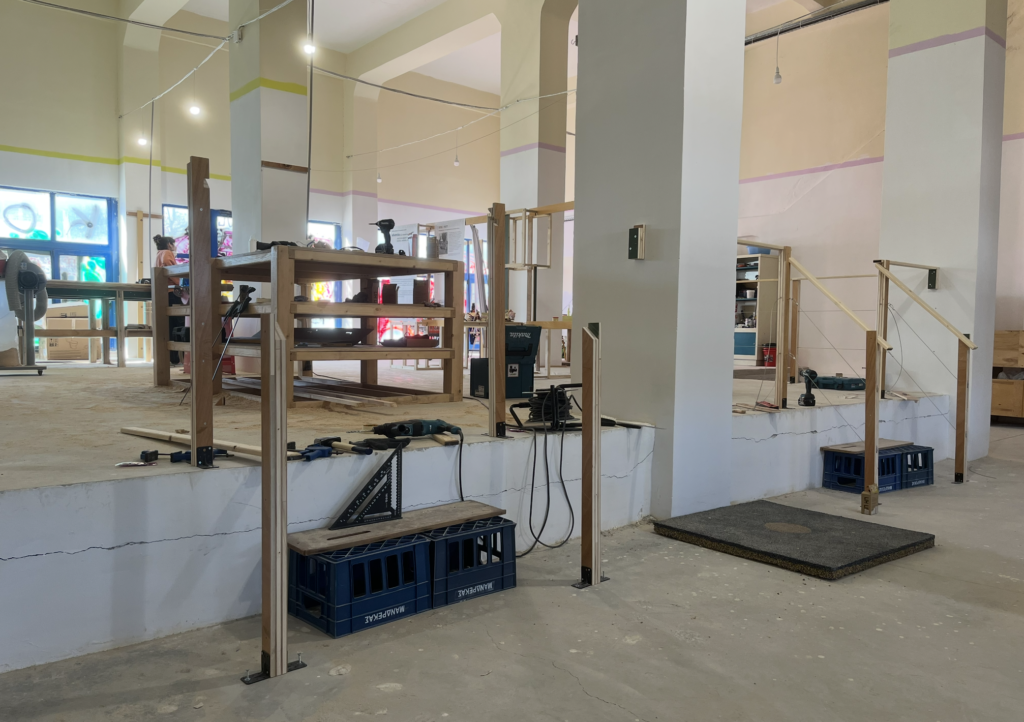
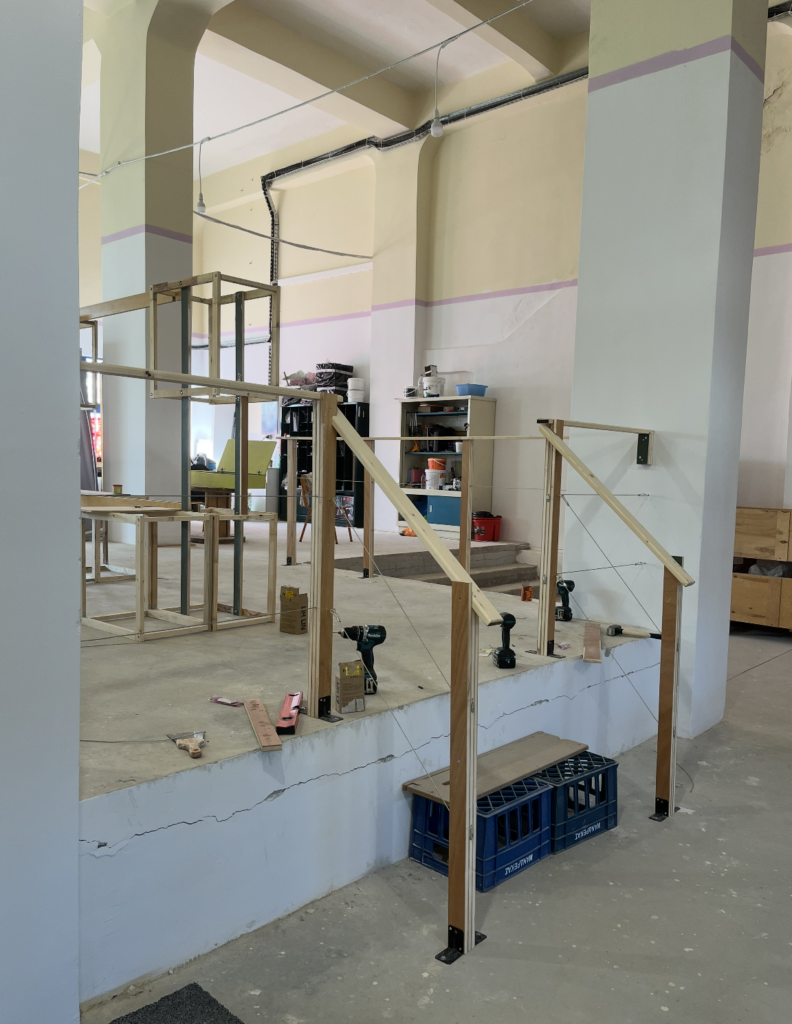
6. A stool — a frame from recycled blackboard-frame timber, with a seat made from a plywood offcut donated by Rokani.
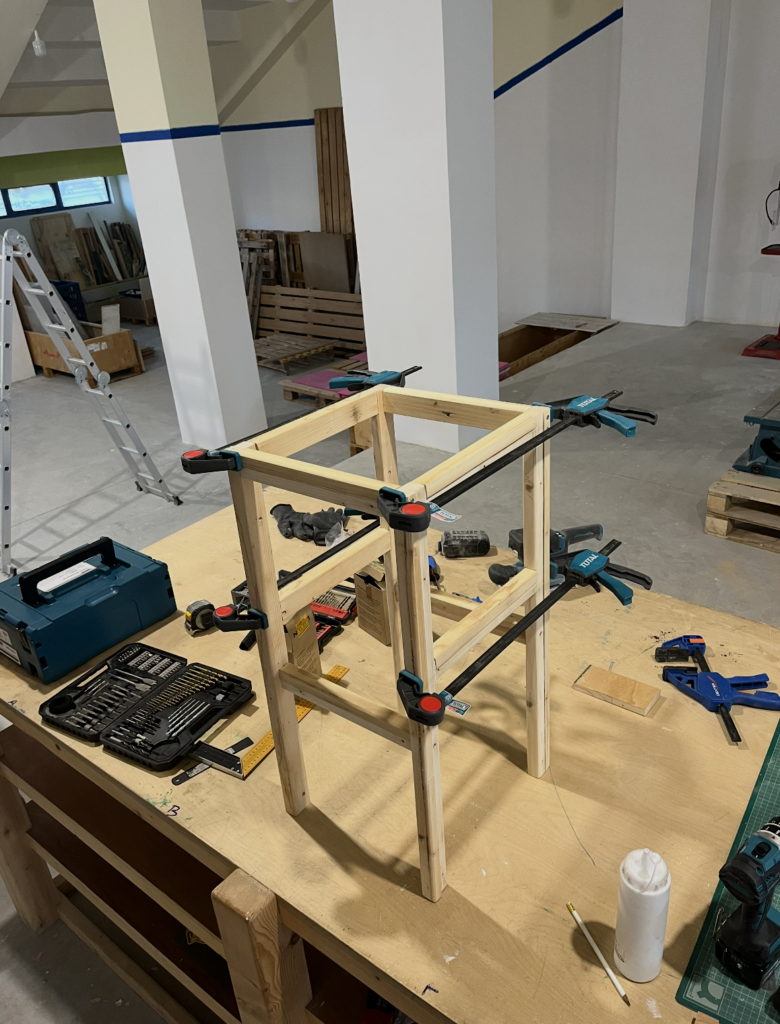
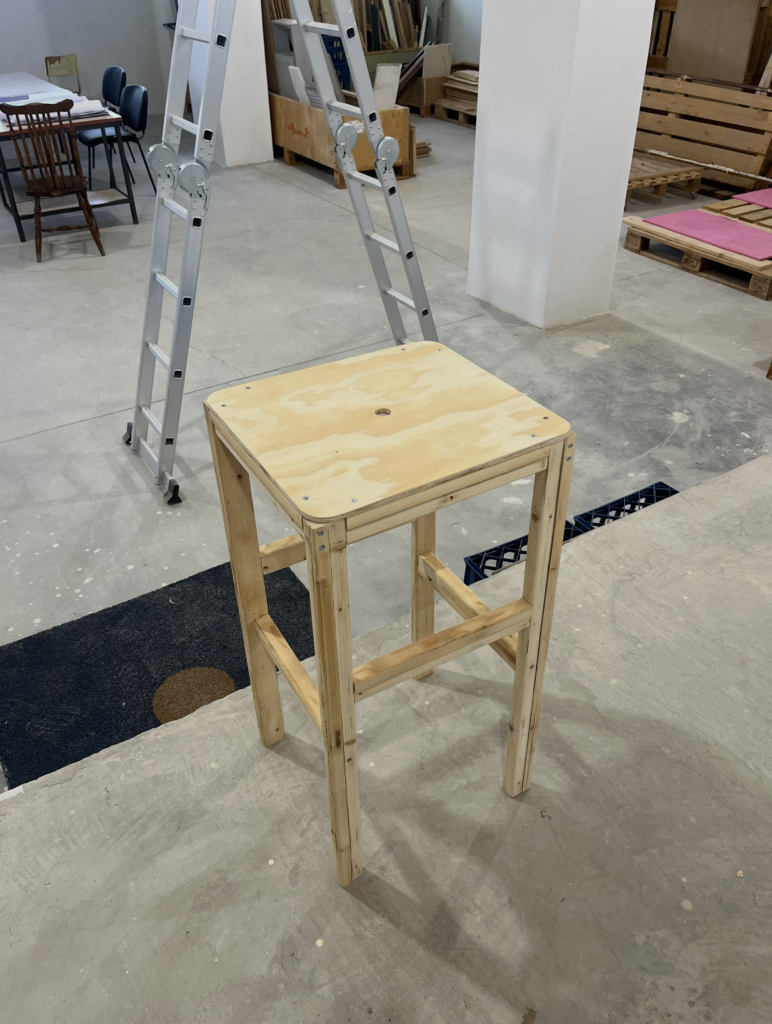
Read together, these builds show how little needs to be bought new. A blackboard becomes a structural beam, its frame becomes a handrail or a stool leg, the rubble of a demolished kiosk becomes a counter, and a sheet of donated plywood becomes a working surface or a seat—each material catalogued in the library and reused down to its offcuts.
One material set—recycled blackboards and their frames, salvaged kiosk timber, and donated plywood—became a wall bench, a counter, a tool board, a CLOUDS for COMMONS structure, railings, and a stool.
Concluding thoughts
A stack of discarded school blackboards, the rubble of an old kiosk, and a few donated offcuts became, in the space of months, a workbench and DIY table-saw station, a wall-mounted bench, a kitchen counter, a tool board, a reproduction of an open-design structure, railings, and a stool. That arc is the argument of this episode in miniature: materials with real value are often sitting idle just metres away, and inside a community workshop they can be transformed into an educational and (re)productive resource.
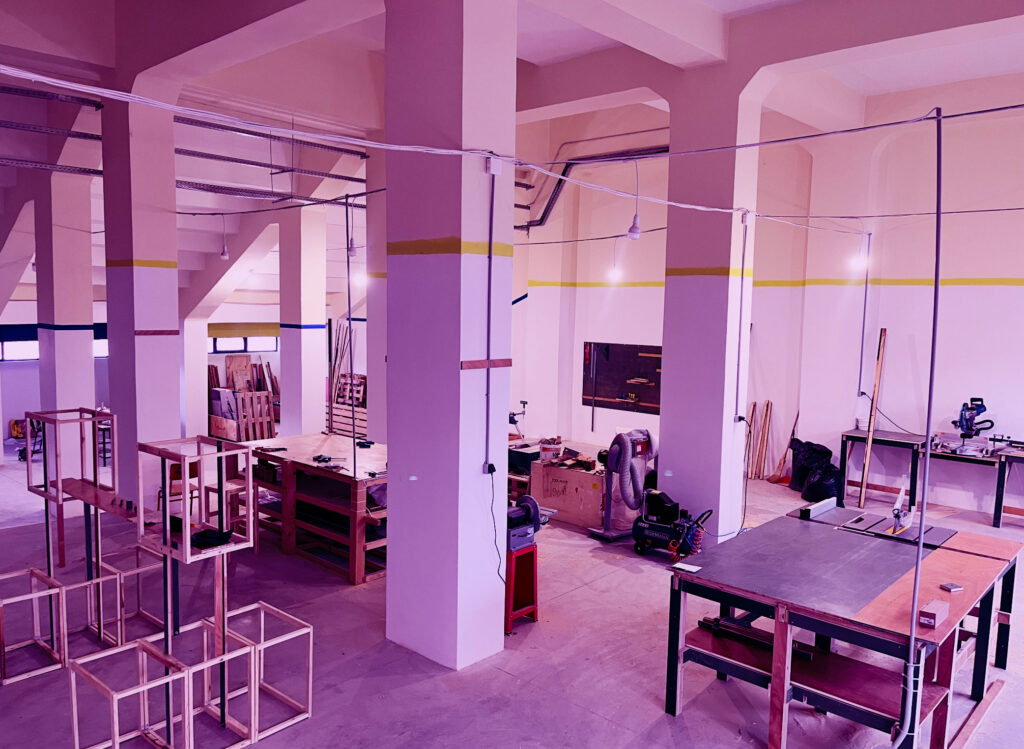
This is what we set out to make—a community makerspace where reusing materials and building together create a shared framework for producing value and exchanging knowledge, and where an open design like CLOUDS for COMMONS can be reproduced rather than re-bought. Each build doubled as a way for the team to learn its tools, its machines, and its techniques, from Japanese joinery to welding.
This first scenario marks the beginning of a series of upcycling explorations, through which we hope to keep investigating how design research, circular practices, and collective making can support the emergence of shared urban resources.
Special thanks to the Rokani Social Cooperative for guiding the team through the first upcycling scenarios, and to LUDD Lab for the open design of CLOUDS for COMMONS.