
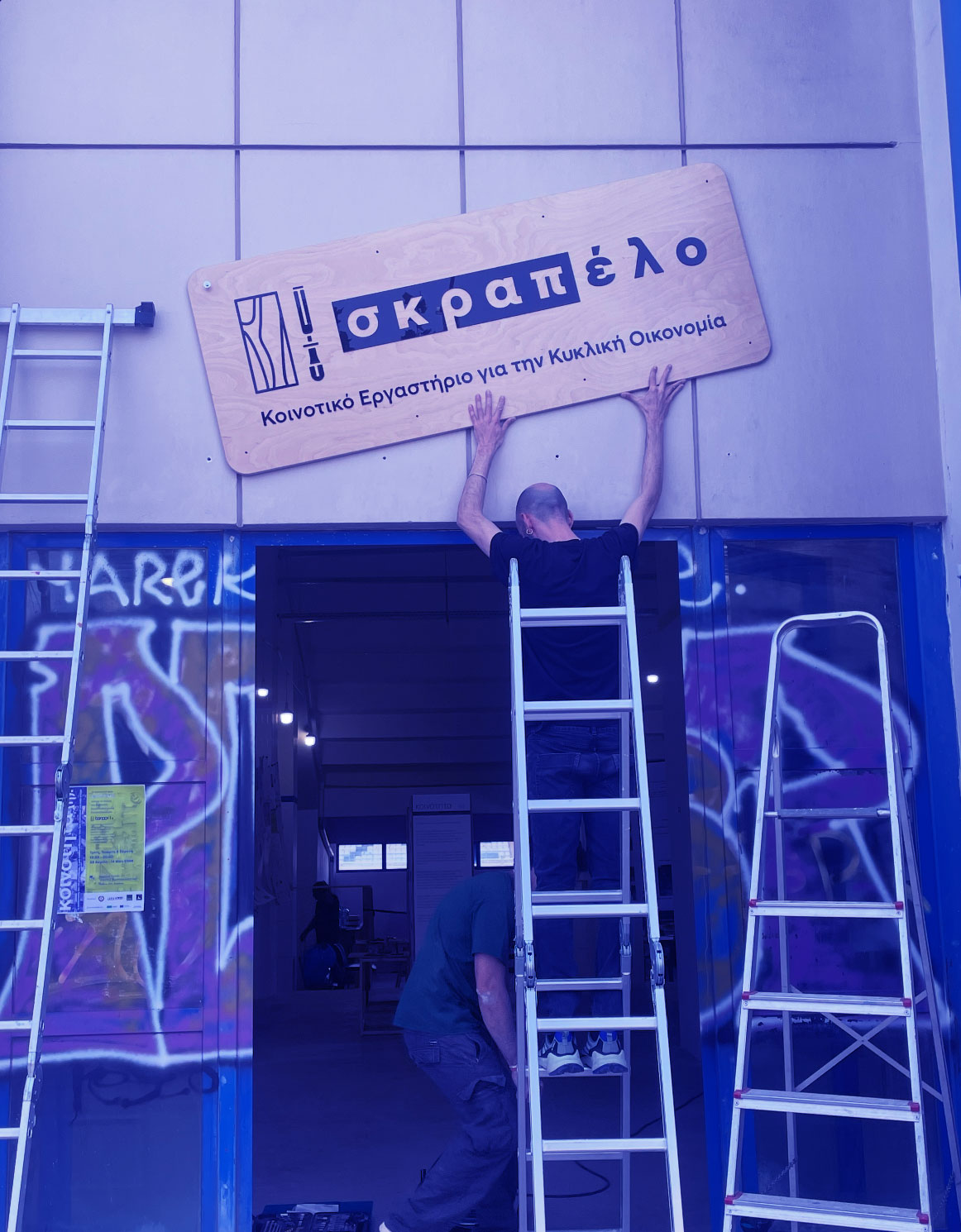
openning a space to create a community of making
In spring 2026, the Aigaleo Urban Living Lab reached a milestone: a disused municipal warehouse beneath the stands of the Stavros Mavrothalassitis stadium became Scrapelo (Σκραπέλο), the Community Makerspace for Circular Economy — hopefully a permanent, municipal space for making, learning and collective action, born through the CORPUS project and the collaboration of the Municipality of Aigaleo, Open Lab Athens, architecture studio FBW and the social cooperative Rokani. Its name comes from the word scrap — the offcuts and discarded materials that the workshop gives a second life.
* See Episode 2 on how the space has taken its form through circular practices.
Opening the space to the public

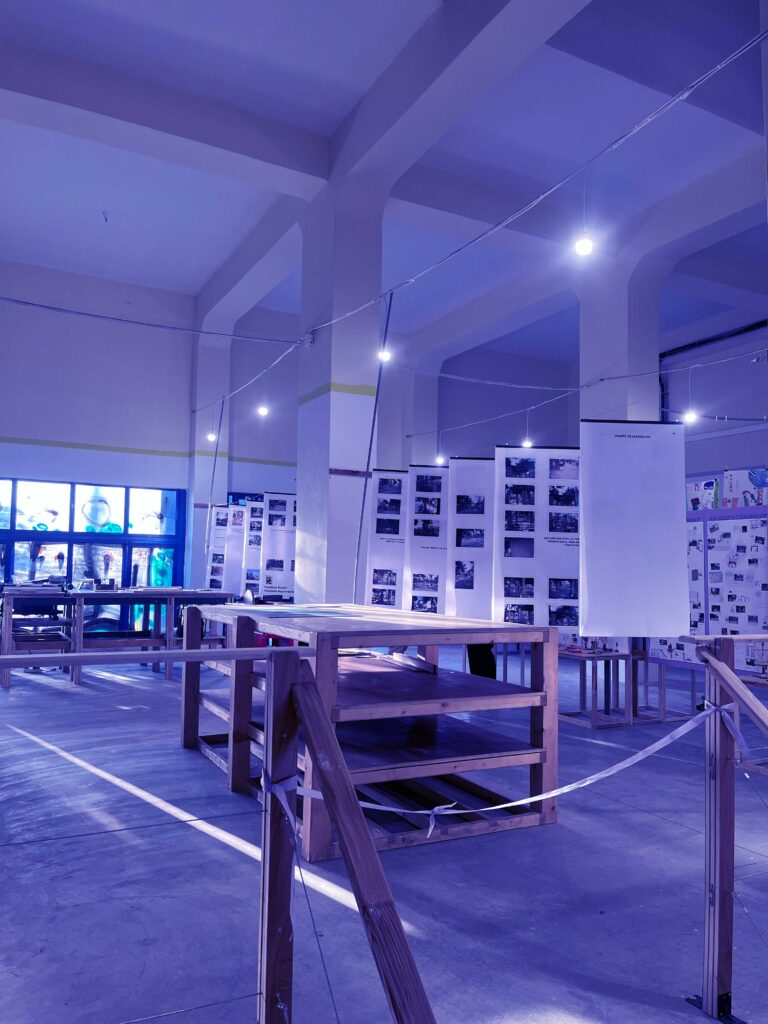
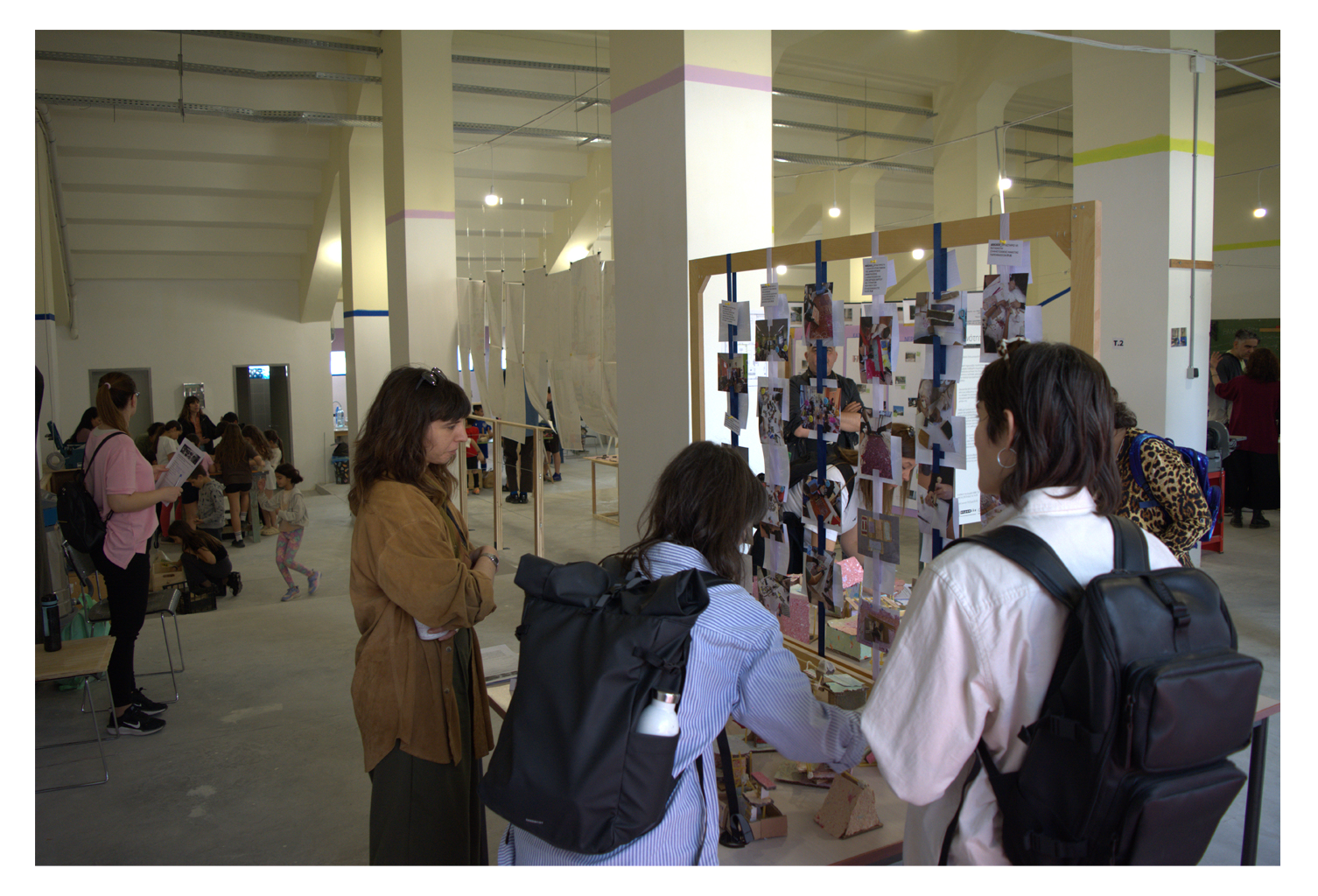
On 28 April 2026, Scrapelo officially opened its doors, free and open to the neighbourhood, accompanied by the exhibition «community (n): the state of sharing, or a group of people acting collectively towards a common goal». Running until 14 May, the exhibition gathered the results of months of participatory work — children and elderly residents, students and day-centre members who together mapped their neighbourhood, remembered its past, observed its present and imagined its future.
Each “image” in the exhibition formed part of the mosaic of a community reclaiming its public space, with respect for the environment, understanding of the neighborhood and imagination. Visitors were invited to wander freely through the space, meet the team, and become part of the new community taking shape.
Making together: the Rokani workshop for children and parents
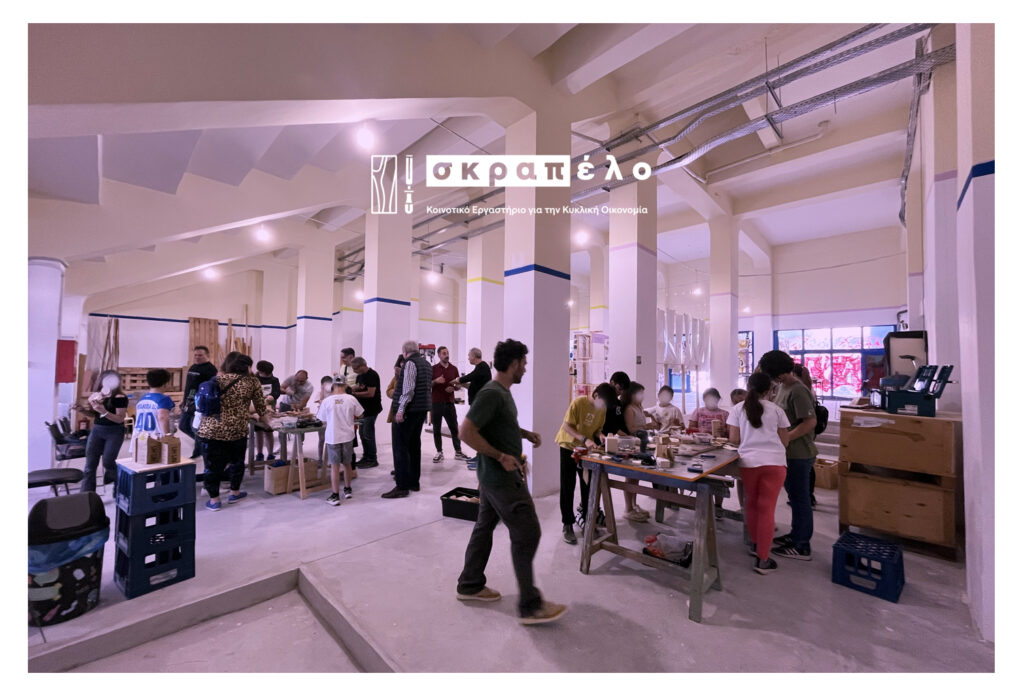
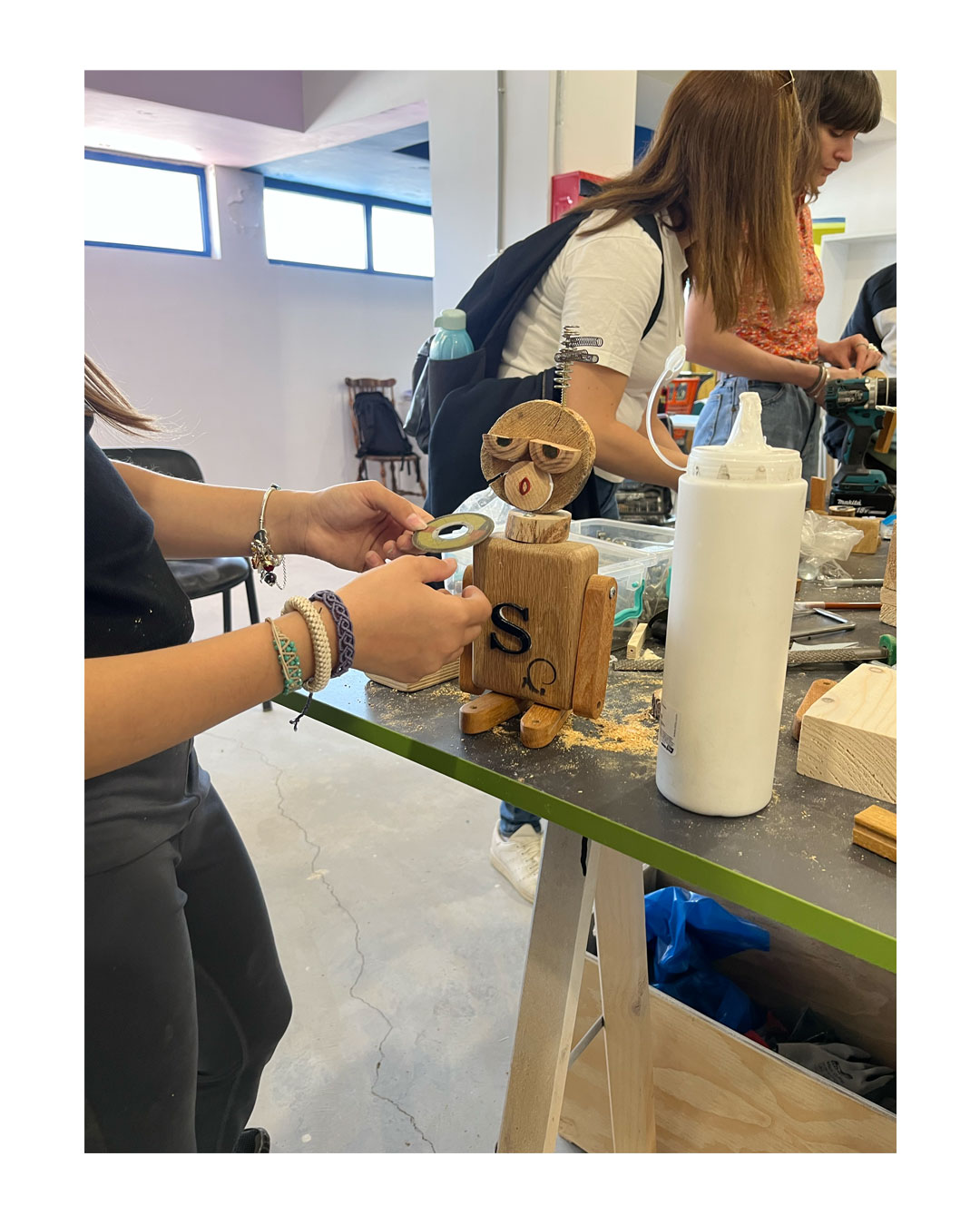
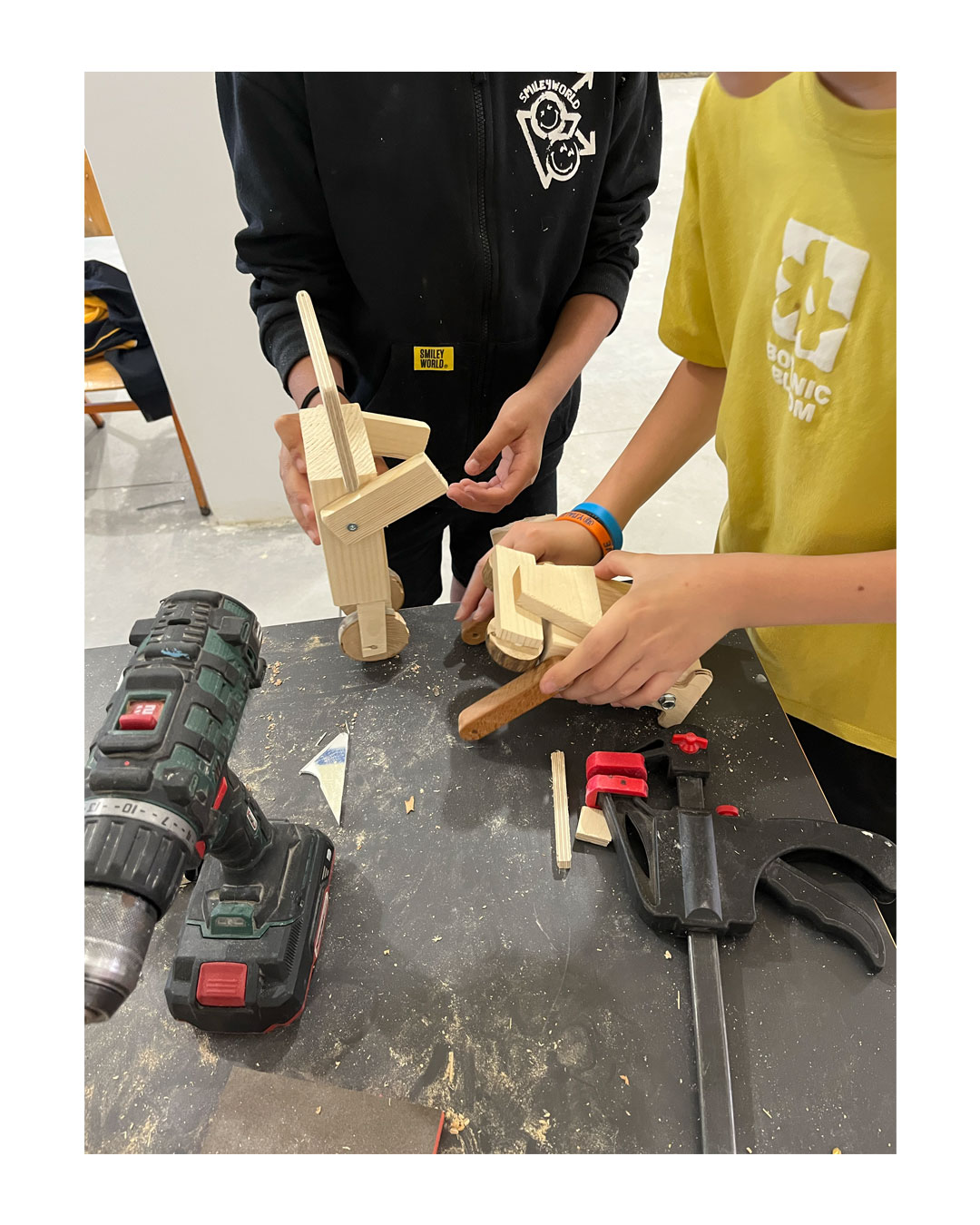
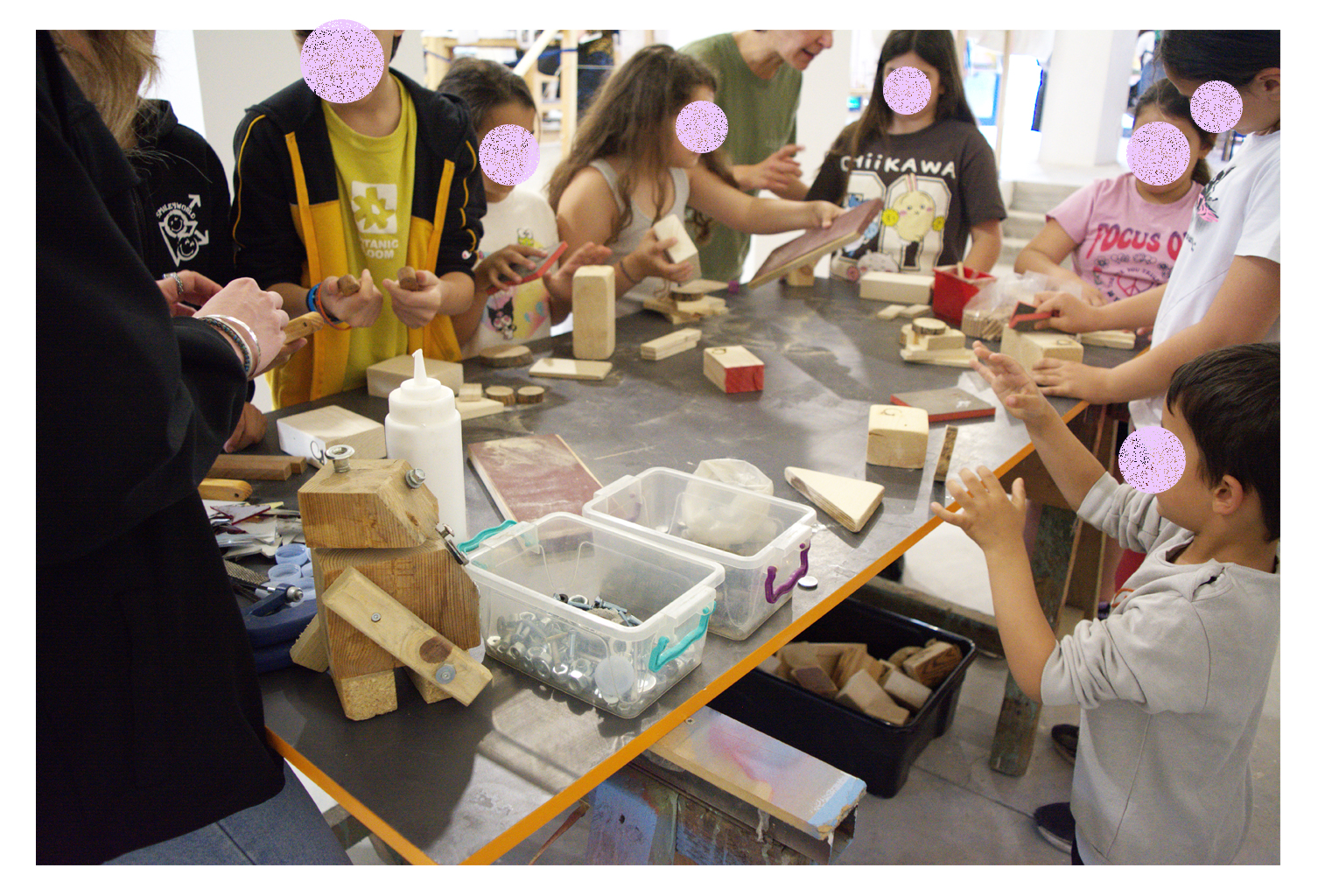
On the morning of Saturday 9 May, Scrapelo came alive with its first hands-on making workshop. Guided by the Rokani team, children and parents worked side by side to build — piece by piece — their own wooden creatures: small sculptural forms assembled from articulated parts, using offcuts of reclaimed wood, metal and other small “treasures” found and creatively repurposed. Passers-by had the chance to visit the exhibition and learn about the workshop’s vision, turning an ordinary Saturday morning into a shared act of building.
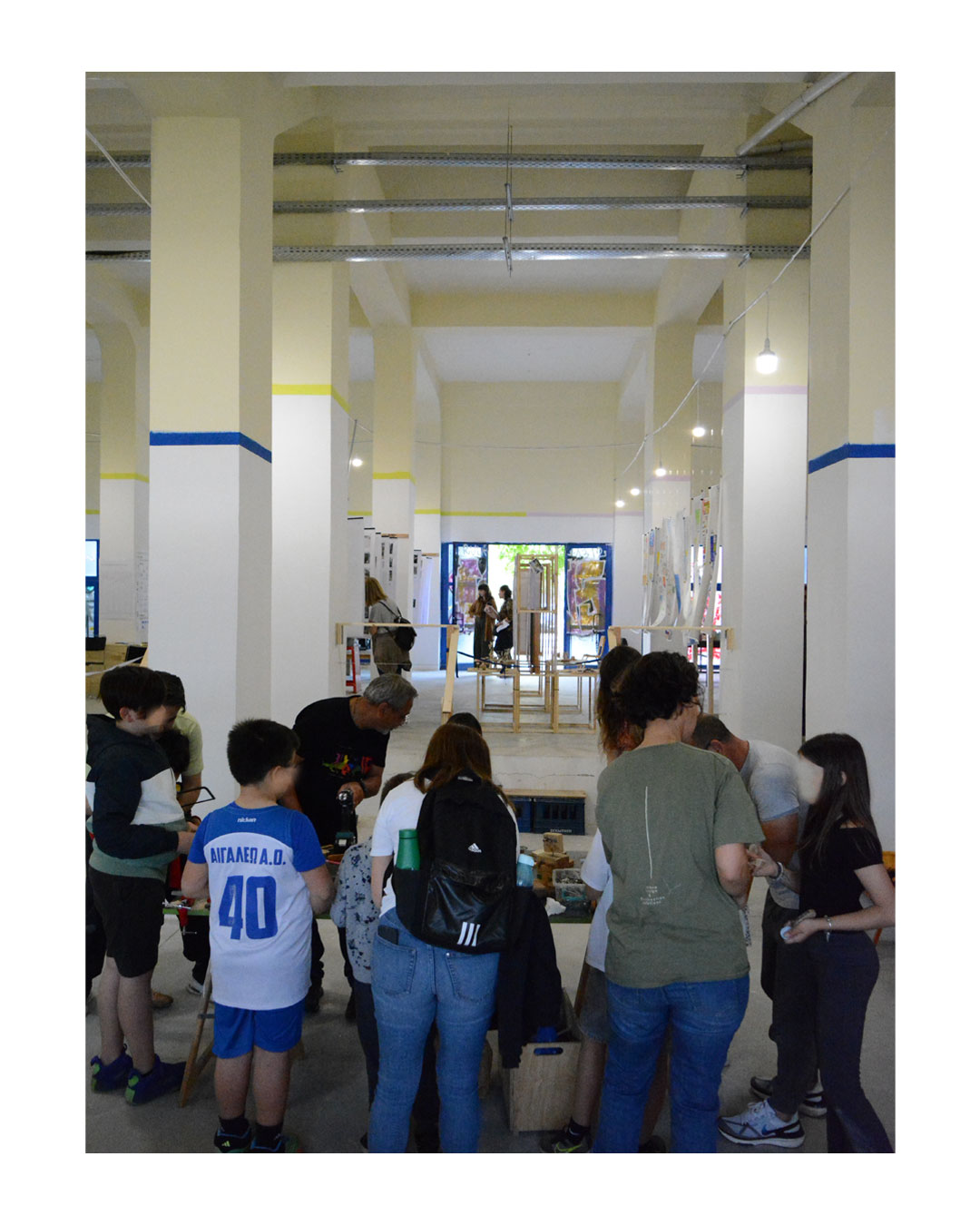
Testing the COMMONSHOOD digital wallet
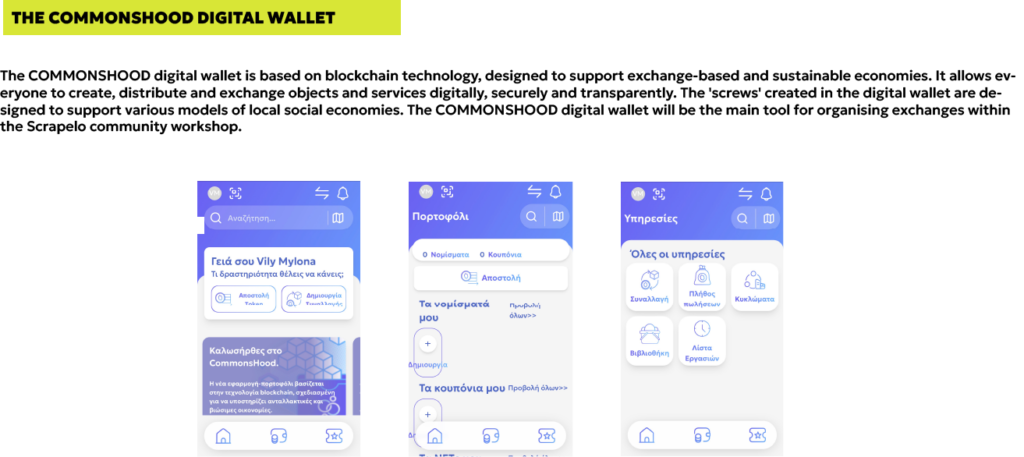
The same day, Gruppo Digitali Territori introduced the COMMONSHOOD digital wallet — the civic, blockchain-based tool being developed within CORPUS to support exchange-based, sustainable local economies. At Scrapelo it will become the main way of organising exchanges within the community, allowing members to create, distribute and exchange objects and services digitally, securely and transparently, without monetary transactions.
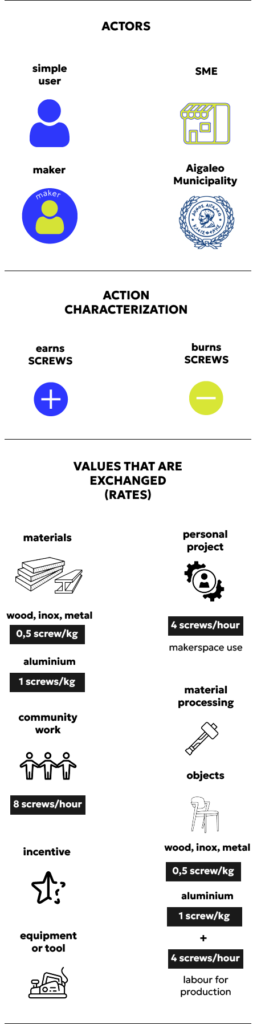
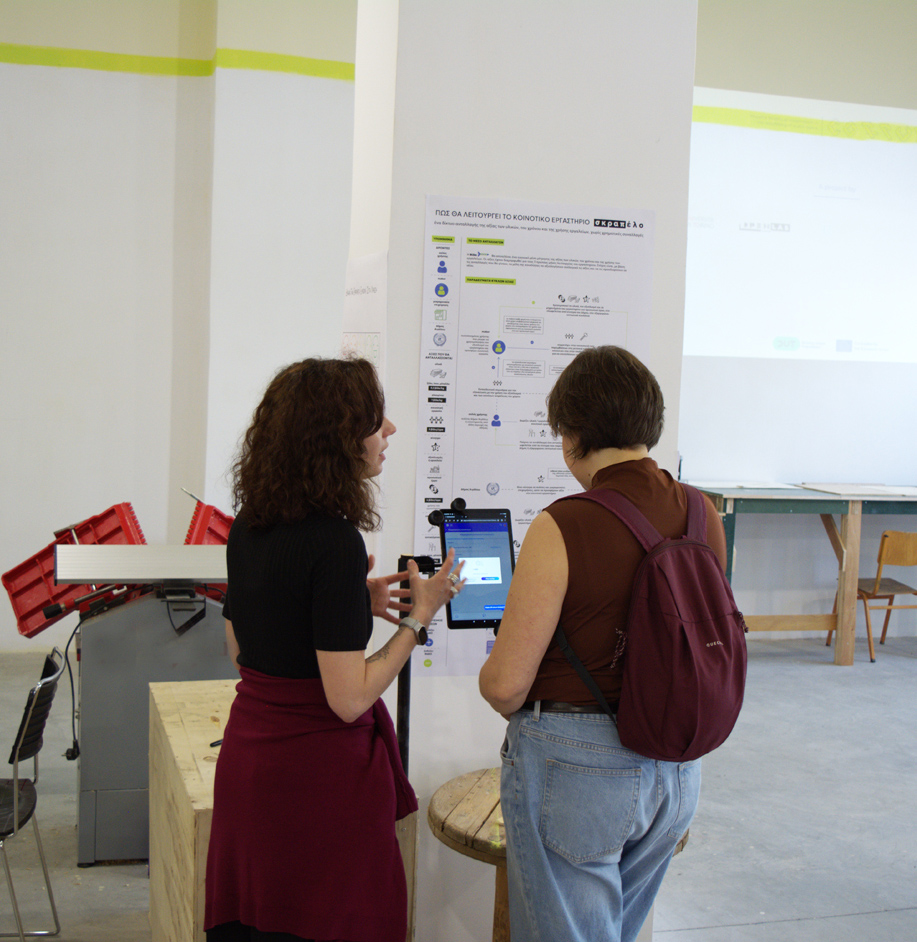
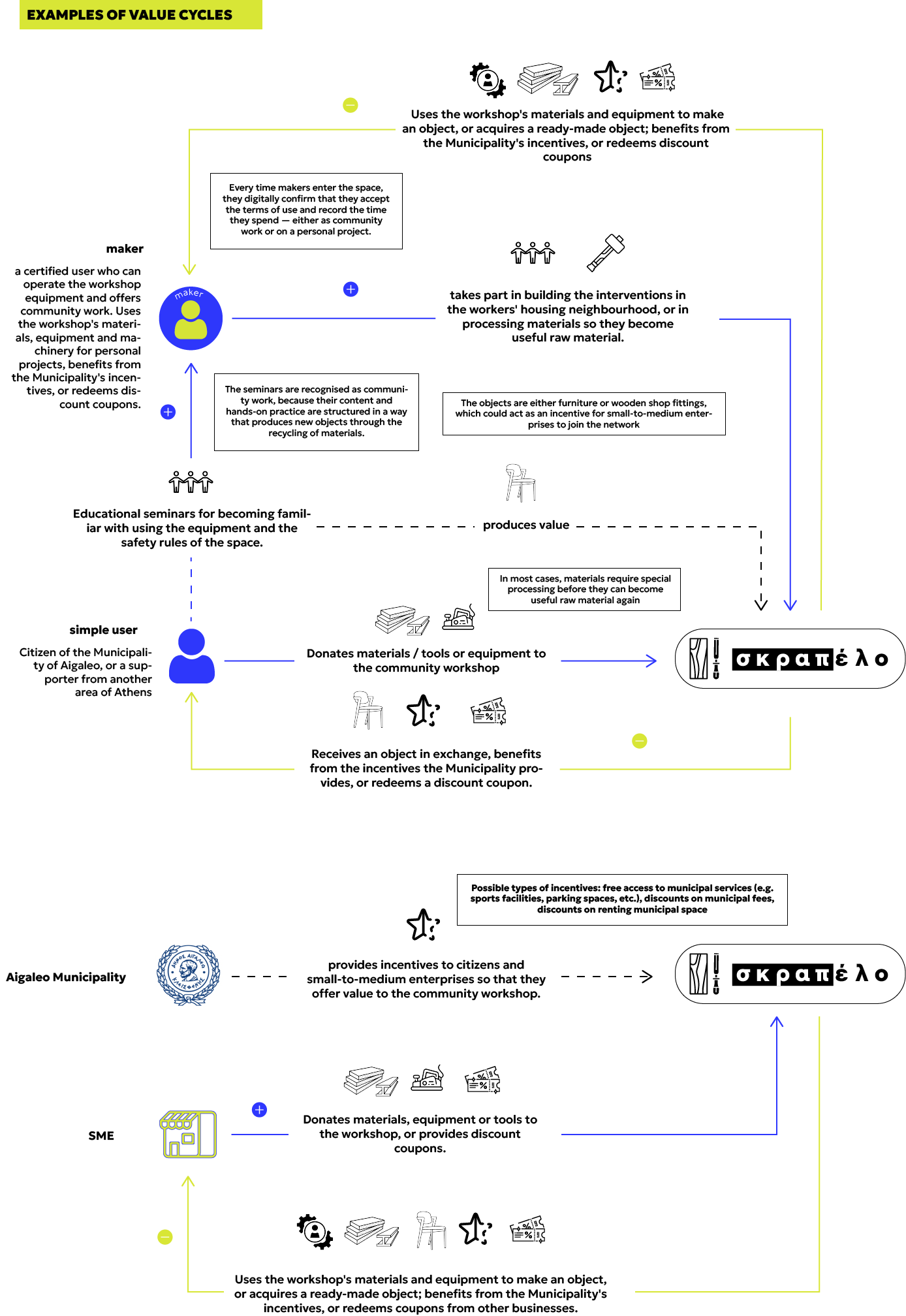
At the heart of the system is a virtual unit of exchange — the “screw” (βίδα) — which measures the value of materials, time and tool use rather than money. A kilo of wood, steel or metal, an hour spent at the workbench, an hour of community work: each is expressed in screws, along a set of rates defined for the workshop’s first three months. Crucially, those rates are not fixed by the team but meant to be revisited: based on the exchanges that actually take place, the community will collectively evaluate the values and redefine them together. The wallet also records how makers use the space — each time they enter, they digitally confirm the terms of use and log their time, whether as community work or a personal project — and connects them to a wider network of incentives from the Municipality and participating local businesses. Its first hands-on testing at Scrapelo marked an early step in weaving the workshop’s physical activity together with this digital layer of shared value. See below the entire diagram explaining the value exchange system.
the scrapelo model of collective use through examples of value cycles (from the presentation board)

A public conversation on circular and sustainable construction
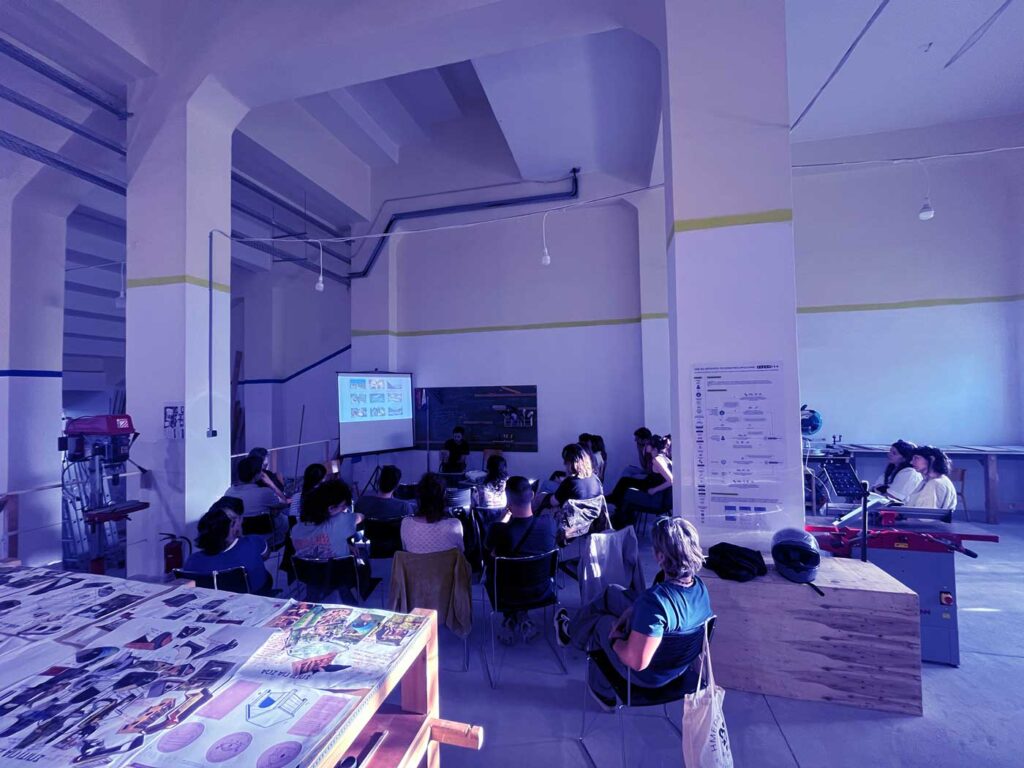
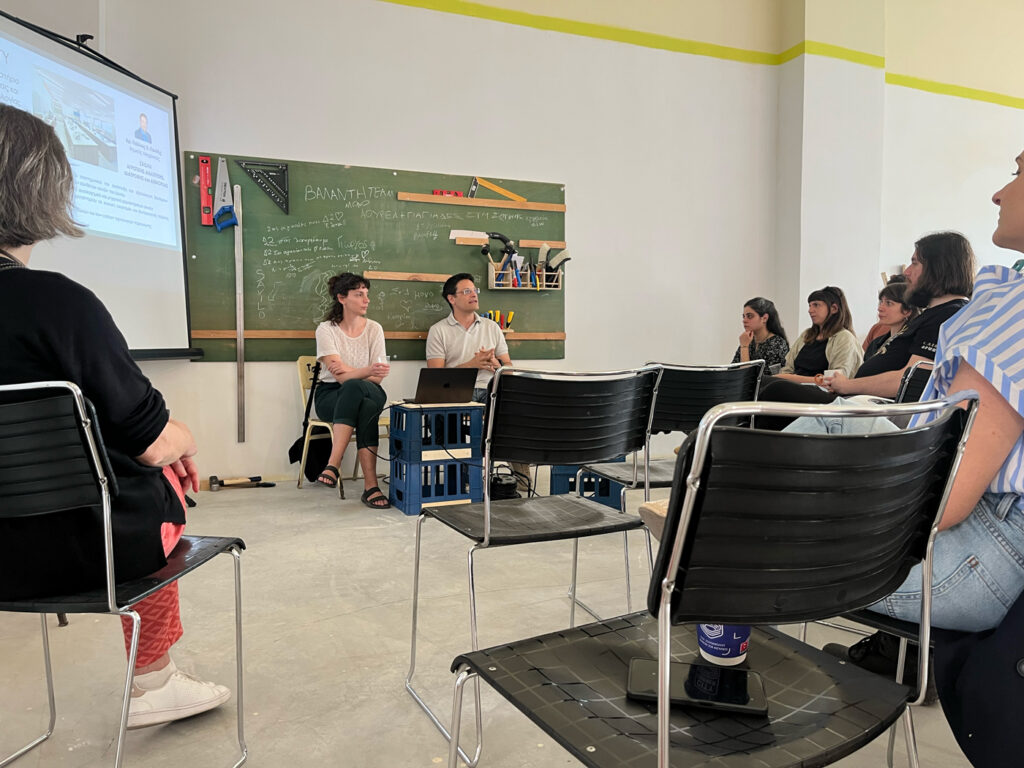
On Wednesday 13 May, Scrapelo hosted the open discussion «Circular and Sustainable Practices in Construction», bringing together groups working with materials, spaces and communities — many of whom had been an inspiration for the workshop’s own creation. The CORPUS research team traced how a municipal warehouse was transformed into a community workshop through collaboration, participation and reuse. Rokani Collective presented the challenges and possibilities of upcycling materials in construction. LUDD explored materialities in flux — the journey of biomaterials from research and experimentation to real-world application in design and construction. Boulouki Team shared examples of building-material reuse and recycling from the school renovation in Tzoumerka and the Tsiati project. The conversations begun that afternoon laid the groundwork for the collaborations and workshops that would follow.
Becoming makers: the first adult seminar cycles
The video of the open call to participate in the first cycles of seminars.
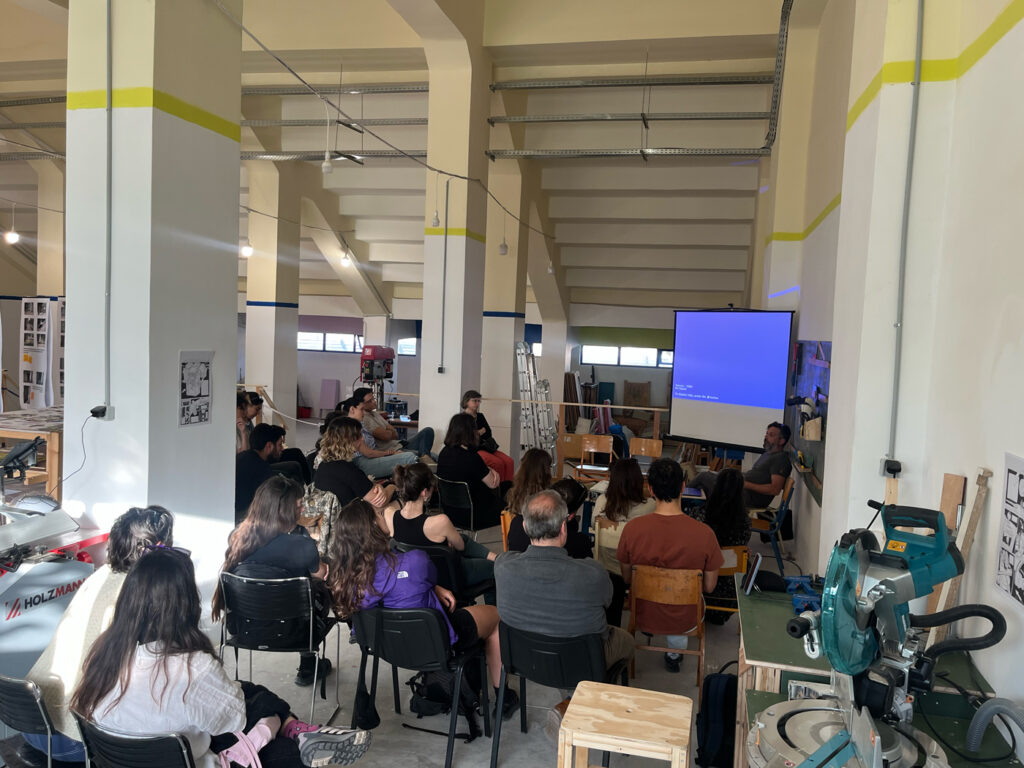
As part of its mission to promote circular economy and sustainable construction, Scrapelo launched free educational seminars for citizens, aimed at familiarising them with the tools and machinery for building with reused materials. Each cycle runs across five three-hour sessions and is open to everyone, regardless of prior experience.
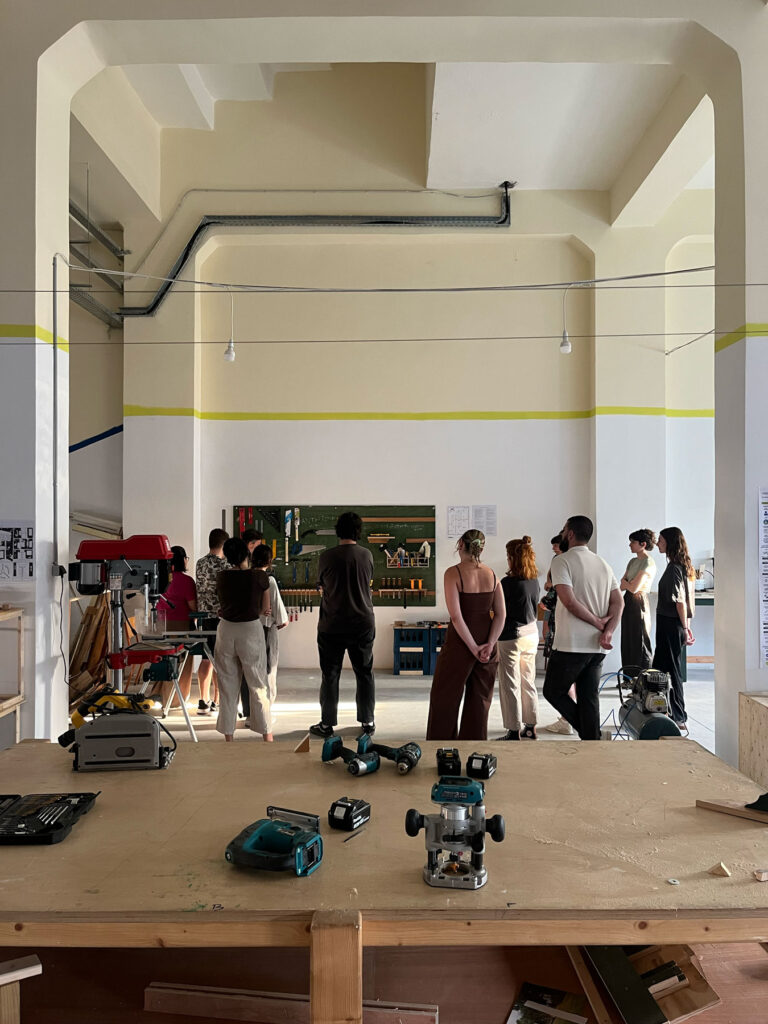
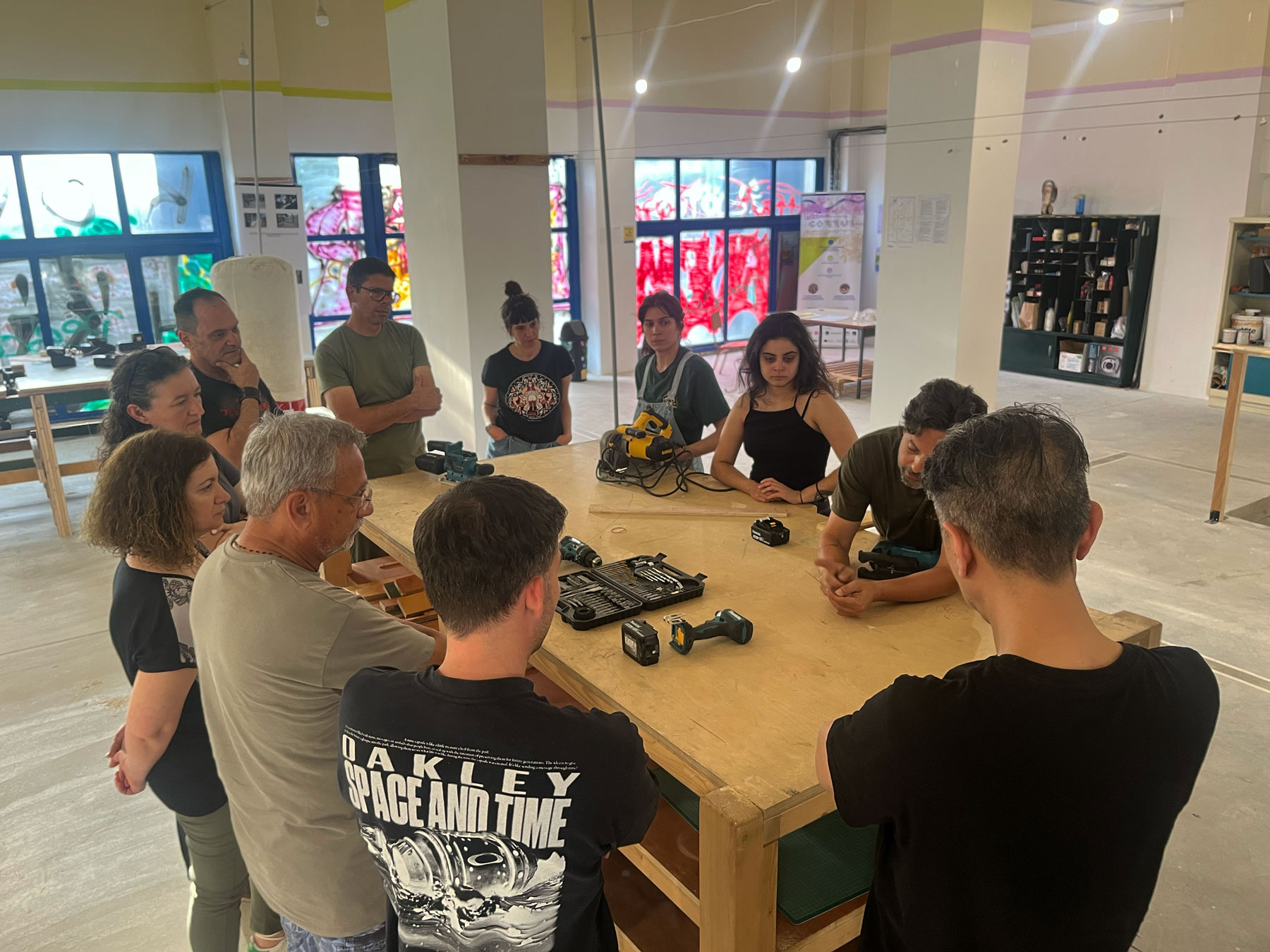
The seminars work towards embedding the rules of safe tool and machinery use, familiarising participants with material-reuse practices, and collectively building the small-scale interventions for the workers’ housing square that emerged from the proposals of the students of the 20th Primary School of Aigaleo. On completing a cycle, participants gain the ability to use Scrapelo’s machinery and space autonomously for their own constructions — and, in doing so, become part of the workshop’s growing community of makers.
Concluding thoughts
Taken together, the events of this spring were more than a series of openings and workshops — they were the moment a research question became a place. From the start, the ambition of the Aigaleo Urban Living Lab was not to study the neighbourhood from the outside but to work alongside it: to use participatory action research as a way of building something the community could hold on to. A former warehouse became a workshop; children’s drawings became models; abstract ideas about circularity and value became tools, rates and a digital wallet that residents can actually use. Making the research tangible — turning it into a space, a set of skills and a shared vocabulary — is what allows its outcomes to belong to the people who took part, rather than remaining on a page or ending with the project.
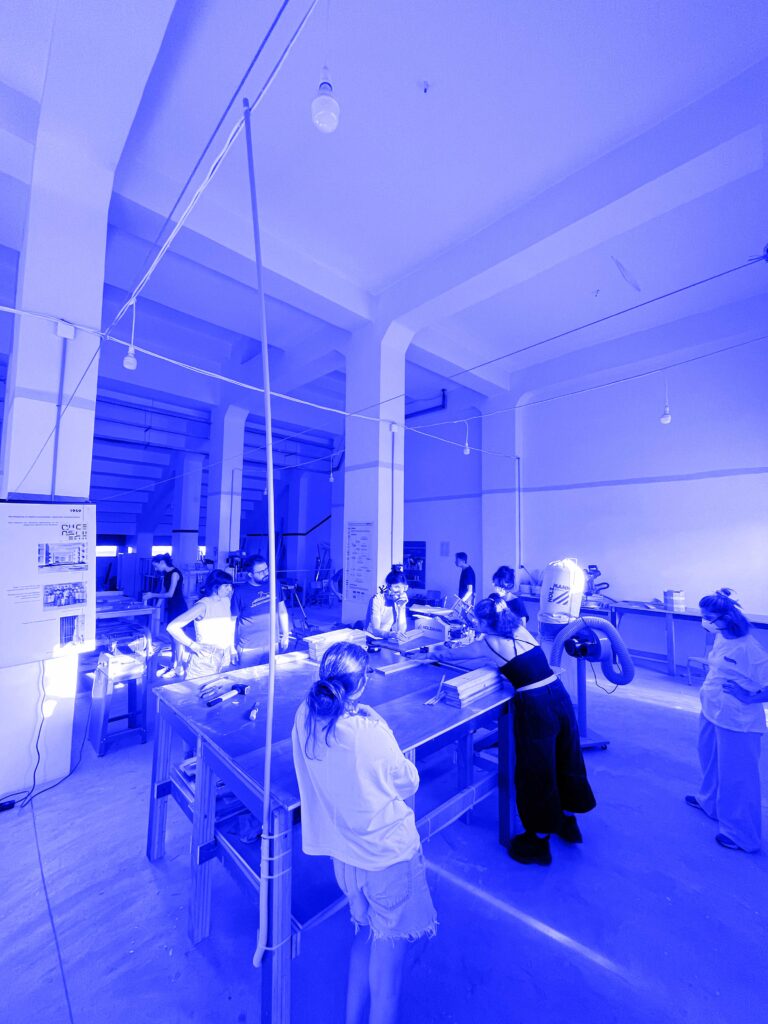
That is the horizon these first months point towards. The opening, the makers’ seminars, the exchange system and the public conversations are the early groundwork of an urban commons: a piece of community infrastructure that is meant to outlast the research that seeded it. As residents become makers, as materials find second lives, and as decisions about value are taken collectively, the workshop moves from being a demonstrator to being genuinely the neighbourhood’s own — a place where making and self-determination reinforce one another. If it succeeds, Scrapelo will remain long after CORPUS concludes: not a finished result handed to the community, but a shared capacity the community continues to build for itself.